What To Eat In Norway: The Most-Eaten Foods And Where To Try Them
What to eat in Norway: brunost, salmon, skillingsboller, the national hot dog habit, what meals really cost and where to eat seafood in Bergen.
 By Lars Hansen, Norway Tour Packages Specialist & Experience Guide
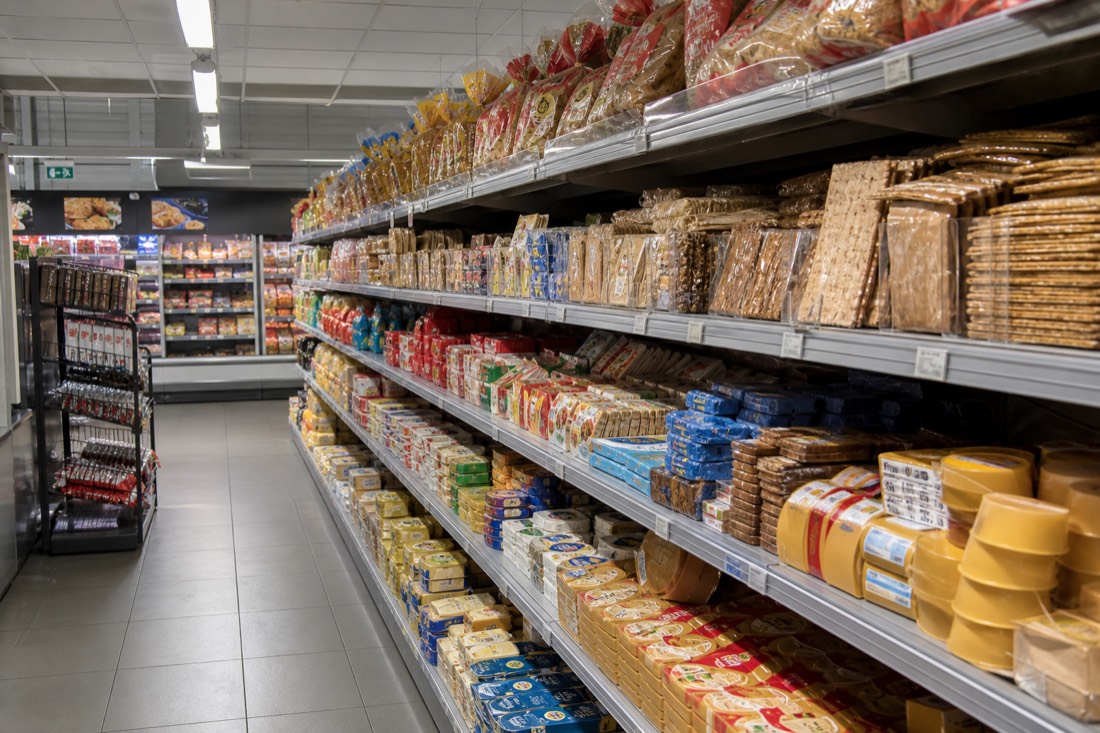
Walk into any Norwegian supermarket and the dairy aisle tells you more than a guidebook. Half a wall of yoghurt and milk, a shelf of caramel-coloured cheese blocks that look like fudge, brown bread with visible grain, tubes of cod roe paste with cartoon fish on them. Then a freezer of frozen pizza that outsells almost everything else. That gap between the wholesome half and the convenience half is the honest picture of how the country eats.
Use a food walk to try a range of dishes, then keep room for the cafés and meals you want to choose yourself.
Booking choice: The Oslo tasting walk is a broad introduction to local food. Choose Bergen instead when that is your base, and confirm dietary needs before booking. Explore Oslo Guided Food Tour with 5 Food Tastings and a Secret Dish
Visitors usually meet the other menu: king crab on ice, reindeer on a tasting plate, salmon carved at a market stall. Both are real. Knowing which is which saves you money and gets you closer to the food people here actually put on a plate.
What Do Norwegians Actually Eat On A Normal Day?
Bread, and a lot of it. The standard day runs open sandwiches for breakfast, a packed lunch of more open sandwiches called matpakke, and a hot dinner around four or five in the afternoon. Dairy is heavy in the diet, potatoes are a default side, and fish appears at dinner several times a week.
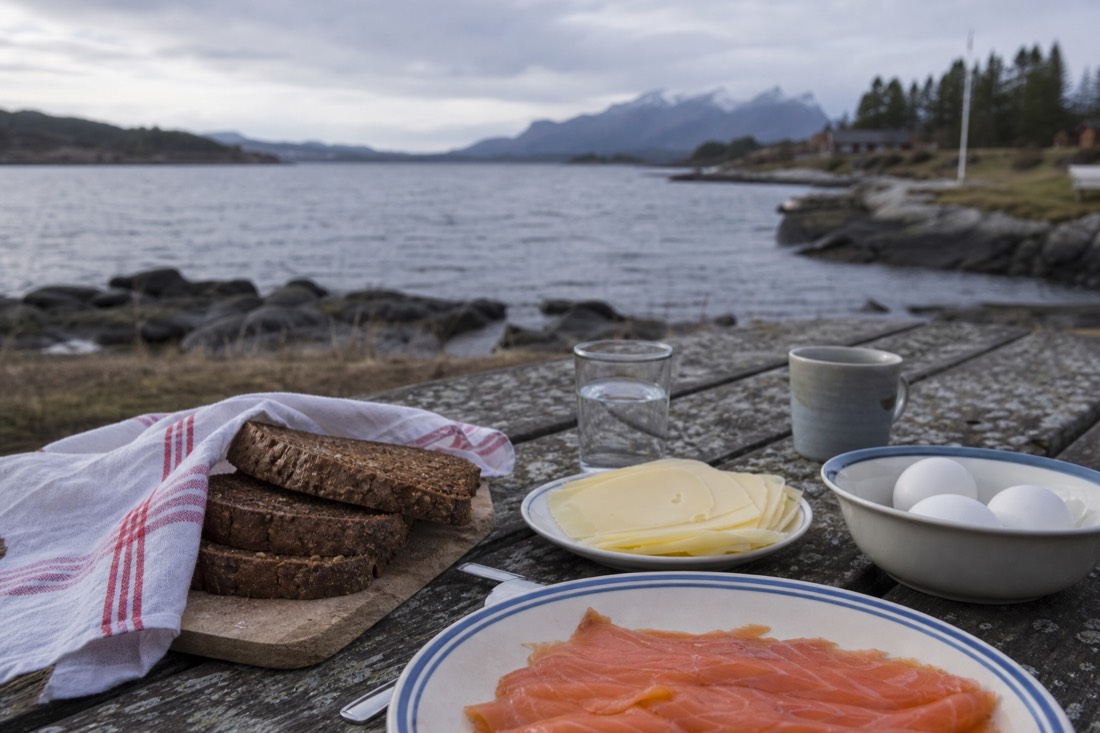
The rhythm surprises Americans more than the ingredients do. Dinner lands early because the working day starts early, and a second light meal, kveldsmat, often turns up before bed. Restaurants adjust to tourists in summer, but in a smaller town the kitchen may genuinely wind down by nine.
| Dish | What it is | When it is eaten | Where to find it |
|---|---|---|---|
| Matpakke | Open sandwiches wrapped in paper, taken to work or school | Lunch, every weekday | Supermarkets, or make your own |
| Brunost | Caramelised whey cheese, sweet and firm | Breakfast, on waffles | Every supermarket, most hotel buffets |
| Kjøttkaker | Meat patties in brown gravy with potatoes | Dinner, home cooking | Cafés doing dagens rett, the daily set dish |
| Fiskesuppe | Creamy fish soup, usually cod or salmon | Lunch or dinner | Coastal restaurants, fish market halls |
| Grandiosa | Frozen pizza, a national in-joke | Friday nights | Any supermarket freezer |
| Kveldsmat | A light late meal, often bread again | Before bed | Home, and hotel evening spreads |
Hotel breakfast is the single best value meal in Norway and it is often included. Ask before taking buffet food away; some hotels sell a packed-lunch option.
What Is Brunost And Should You Try It?
Brunost is brown cheese, made by boiling whey until the milk sugars caramelise. It is sweet, dense and closer to fudge than to cheddar, and it is normally sliced thin with a cheese slicer onto bread or waffles. Try it, but slice it thinly, because a thick slab overwhelms first-timers.
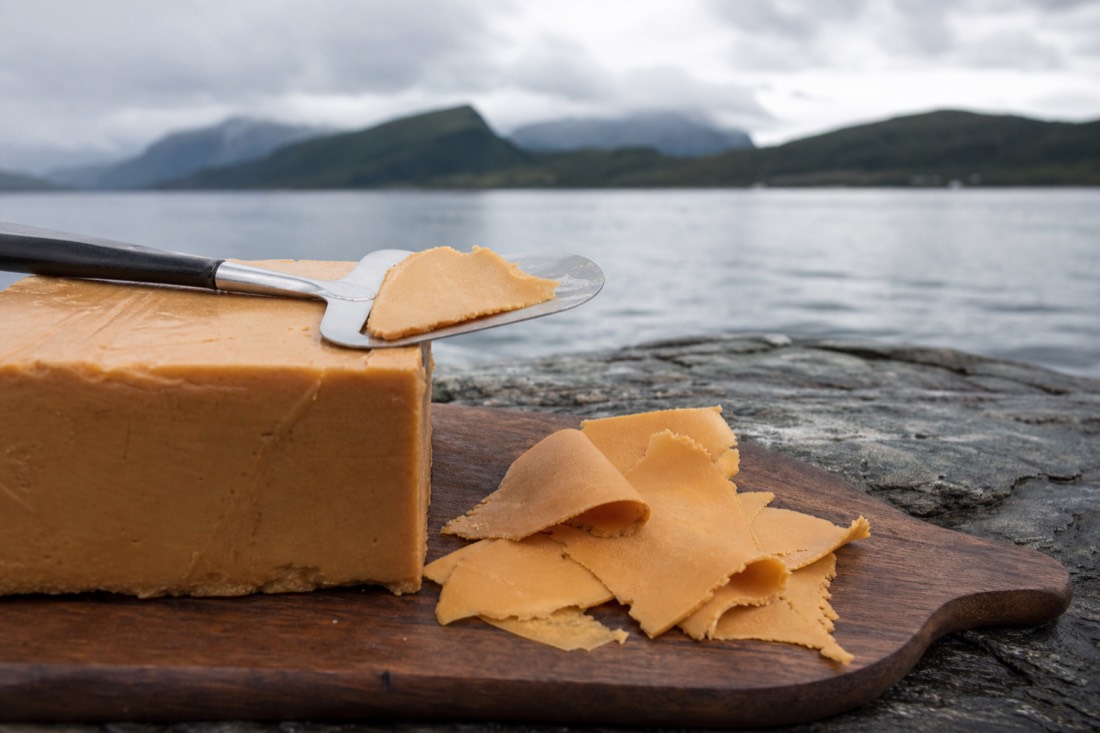
There are several types, and they are not interchangeable. Gudbrandsdalsost mixes cow and goat milk and is the mainstream choice. Ekte geitost is pure goat and considerably sharper. Fløtemysost is milder and creamier, which is the one to hand a sceptical child.
The classic pairing is with waffles, which in Norway are heart-shaped, soft rather than crisp, and served with sour cream and jam as often as with cheese. You will meet this combination at trailheads, on ferries and in mountain cabins, where it functions as fuel rather than dessert.
Is Norwegian Salmon Worth Ordering In Norway?
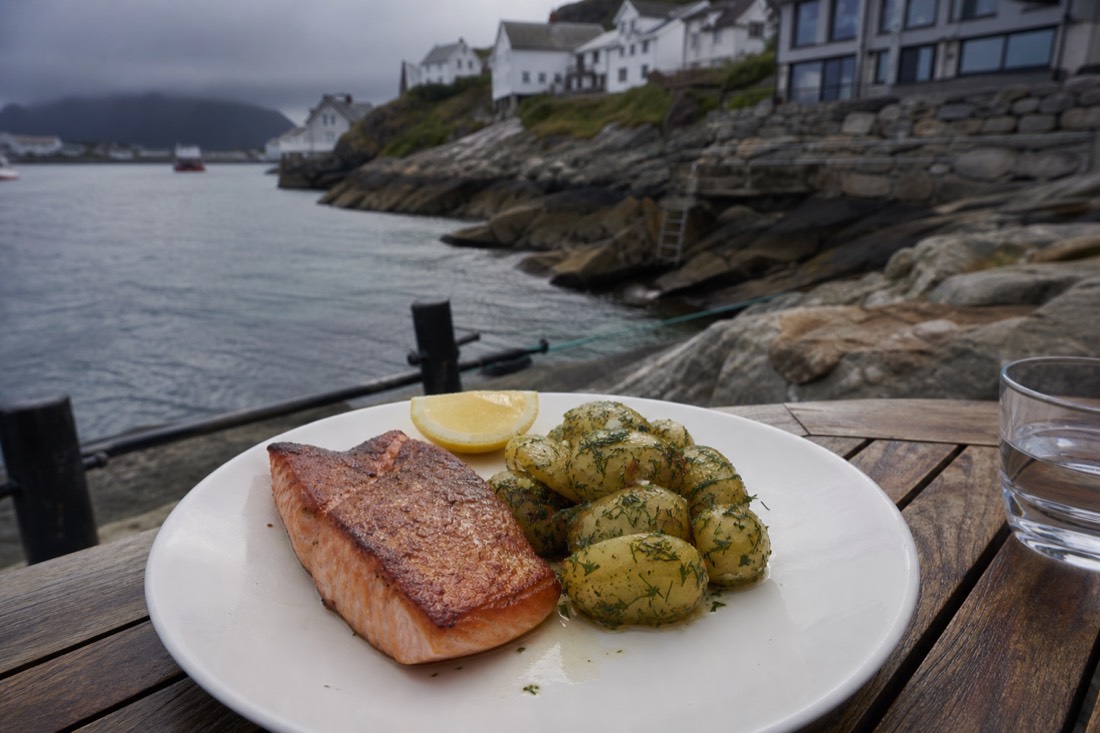
Yes, and the supply chain backs it up: Norway exported 2.8 million metric tons of seafood in 2025, worth NOK 181.5 billion. Farmed salmon is everywhere and consistently good. Cod, halibut, king crab and shrimp are the more interesting orders, and they are seasonal in ways salmon is not.
| Seafood | Best season | Where it is strongest | Usual form |
|---|---|---|---|
| Farmed salmon | Year-round | Nationwide | Grilled, cured as gravlaks, smoked |
| Skrei (winter cod) | January to April | Lofoten and the north | Poached with liver and roe, or pan-fried |
| King crab | Year-round, best in winter | Finnmark, sold nationwide | Steamed legs, sold by weight |
| Shrimp (reker) | Summer | Oslofjord, Bergen | Cold, peeled at the table with bread and mayonnaise |
| Klippfisk and lutefisk | Autumn to Christmas | Ålesund, Trøndelag | Dried, salted, rehydrated, an acquired taste |
Skrei is the order worth planning a trip around. It is migratory cod that arrives on the northern coast in winter to spawn, it is graded and labelled, and Norwegian restaurants treat its arrival the way Italians treat white truffle season. Fjord Norway and regional boards publish which restaurants are serving it each winter.
Are Norwegian Hot Dogs Really A National Food?
Effectively, yes. The pølse is the default Norwegian fast food, sold at every petrol station and kiosk, and usually served in a lompe, a soft potato flatbread, rather than a bun. It is also close to the only genuinely cheap hot meal in the country, which explains a lot of its status.
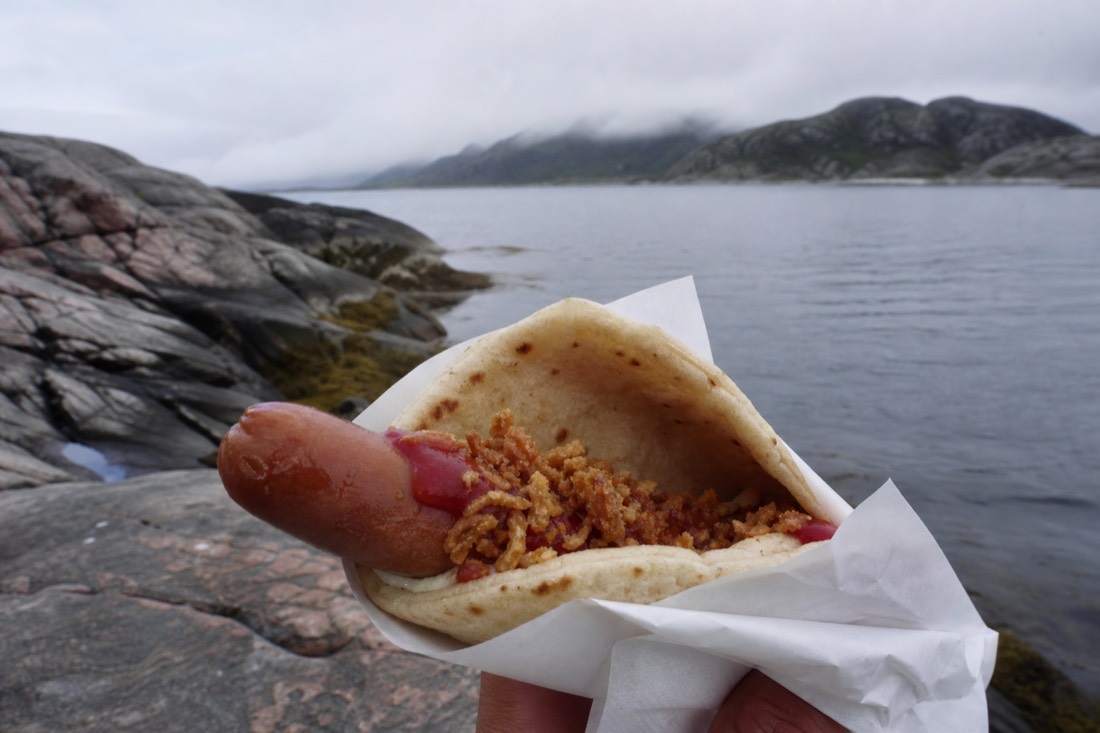
Order it the local way: pølse med lompe, plus roasted onion, mustard and a squeeze of shrimp salad or cucumber relish if you want the full version. Petrol station chains sell them at all hours, which matters on a road trip where the next restaurant might be an hour away and closed by the time you get there.
The joke about the frozen pizza is similar. Norwegians eat a great deal of Grandiosa, and they will tell you so before you have a chance to be polite about it. Accept both facts and you understand the everyday food culture better than any tasting menu will teach you.
What Is A Skillingsbolle And Where Do You Find One?
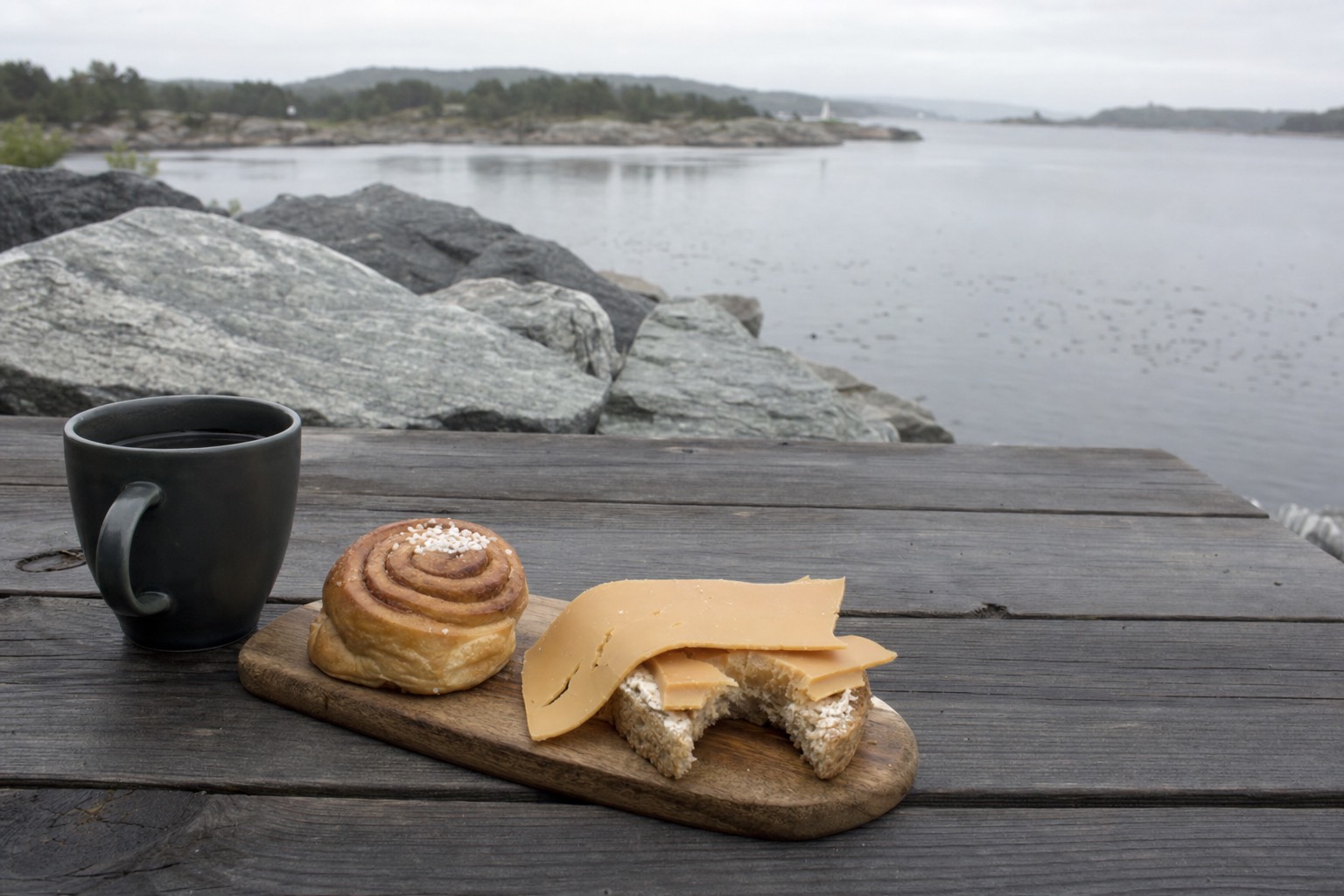
A skillingsbolle is Bergen's large cinnamon bun, named after the coin it once cost, and it is softer and less sugary than an American cinnamon roll. Bakeries across Norway sell related buns called boller, often with pearl sugar or custard. Buy them fresh in the morning, not late.
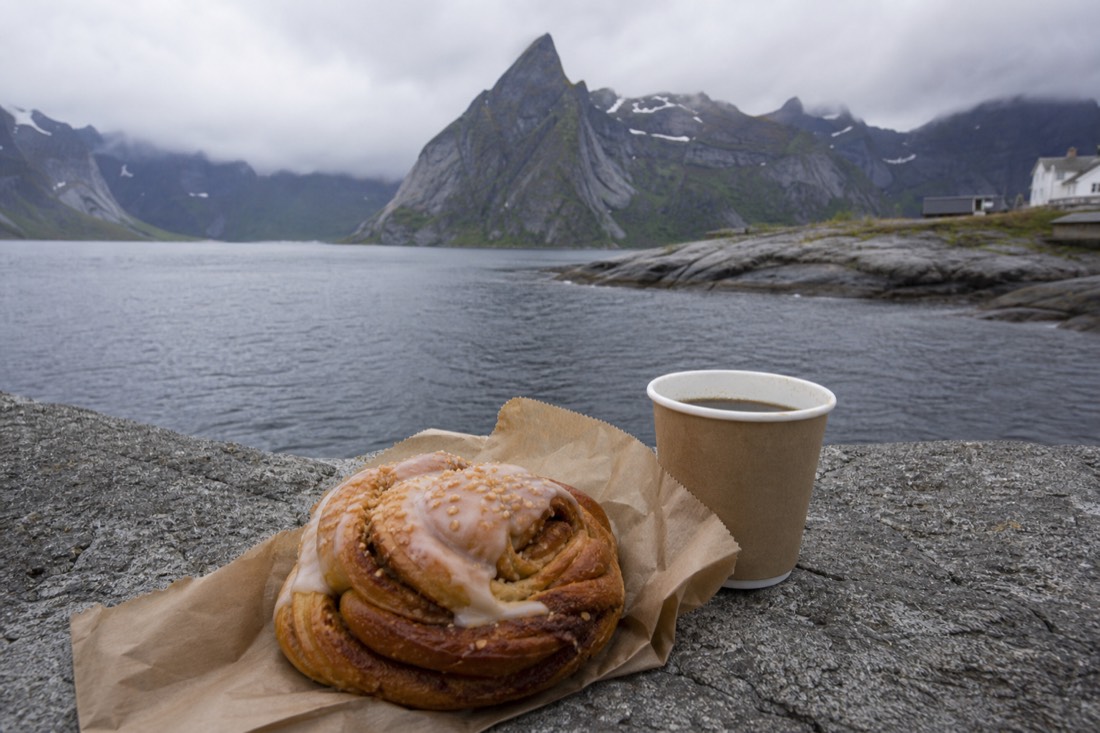
Coffee is the other half of this. Norway sits among the world's highest coffee consumers per head, it is drunk black and filtered far more often than as espresso, and the bakery counter is the social setting for it. The word to know is kaffe og bolle, coffee and a bun, which is a whole social event rather than a snack.
What Does Eating In Norway Cost?
More than almost anywhere in Europe, with the gap widest on restaurant meals and alcohol. The saving levers are hotel breakfast, supermarket lunches, kiosk hot dogs and tap water, which is excellent nationwide and free. Cards and Apple Pay work everywhere, and tipping is optional, 5 to 15 percent for genuinely good service.
| Where you eat | What that looks like | Cost tier |
|---|---|---|
| Hotel breakfast buffet | Bread, cheese, cured fish, eggs, often included in the rate | Lowest, frequently free |
| Supermarket and bakery | Matpakke ingredients, boller, fruit, bottled nothing since tap water is fine | Low |
| Kiosk and petrol station | Pølse med lompe, coffee, a warm cabinet | Low |
| Café dagens rett | The daily hot dish at lunchtime, often the best value hot meal | Medium |
| Harbour restaurant | Fish soup, skrei in season, shellfish platters | High |
| Michelin-starred dining | Tasting menus in Oslo, Stavanger, Trondheim and beyond | Highest |
That last row is not a token. As of the 2026 Michelin Guide, Norway holds 23 starred restaurants, which is a serious count for a country of five and a half million and a reason the food scene has stopped being a punchline. For the wider budget picture, including how food fits beside transport and hotels, see how much a trip to Norway costs, and the payment and tipping specifics are set out in our note on tap water, cards and tipping.
What Should Vegetarians And Vegans Expect?
Better than Norway's fish-and-meat reputation suggests in the cities, and thin in small villages. Oslo and Bergen have dedicated vegetarian and vegan restaurants and clear supermarket labelling; a fjord hamlet in October may offer one option or none.
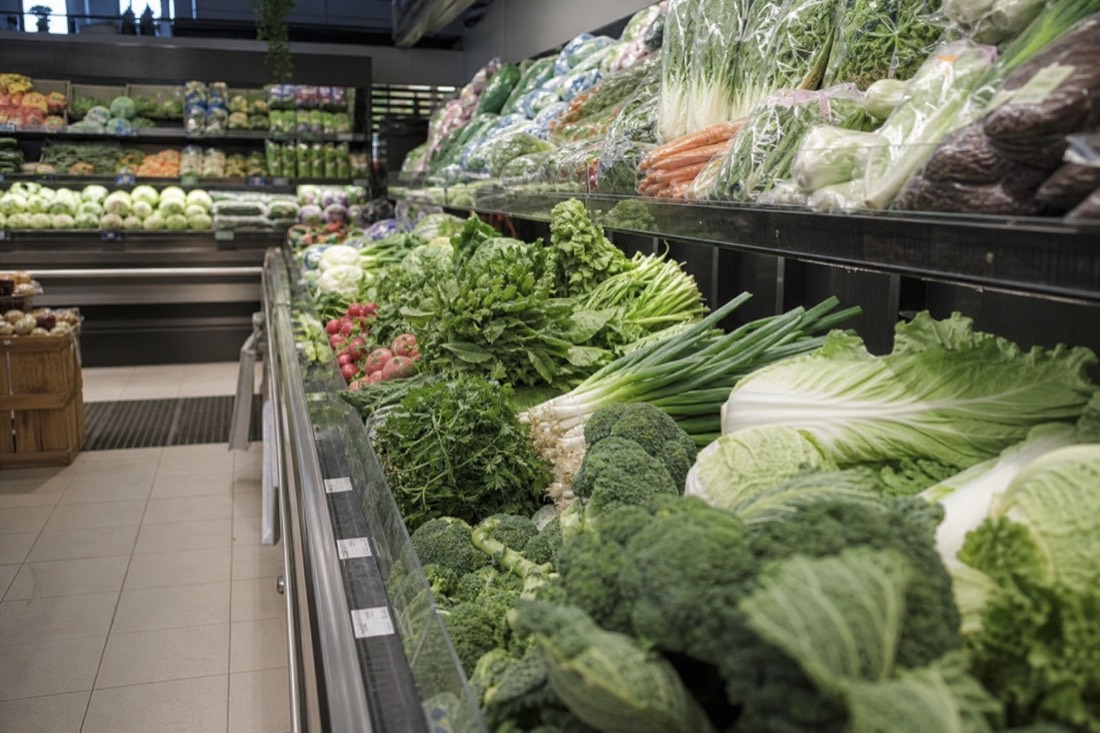
Check ingredients and allergen labels; English is not guaranteed on every package, which makes supermarket shopping straightforward for anyone with a dietary requirement.
Norwegian food culture is built on fish, dairy and meat, but the cities have moved quickly and supermarket ranges are good. The constraint is geographic rather than cultural: the further from a city you eat, the narrower the menu.
| Where | What to expect |
|---|---|
| Oslo and Bergen | Dedicated vegetarian and vegan restaurants |
| Larger towns | At least one option on most menus |
| Small fjord villages | Limited; call ahead or self-cater |
| Supermarkets | Good range, clear labelling |
| Tour meals | Ask before booking; obtain explicit confirmation |
| Traditional restaurants | Fish-heavy by design |
Gluten-free and other requirements follow the same pattern: worth confirming with each restaurant or operator before booking, unpredictable in a village restaurant in October. Norwegian labelling is clear and supermarket ranges are broad, so self-catering removes almost all of the uncertainty.
Booking notes on GetYourGuide, Viator and TourRadar all have a field for this, and using it at the point of booking is far more reliable than raising it at the meeting point.
The tour row matters most. A meal inclusion does not establish dietary or allergy suitability. Obtain explicit confirmation for the exact requirement before booking.
How Does Food Differ Across The Regions?
The coast eats fish, the inland valleys eat game and cured meat, and the north adds reindeer and king crab. Bergen is the seafood capital, Røros and the mountain regions do cured lamb, and Arctic menus are genuinely distinct from southern ones.
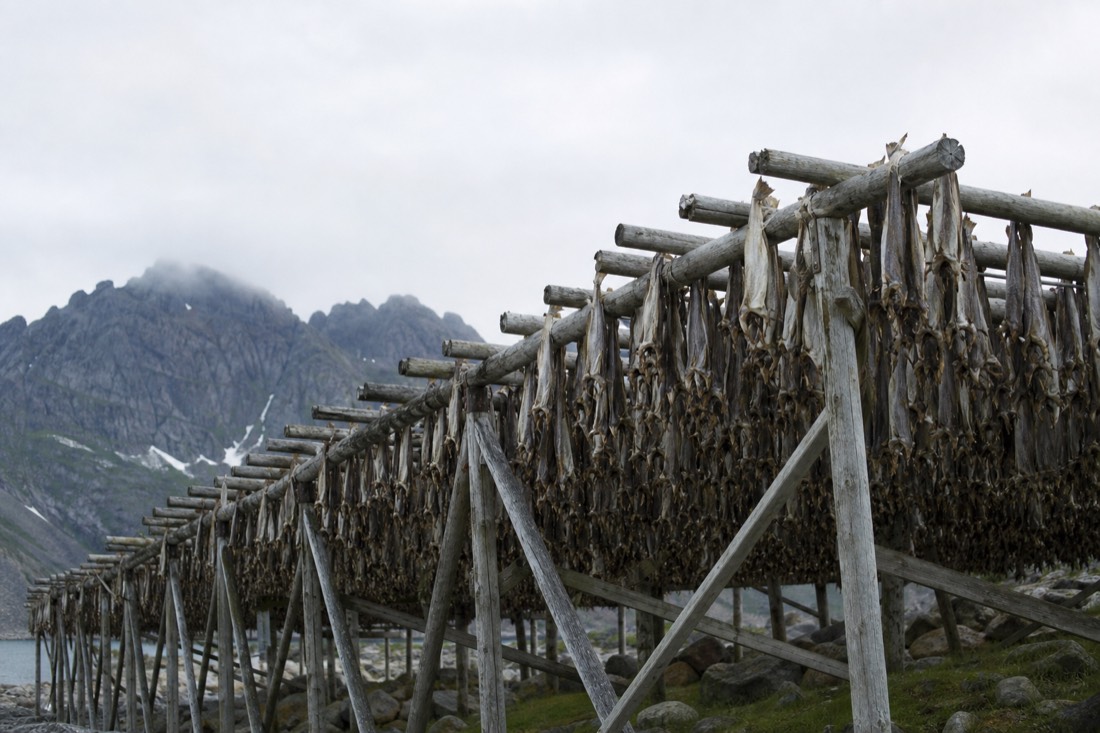
Asking what is local rather than what is Norwegian tends to produce a better answer in any given town.
Norway is long enough that its food geography changes substantially between Kristiansand and Kirkenes. Ordering the same dish everywhere means missing what each region actually does well.
| Region | What it does best |
|---|---|
| Bergen and the west coast | Seafood; fish soup, shellfish |
| Lofoten and the north | Stockfish, king crab, reindeer |
| Inland valleys and Røros | Cured and dried meats, game |
| Oslo | The widest range; modern Nordic cooking |
| Everywhere | Bakeries and the skillingsbolle |
Seasonality applies to the seafood as much as to the restaurants. King crab, skrei cod and the shellfish that dominate the market displays each have their own window, and asking what is in season locally produces a better meal than ordering the thing you recognise from a photograph.
Stockfish is the one worth seeking out in Lofoten specifically. The drying racks along the E10 are not decorative; they are a working industry that has shaped those villages for centuries.
What Food Can You Legally Take Home?
Most shelf-stable Norwegian products, within customs limits at your destination. Brunost, dried fish, jams and chocolate travel well. Fresh meat and dairy are restricted entering many countries, including the US, so check your own border rules rather than Norway's.
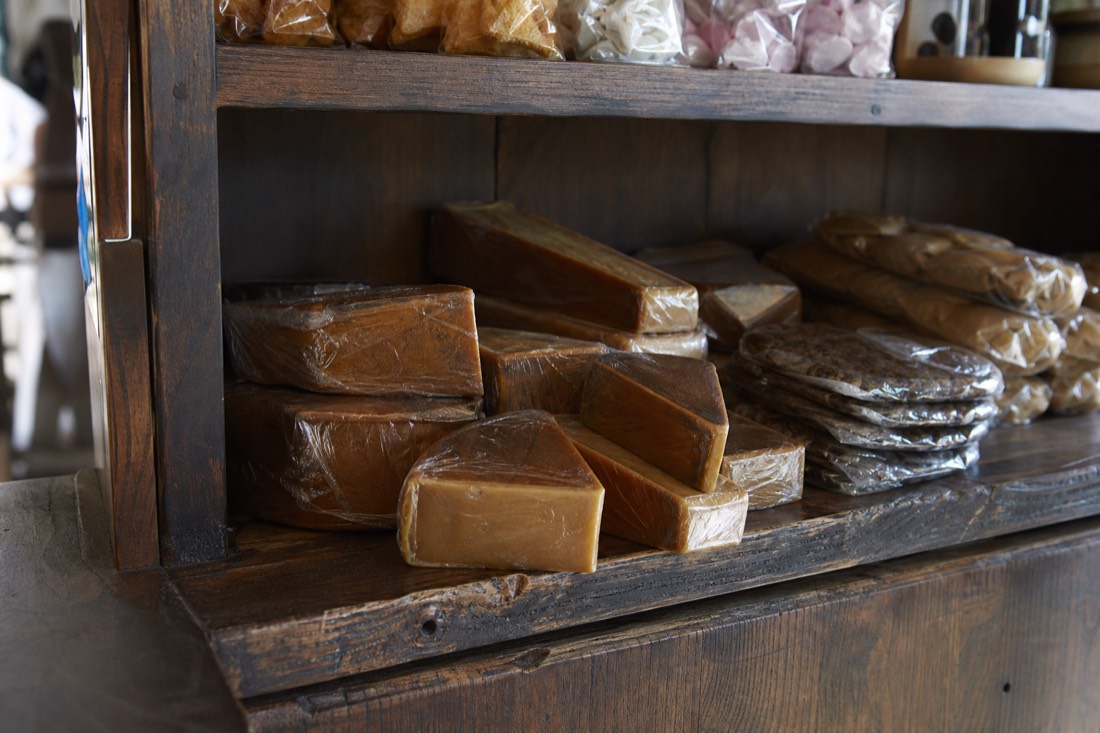
The constraint here is rarely Norwegian export rules; it is what your home country will let in. Travellers regularly buy Norwegian cheese and then surrender it on arrival, which is an expensive way to learn the rule.
| Item | Travels well | Watch out for |
|---|---|---|
| Brunost | Yes, vacuum sealed | Dairy restrictions at your destination |
| Dried or smoked fish | Yes | Some countries restrict fish products |
| Jams and preserves | Yes | Liquid limits in cabin baggage |
| Chocolate and biscuits | Yes | Nothing |
| Fresh salmon | Only if properly packed | Often prohibited on arrival |
| Aquavit and spirits | Yes, within your own duty limits | Buy at duty free, not in town |
The last row is worth acting on. Buying spirits at Vinmonopolet prices to take home makes little sense when the same bottles sit in duty free at the airport for less.
What Should You Drink In Norway?
Coffee, first and constantly. Norwegians are among the world's heaviest coffee drinkers, the tap water is excellent everywhere and free, and aquavit is the traditional spirit, usually served with heavy festive food rather than casually.
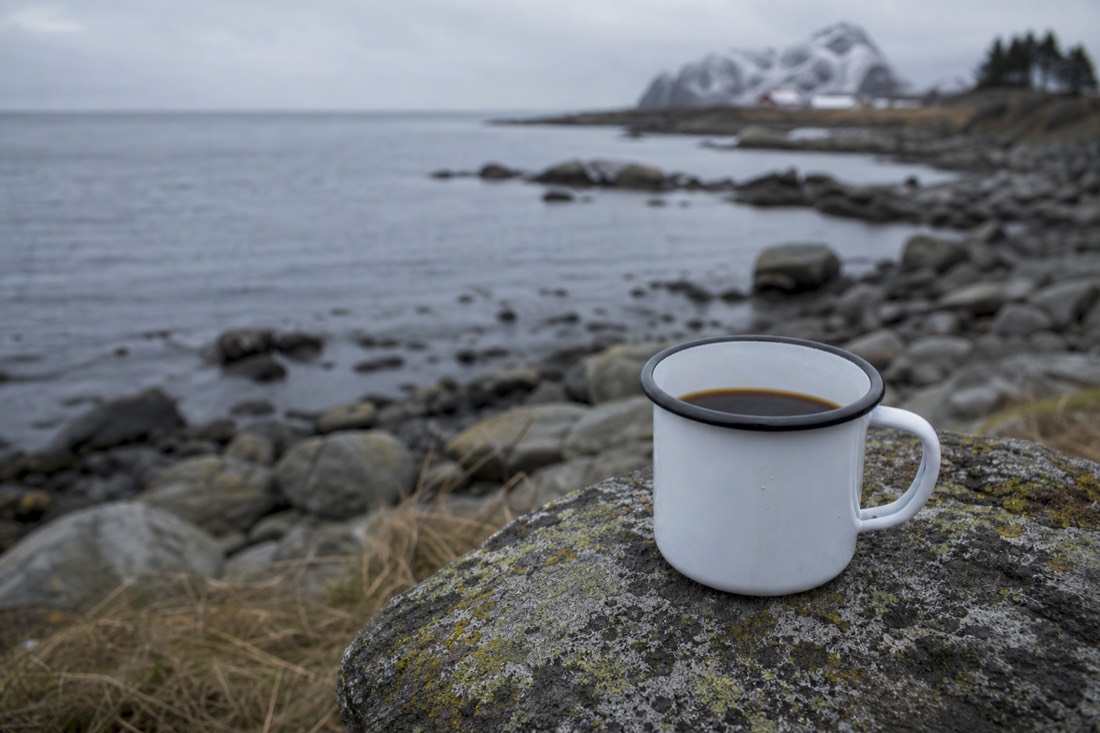
Drinking habits here are worth knowing partly for the culture and partly for the budget, since this is the category where visitors overspend most easily without noticing.
| Drink | What to know |
|---|---|
| Coffee | Central to daily life; filter coffee is the default |
| Tap water | Excellent, free, safe everywhere; refill rather than buy |
| Beer | Sold in supermarkets, within daily cut-off times |
| Wine and spirits | Vinmonopolet only; shorter hours, closed Sundays |
| Aquavit | Traditional, tied to festive meals |
| Craft beer | A strong scene in Oslo, Bergen and Tromsø |
The tap water line is not a throwaway. Norwegian tap water is genuinely excellent, bottled water is priced like everything else here, and a refillable bottle is one of the few pieces of gear that pays for itself in a day.
If you want one drinking experience that feels specifically Norwegian, it is not aquavit. It is a filter coffee outdoors in cold weather, which is a national habit rather than a novelty and comes with almost every guided winter activity.
Where Do You Eat Well Outside The Cities?
Bakeries, supermarket counters and the kitchen in your own accommodation. Rural Norway has excellent raw ingredients and comparatively few restaurants, so the good eating happens at a counter or a cabin table rather than at a table service.
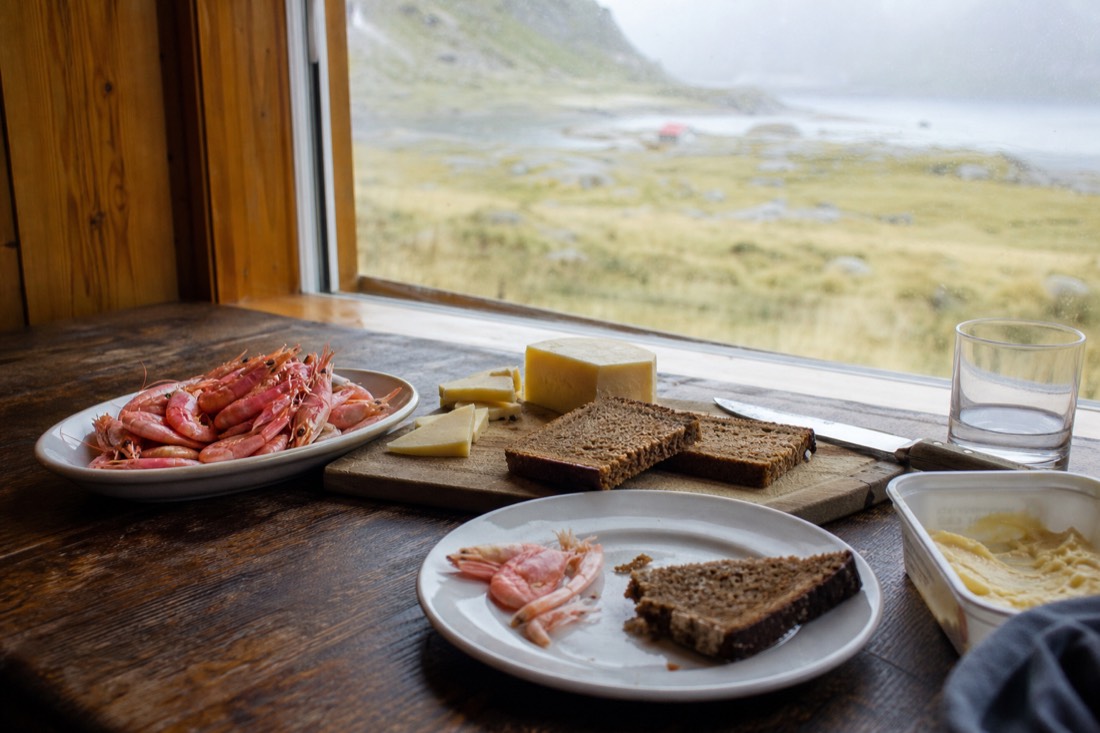
It also means the quality of what you can assemble yourself is unusually high. Norwegian supermarket seafood, bread and dairy are genuinely good rather than a fallback, which is not true everywhere.
This is a structural feature of travelling here rather than a shortcoming. Population density is low, restaurants are correspondingly sparse outside the towns, and the food culture has always centred on the home and the packed lunch.
| Where | What to expect |
|---|---|
| Village bakeries | Reliably good; often the best food in town |
| Supermarket counters | Cooked shrimp, cured meats, decent bread |
| Cabin and rorbu kitchens | Where most rural meals actually happen |
| Roadside kiosks | Hot dogs, coffee; a genuine Norwegian institution |
| Hotel restaurants | Often the only sit-down option; book ahead |
| Village restaurants | Few, and many close outside season |
Checking opening days as well as hours is worth the minute it takes, since a single village restaurant may close two days a week outside summer.
The seasonality matters most. A village that supports two restaurants in July may support none in November, so self-catering is not a budget choice out of season so much as the only option.
None of this means eating badly. Norwegian supermarket bread, seafood and dairy are genuinely good, and a table by a fjord window with food you assembled yourself is closer to how the country actually eats than any restaurant meal.
Where Should You Eat Seafood In Bergen?
At Torget, the harbour fish market, with a caveat. The outdoor stalls are seasonal, priced for visitors and good for shellfish theatre. The indoor Mathallen beside them runs year-round with sit-down restaurants and better value. Do both: a shrimp sandwich outside, a bowl of fish soup inside.
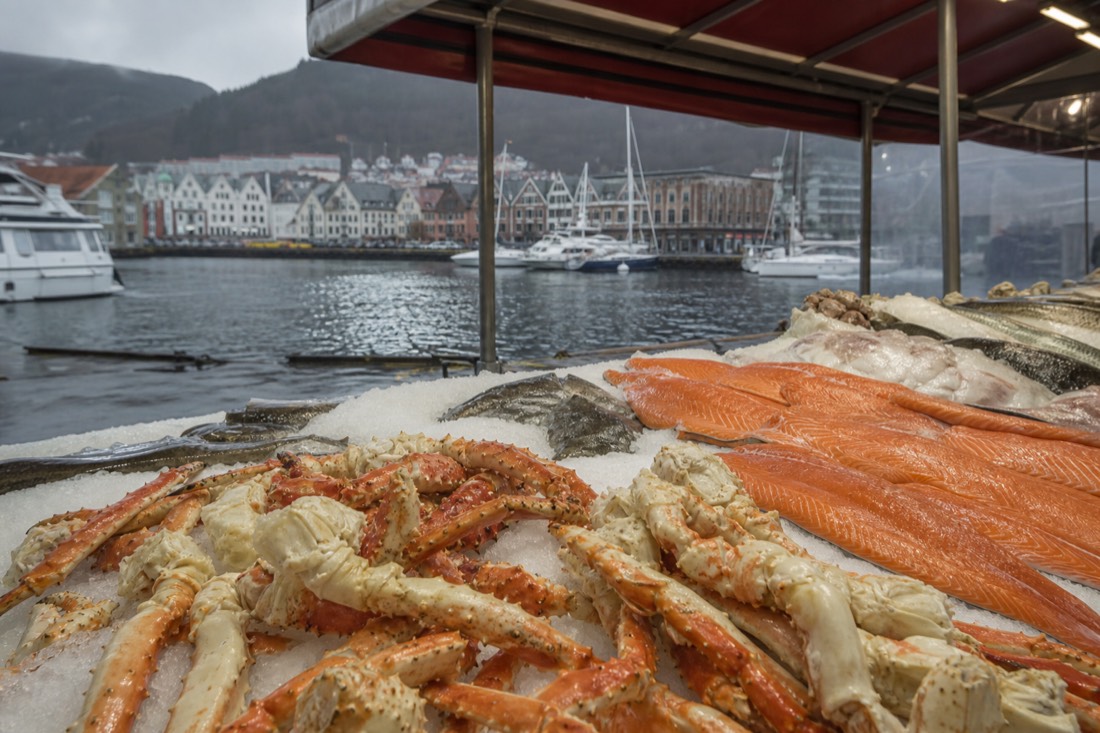
The market sits at the head of the harbour, a few minutes’ walk from the quay where the fjord boats leave, which makes an obvious pairing out of lunch and an afternoon on the water.
Related planning: fjord cruise options.
Outside Bergen the rule holds anywhere on the coast: eat what was landed nearby, in the season it was landed, and let the imported options go. Visit Bergen lists current market hours, which change between summer and winter, and the rest of the city's food geography sits in our guide to things to do in Bergen.
Choose Your Norway Experience
Oslo Guided Food Tour with 5 Food Tastings and a Secret Dish. Taste Norwegian bolle, fishcake and other local dishes on a guided Grünerløkka food walk. Have a date in mind? Check it before arranging the rest of your Norway trip.
3 hours. Meet at Olaf Ryes Plass; finish at Kulturkirken Jakob. Three hours on foot. Menu can change. Dietary requests need advance confirmation; wheelchair access is not offered.
Choose a date to see scheduled departures. Final availability and price are confirmed on Viator.
No verified experience fits those requirements. Adjust your choices, or keep the independent plan described above.
Compare Options And Fit Your Plans
General recommendation until you choose. Choose the city where the activity starts, not your arrival airport. Month filters describe the experience’s season, not confirmed departures. Allow travel to the meeting point as well as the listed duration. Confirm your exact option and access needs when booking.
- Oslo Grünerløkka Food & Culture Walking Tour: 2 hours 30 minutes. Taste Norwegian cured meats, cheese, salmon lefse and waffles while exploring Grünerløkka. Meet at Mathallen’s courtyard entrance in Vulkan; return to the meeting point. About 2.5 hours on foot. Not wheelchair accessible; dietary suitability is unconfirmed.
- Food and Culture walk: 3 hours. Explore Bergen’s food and harbour history on a three-hour tasting walk with lunch included. Meet at the tourist-information entrance. Ages 5+; the listing requires at least two guests per booking. No specific dietary accommodation is verified.
- Oslo fjord 3-Course Dinner Cruise with Live Music: 2 hours 30 minutes. Combine an Oslofjord evening with a three-course dinner and live music. Meet at Rådhusbrygge 2, before PIREN, 15 minutes early. Tell the operator about dietary restrictions at least 24 hours ahead; a special diet is not automatically confirmed.