Things To Do In Bergen, Rain Or Shine
Bergen gets rain on most days of the year, so the city that works is the one with an indoor plan attached to every outdoor one.
 Written with Lars Hansen, Norway Tour Packages Specialist & Experience Guide
Short answer
Walk Bryggen's wooden alleys, ride the Fløibanen funicular up for the harbour view, eat at the fish market, then take a boat into the fjord for a half day. KODE's four museums and the Hanseatic buildings cover the wet hours, and Bergen gets a great many of those.
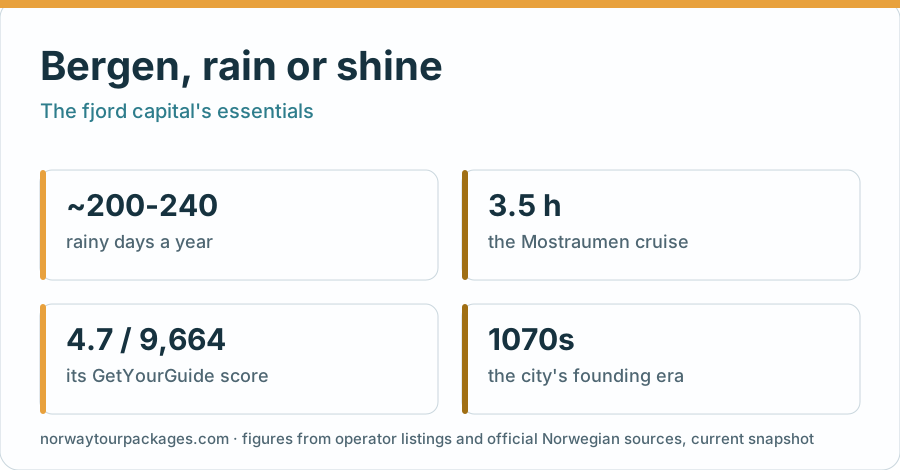
Bergen smells of salt, wet timber and, near the quay, of fish. The old Hanseatic gables lean slightly into each other along Bryggen, the boards underfoot creak in the alleys behind them, and the rain arrives without much warning and often without leaving. This is a city of roughly 200 to 240 rainy days a year and somewhere between 2,250 and 2,413 mm of precipitation, which locals mention with something close to pride.
Keep Bergen’s walkable city time around one chosen fjord or food outing.
Booking choice: Mostraumen is the shorter fjord choice. The railway-and-Nærøyfjord circuit needs a full day; the food walk stays in Bergen. Explore Mostraumen Fjord Cruise : Operated & Guided by Locals
That single fact should shape your plan. A Bergen itinerary built only around clear-sky views will fail more often than it works, so everything below is paired with what you do instead when the sky closes in.
What Is Bryggen And Why Does It Matter?
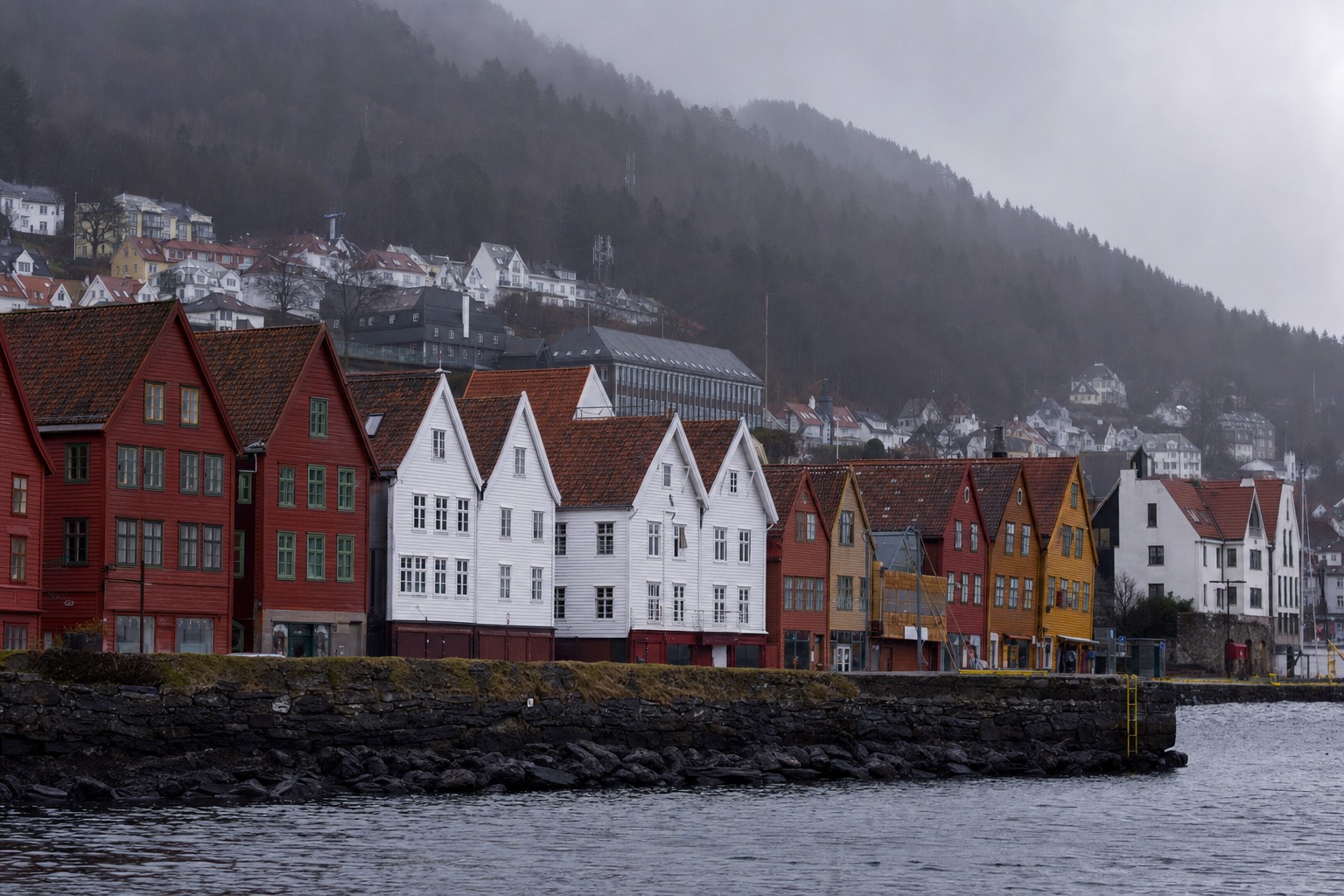
Bryggen is the old Hanseatic wharf on the north side of Bergen harbour, a row of wooden merchant houses whose alleys and leaning warehouses survived repeated fires. It is a UNESCO World Heritage Site and free to walk through, and the interior passages are far more interesting than the postcard facade.
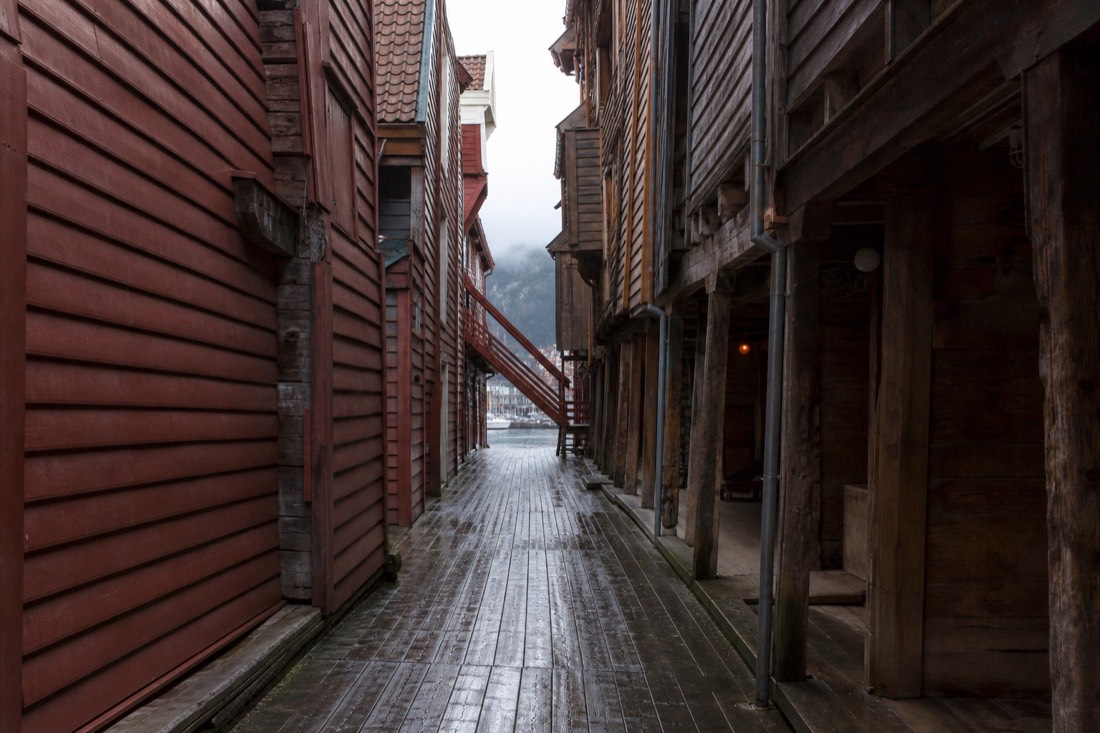
Most visitors photograph the front row from across the water and move on. The better move is to go through the gaps between the buildings into the tight parallel lanes, where the timber galleries stack over your head and the whole structure visibly tilts. The UNESCO listing for Bryggen explains why the reconstruction after the 1702 and 1955 fires still counts as authentic: the builders reused the medieval foundations and the same construction methods.
Give it an hour on a dry day, two if you go into the Hanseatic buildings. It is also the one attraction that works in rain, since the alleys are partly covered and there is nothing to see at a distance anyway.
Is The Fløibanen Funicular Worth The Ticket?
Yes, on a clear or half-clear day. The Fløibanen climbs Mount Fløyen from the city centre in about six minutes, and the top gives you the harbour, the seven mountains and the islands in one view. In thick cloud you are paying for a ride into grey, so check the sky first.
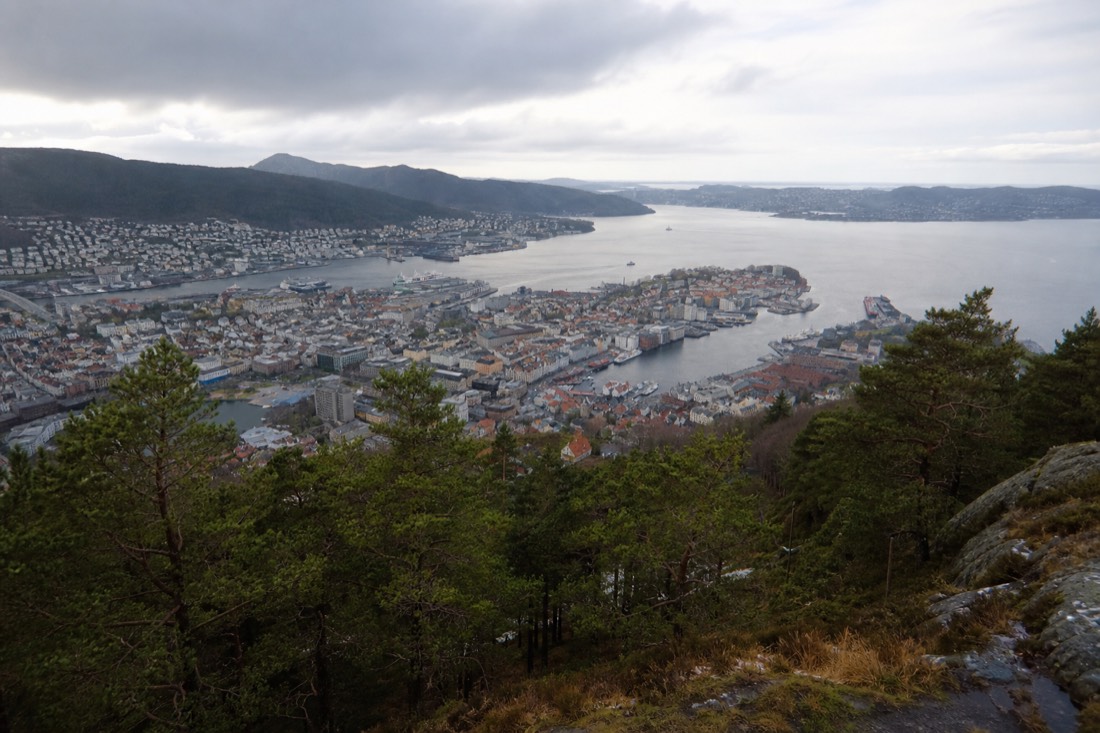
The line has been running since 1918 and climbs an 850-metre incline pitched at 26 degrees, which is steep enough that the carriage floors are stepped. At the top there are marked forest trails, a café and a play area, and the walk back down to the city takes most people 45 minutes on a well-graded path. Doing exactly that, riding up and walking down, is the highest-value hour in Bergen.
Timing matters more than tickets. Look at the hourly cloud base on yr.no in the morning and go when there is a gap, rather than booking a slot two days out and hoping.
Should You Eat At The Bergen Fish Market?
Eat there for the theatre and the shellfish, not for value. The outdoor Torget stalls are seasonal and priced for visitors, while the indoor Mathallen next to it operates year-round with sit-down restaurants. Buying a shrimp sandwich outdoors and a proper meal indoors is the usual compromise.
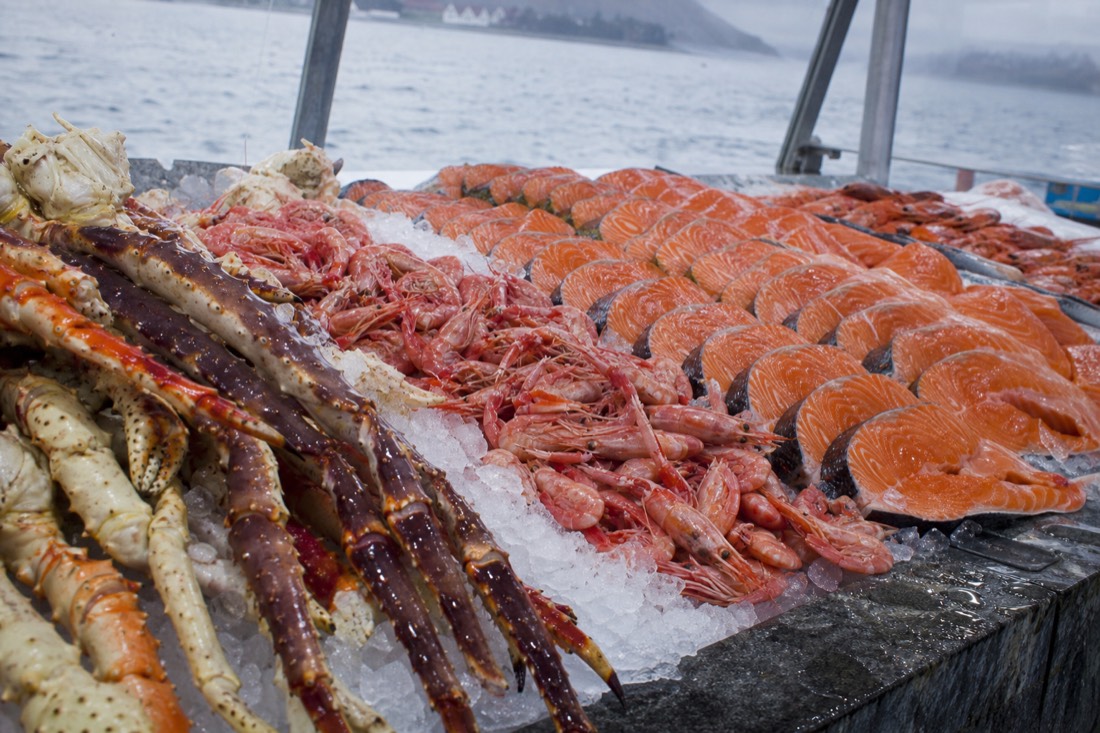
The market sits at the head of the harbour where the boats used to unload, and it is still the fastest way to eat king crab, shrimp, salmon and whale in one sitting. Prices are high by any standard, which is a Norway-wide condition rather than a market trick. Cards and Apple Pay work at every stall, so you do not need cash, and tipping is optional and reserved for genuinely good service, usually 5 to 15 percent.
If you want the seafood without the tourist markup, we cover the alternatives and what Norwegians actually eat in our piece on what to eat in Norway. Visit Bergen publishes the current market opening hours, which shift between summer and winter.
Which Boat Trip Gets You Into The Fjord From Bergen?
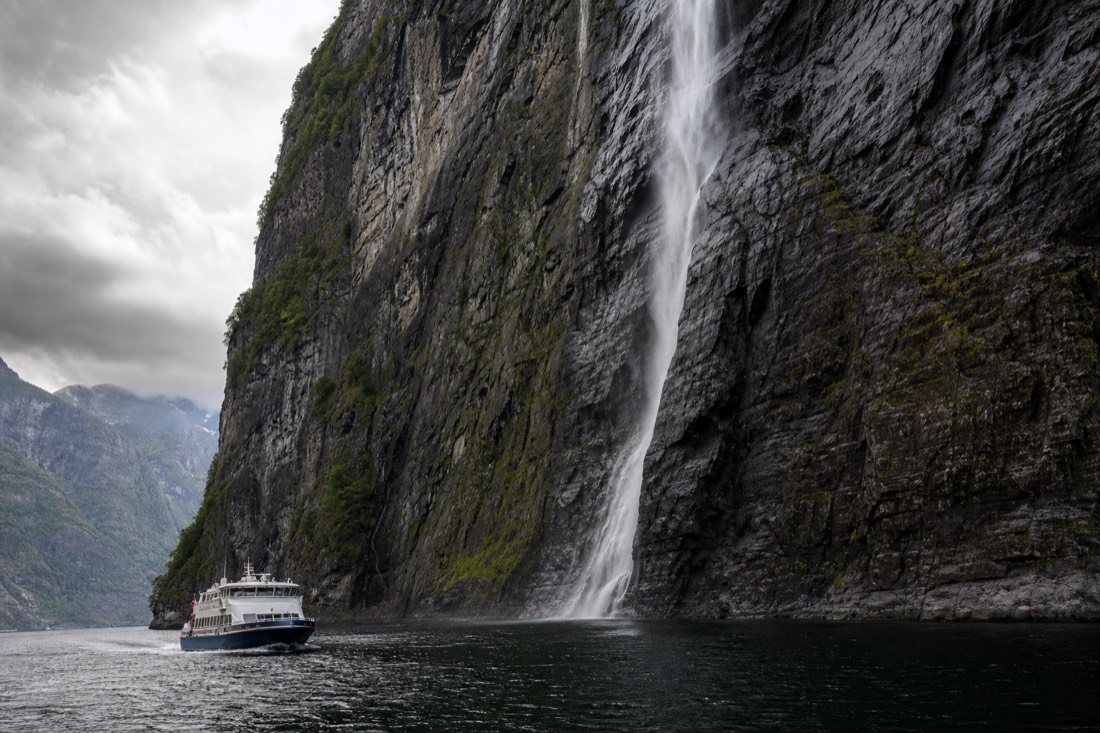
The Mostraumen route north up the Osterfjord is the practical choice from the city quay: about three and a half hours, year-round, into a narrow arm with waterfalls and a tidal current at the turning point. Longer day trips to Nærøyfjord exist, but they take ten hours or more.
| Boat trip from Bergen | Platform | Rating and reviews | Duration | Season |
|---|---|---|---|---|
| Original fjord cruise to Mostraumen, Rødne | GetYourGuide | Check current listing | 3.5 hours | Year-round |
| Mostraumen cruise hosted by locals | Viator | Check current listing | 3.5 hours | Year-round |
| Viking village, Nærøyfjord cruise and Flåm Railway | Viator | Check current listing | 10.5 hours | Guided day trip |
| Flåm Railway, Nærøyfjord and Stegastein viewpoint | GetYourGuide | Check current listing | 13 to 14 hours | May to September, no under-4s |
The half-day option is the one that fits an ordinary Bergen stay. You board in the centre, the city gives way to islands within twenty minutes, and the boat noses close enough to the falls that the deck gets wet. It is also less dependent on visibility in the sense that rain does not cancel it, though a low ceiling flattens the mountain views.
The full-day trips are a different proposition and really belong to a fjord itinerary rather than a Bergen one. If you have the day spare, our day trips from Bergen guide sorts them by how much of the day they actually consume.
What Can You Do In Bergen In The Rain?
Plenty, and you should plan for it. KODE's four art museums, the Hanseatic museum buildings, Mathallen's indoor food hall, the aquarium and Bryggen's covered alleys all work wet. Bergen's boat trips also run in rain, so a cruise is a legitimate bad-weather move rather than a compromise.
| Plan A, dry | Swap when it rains | Time needed |
|---|---|---|
| Fløibanen and the summit trails | KODE art museums | 2 to 4 hours |
| Walking the outer harbour and Nordnes | Hanseatic buildings and Bryggen alleys | 1.5 to 2 hours |
| Outdoor fish market stalls | Mathallen indoor hall, sit-down seafood | 1 to 2 hours |
| Mount Ulriken hike | Half-day fjord cruise, covered saloon | 3.5 hours |
| Photographing the harbour at golden hour | Composer homes; check ticket coverage and transport | 2 to 3 hours |
Rain gear is not optional here and it is not a joke. A waterproof shell with a hood beats an umbrella, because the wind off the harbour turns umbrellas inside out most days. Bring boots you do not mind soaking, since the cobbles hold water for hours after a shower, and Visit Norway is blunt about Bergen's reputation in its own city pages.
Is KODE Worth Half A Day?
Yes, if you like art at all. KODE spans four museum buildings around the city lake with close to 50,000 works, including Picasso, Kandinsky and a substantial Munch holding. Check the current ticket’s coverage and composer-home opening dates before planning an out-of-town visit.
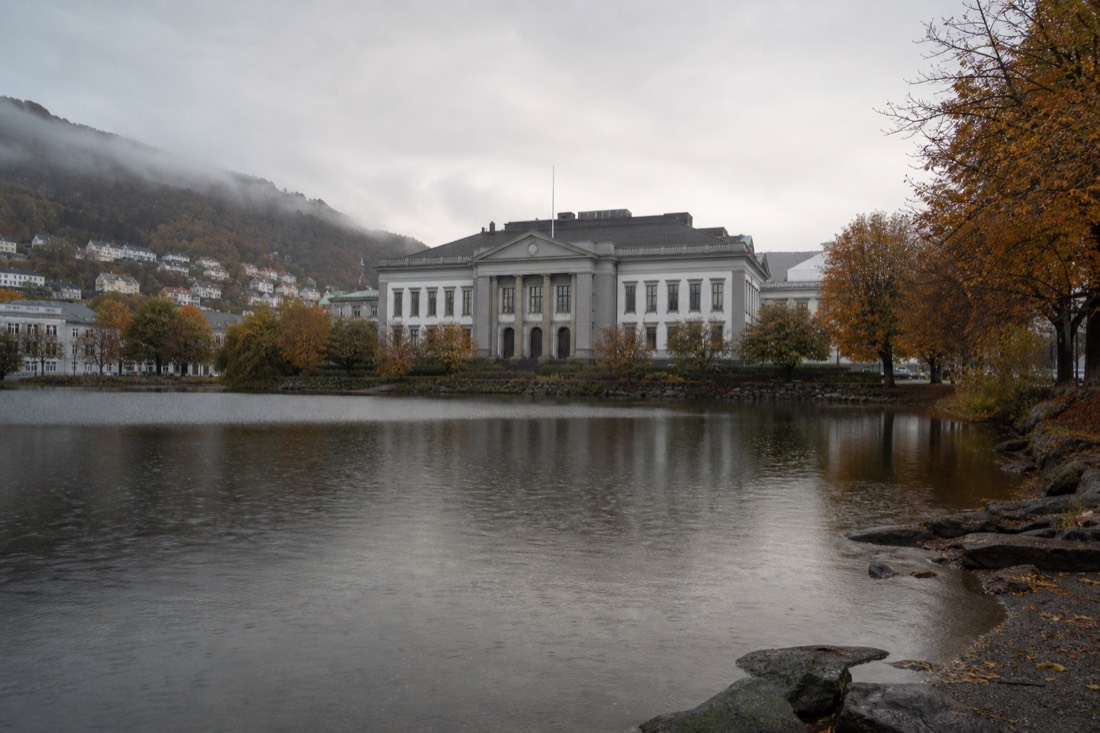
The Munch rooms alone justify the entry for most visitors, and because the four buildings sit within a few hundred metres of each other around Lille Lungegårdsvannet, you can dip in and out between showers. The composer homes, including Edvard Grieg's, are a bus or short drive from the centre and reward a second day rather than a squeezed afternoon.
Is Bergen A Base Or A Destination?
Both, which is why it earns more nights than its size suggests. The city itself is a comfortable one-day visit, but it is also the best fjord base in Norway, and those two roles stack rather than compete.
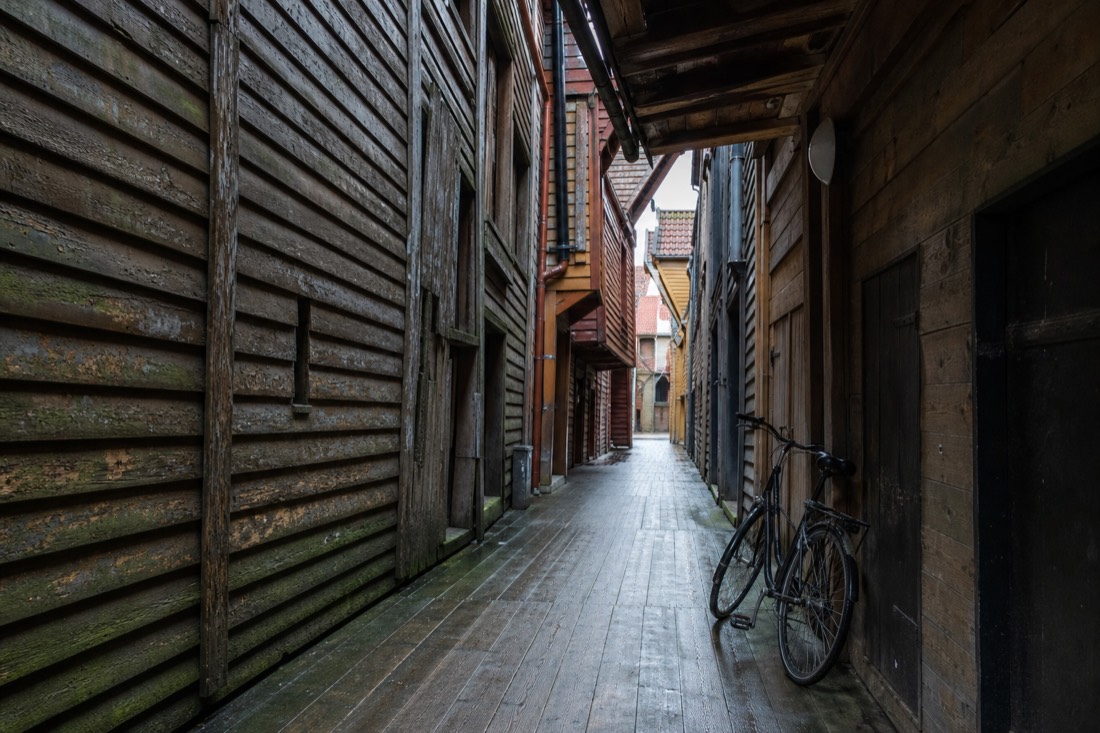
Bergen is compact, and much of what makes it enjoyable is atmospheric rather than tick-list: the wooden alleys behind Bryggen, the harbour in changing light, the walk up the hillside. That rewards unhurried time more than extra days.
| Nights | What fits | Suits |
|---|---|---|
| 1 | Bryggen, fish market, one viewpoint | A stopover before the fjords |
| 2 | The above plus a full fjord day | The recommendation for most trips |
| 3 | Add Hardanger or a second cruise | Fjord-focused trips |
| 4+ | Day trips further afield | Using Bergen as a regional base |
If you are choosing between a third Bergen night and a night in Flåm or Voss, take the fjord village. Bergen is at its best in two well-used days.
Where Do Bergen Residents Actually Eat?
Away from the harbour. Bakeries for skillingsboller and open sandwiches, supermarket seafood counters for cooked shrimp, and neighbourhood restaurants a few streets uphill from Bryggen where the same quality costs noticeably less.
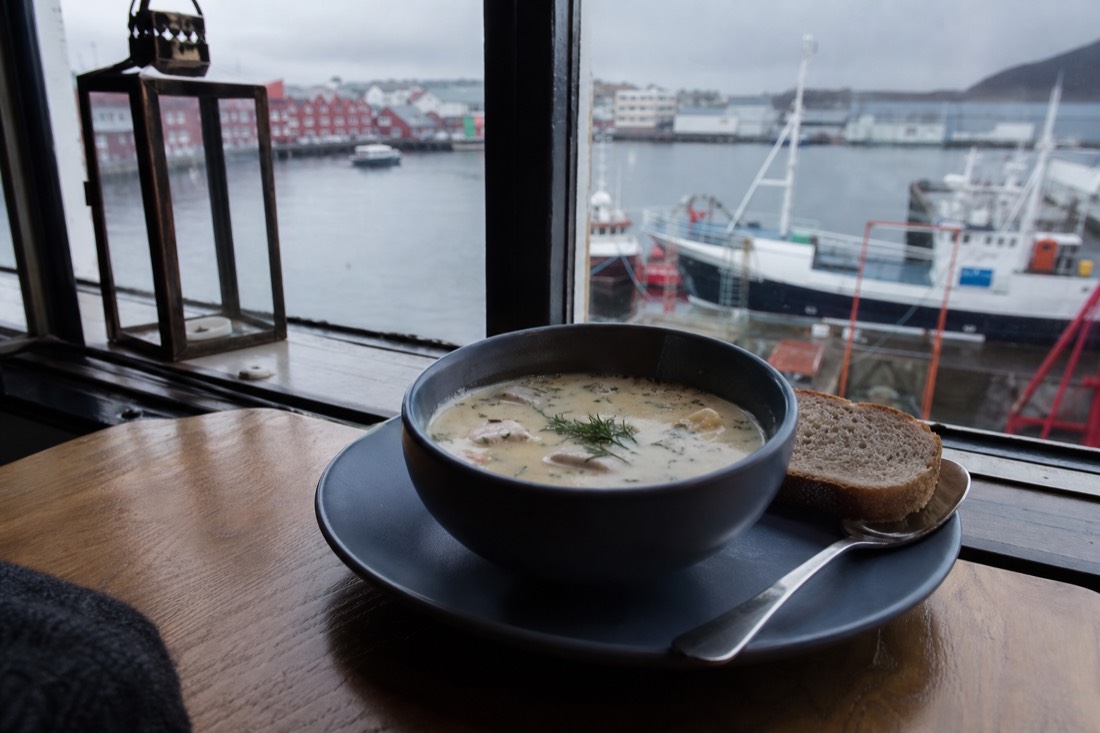
Bergen's food reputation is built almost entirely on one waterfront block, which is also its most expensive. Walk five minutes in any direction and the prices fall while the quality does not, which is the pattern in most harbour cities and is unusually pronounced here.
| Where | What to get | Why |
|---|---|---|
| Bakeries | Skillingsbolle, open sandwiches | Cheap, everywhere, genuinely local |
| Supermarket seafood counter | Cooked shrimp by weight | What residents buy for a harbour picnic |
| Streets uphill from Bryggen | Neighbourhood restaurants | Same quality, lower rent, lower prices |
| Indoor food hall | Sit-down seafood | Year-round, better value than the outdoor stalls |
| Anywhere | Fish soup | The reliable best-value order in the city |
Prices at the outdoor stalls are worth checking before you commit. Some are quoted by weight rather than per portion, which is how visitors end up with an unexpectedly large bill for a seafood platter. Asking the price of the exact portion you want, before it is assembled, is entirely normal and avoids the most common complaint about the market.
Getting around is a non-issue, which shapes how you use your time. The centre, Bryggen, the fish market, the funicular base and most museums sit within a fifteen-minute walk of each other, so no day here needs planning around transport. That compactness is exactly why two unhurried days beat three rushed ones.
Fish soup remains the honest recommendation wherever you order it. It is a Bergen staple, it is filling, and it costs a fraction of a seafood platter assembled for photographs.
How Do You Plan A Bergen Day Around 200 Rainy Days A Year?
Assume rain and book accordingly, rather than holding the good things back for a clear day that may not arrive. With 200 to 240 wet days a year, a wait-and-see plan usually means leaving without having done the fjord trip at all.
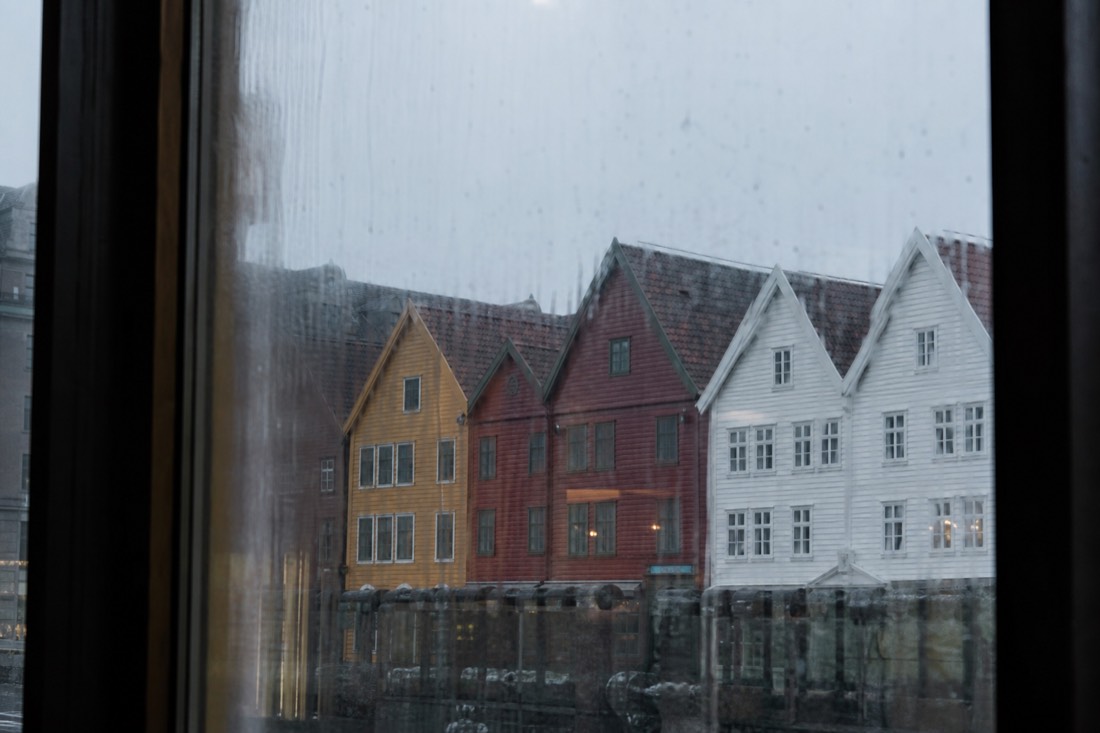
Bergen has organised itself around rain more thoroughly than any other Norwegian city. Locals do not reschedule around it, and visitors who try to will lose most of their trip.
| Weather | Still works | Postpone |
|---|---|---|
| Steady rain | Fjord cruise, museums, Bryggen, Mathallen | Fløibanen viewpoint |
| Low cloud | Fjord cruise; the walls look better | Ulriken and Fløyen |
| Wind | Most cruises sail; check the operator | Exposed ridge walks |
| Clear spell | Go straight up the funicular | Nothing |
Treat the funicular as opportunistic rather than scheduled: buy the ticket when the sky clears, not the night before.
What Is Worth Doing Beyond The Standard Bryggen Circuit?
Three things: the second cable car up Ulriken for a higher and quieter view, the residential wooden streets above the centre, and a working-harbour walk away from the tourist quay. All are free or cheap and take the city out of postcard mode.
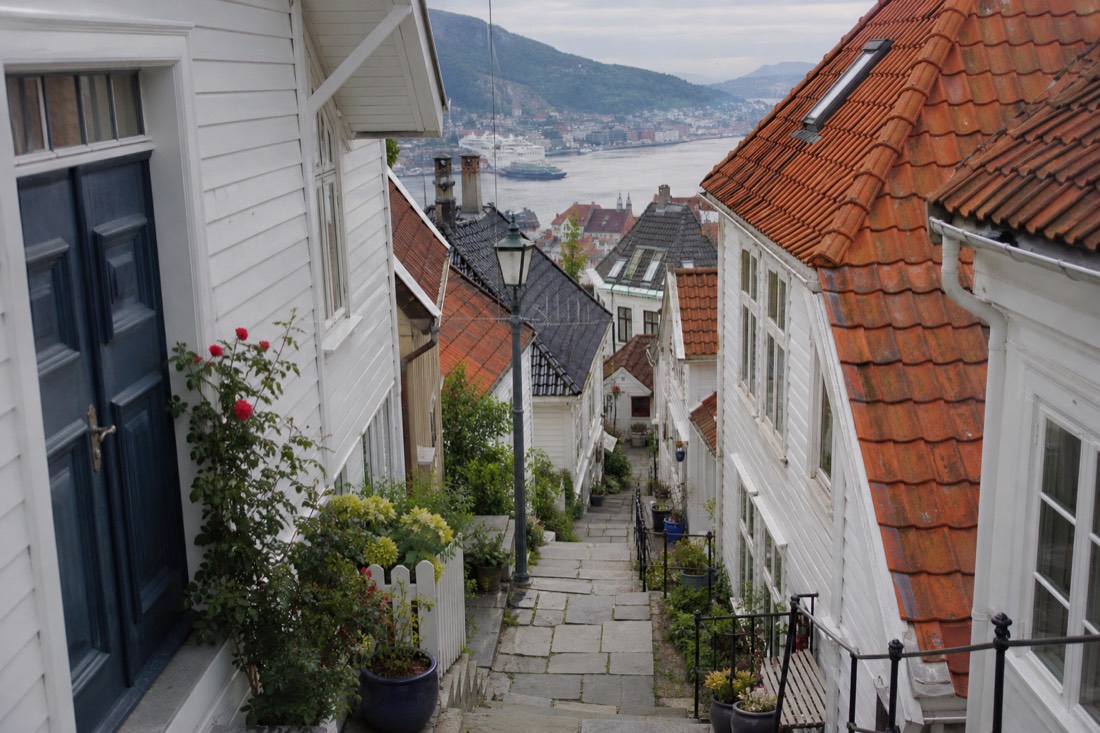
Bergen's tourist circuit is small enough to complete in a morning, which leaves most visitors wondering what to do with the rest of a two-day stay. The answer is usually uphill and slightly out of the centre.
| Beyond the circuit | What it is | Time |
|---|---|---|
| Ulriken cable car | Higher than Fløyen, far fewer people | Half a day with a walk |
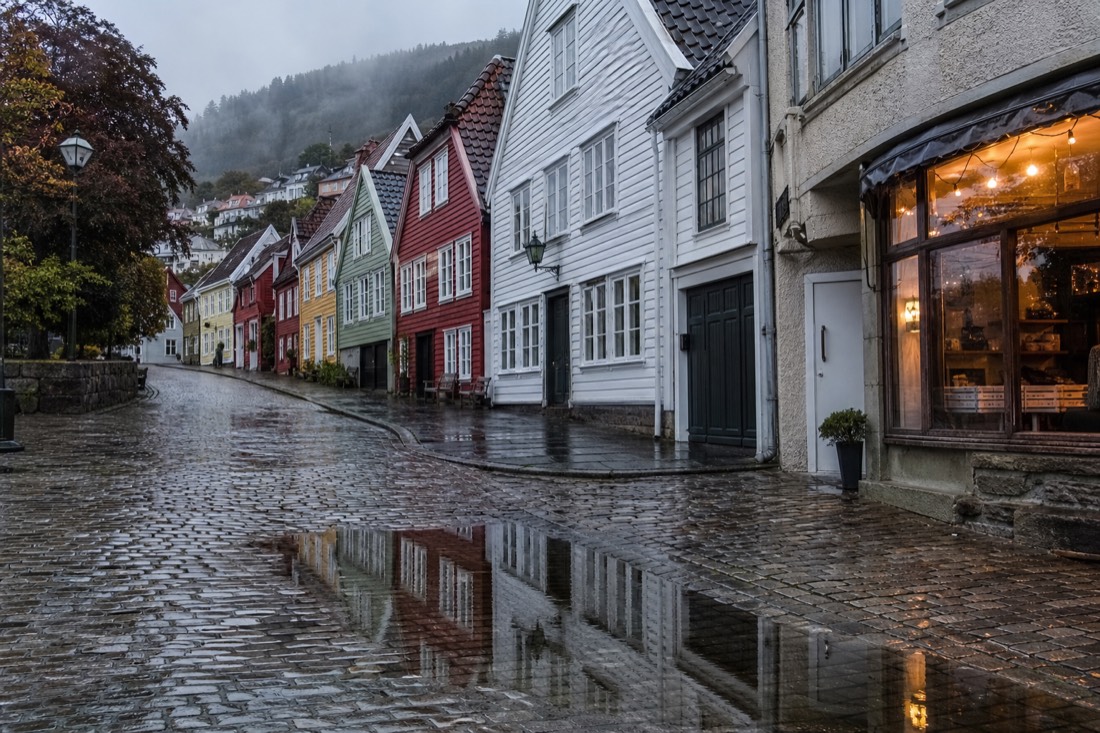
| Wooden residential streets | Steep painted lanes above the centre | An hour of wandering |
| Working harbour walk | Boats and warehouses, no souvenir stalls | An hour |
| Fantoft-style stave church architecture | Distinctive Norwegian timber building | Half a day with transport |
| Composer and museum houses | Quiet, specialised, uncrowded | Two to three hours |
| The ridge walk between the two peaks | Fløyen to Ulriken on foot | A full, demanding day |
Bergen also rewards simply sitting still for a while: the harbour, a coffee and an hour of watching boats is a legitimate use of an afternoon here, and it is what residents do.
Museum opening hours are the one thing worth checking the night before, since several run reduced winter schedules and a couple close one day a week. That is easily absorbed with two days in hand and genuinely annoying on a single-day stop.
The last row is a genuine hike rather than a stroll, and it is the local answer to what to do with a clear day in Bergen. It needs proper footwear and a forecast you trust.
Wear shoes with grip, because the lanes are steep, cobbled and frequently wet, and the climb is the whole point of going up there in the first place.
The wooden residential streets are the underrated entry on this list. They are where Bergen still looks like the town Bryggen came from, they cost nothing, and almost nobody with a cruise-ship day ticket ever climbs that far.
How Should You Order Two Days In Bergen?
Give day one to the compact centre: Bryggen, the fish market, the funicular when the cloud lifts. Give day two to the water, either a half-day cruise from the quay or a full fjord day trip. Keep the museums as floating cover for whichever half-day the weather takes away.
| Bergen stay | What fits comfortably | What to skip |
|---|---|---|
| 1 day | Bryggen, fish market, Fløibanen, harbour walk | Any fjord trip longer than 3.5 hours |
| 2 days | The above plus a half-day fjord cruise and KODE | The full-day Flåm and Nærøyfjord run |
| 3 days | Add a full-day fjord trip or Mount Ulriken | Nothing, this is the comfortable length |
| Rainy stay | Museums, Mathallen, cruise, Hanseatic interiors | Summit views, long ridge hikes |
Locals will tell you there is no bad weather, only bad clothing, though clothing does not make severe weather safe.
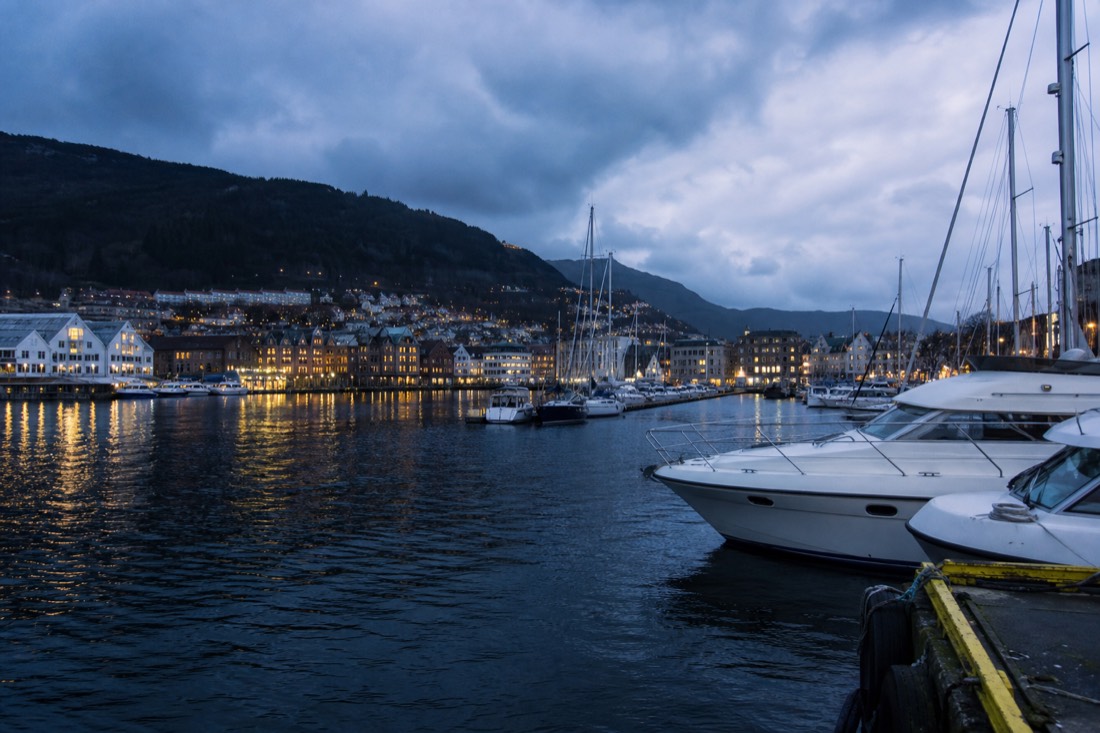
Wet-weather clothing is genuinely the difference between enjoying Bergen and enduring it, and locals treat rain as unremarkable rather than a reason to stay in. Dressed properly, a wet day here is perfectly pleasant, and the harbour under low cloud is arguably better looking than under flat sunshine.
Luggage storage is available at the station and some hotels hold bags before check-in, which turns an awkward early arrival into a usable half day rather than dead time spent waiting for a room.
Arrival timing shapes the first day more than people expect. Cruise ships dock in the morning and the centre fills between roughly ten and four, so an afternoon arrival walks into the quietest part of the day, while an early one competes with several thousand day passengers for the same few streets.
Related planning: fjord cruise options.
Weather gear is the other thing to sort before your first morning rather than during it. Bergen sells excellent waterproofs and sells a lot of them to visitors who arrived without any, at prices that reflect the captive market. Packing a proper shell from home is materially cheaper than buying one on Bryggen.
One practical note for arrivals. Bergen is the western end of the Bergensbanen from Oslo, a crossing of six and a half to seven and a half hours with 6 to 7 departures a day, so the city works far better as the finish of a rail journey than as a flight in and out. That framing also answers the question of how long the whole trip should be, which we work through in how many days in Norway.
Choose Your Norway Experience
Mostraumen Fjord Cruise : Operated & Guided by Locals. Cruise from Bergen into Osterfjord and the narrow Mostraumen passage. Have a date in mind? Check it before arranging the rest of your Norway trip.
3 hours 30 minutes. Meet at the pier between Strandkaien Terminal and Mathallen. English audio commentary. Winter ice can require an alternative route.
Choose a date to see scheduled departures. Final availability and price are confirmed on Viator.
No verified experience fits those requirements. Adjust your choices, or keep the independent plan described above.
Compare Options And Fit Your Plans
General recommendation until you choose. Choose the city where the activity starts, not your arrival airport. Month filters describe the experience’s season, not confirmed departures. Allow travel to the meeting point as well as the listed duration. Confirm your exact option and access needs when booking.
- Food and Culture walk: 3 hours. Explore Bergen’s food and harbour history on a three-hour tasting walk with lunch included. Meet at the tourist-information entrance. Ages 5+; the listing requires at least two guests per booking. No specific dietary accommodation is verified.
- Guided tour - Viking Village, Nærøyfjord Cruise and Flåm Railway: 10 hours 30 minutes. Join the Nærøyfjord cruise, Flåm Railway and Viking village in one guided day. Round trip from Strandkaien 16, Bergen. Choose the English option. Food and drinks cost extra. This is a day trip, with no hotel night.
- Guided tour to Hardangerfjord with Waterfalls and Ferry Crossing: 8 hours 30 minutes. Visit Hardangerfjord waterfalls with a guide, minibus transport and a ferry crossing. 8.5 hours from Strandkaien 1, outside tourist information. Ages 4+. Ferry tickets are included; meals are not. Meet 10 minutes before departure.