Norway Tours For Seniors: Comfort Without Compromise
Norway rewards slow travel better than almost anywhere in Europe, because the best scenery is visible from a seat.
 Written with Lars Hansen, Norway Tour Packages Specialist & Experience Guide
Short answer
Fjord boats and scenic trains can reduce walking, but boarding, steps and transfers still matter. Choose by actual access and daily demands, not age alone. Vy senior discounts start at 67 and depend on ticket type.
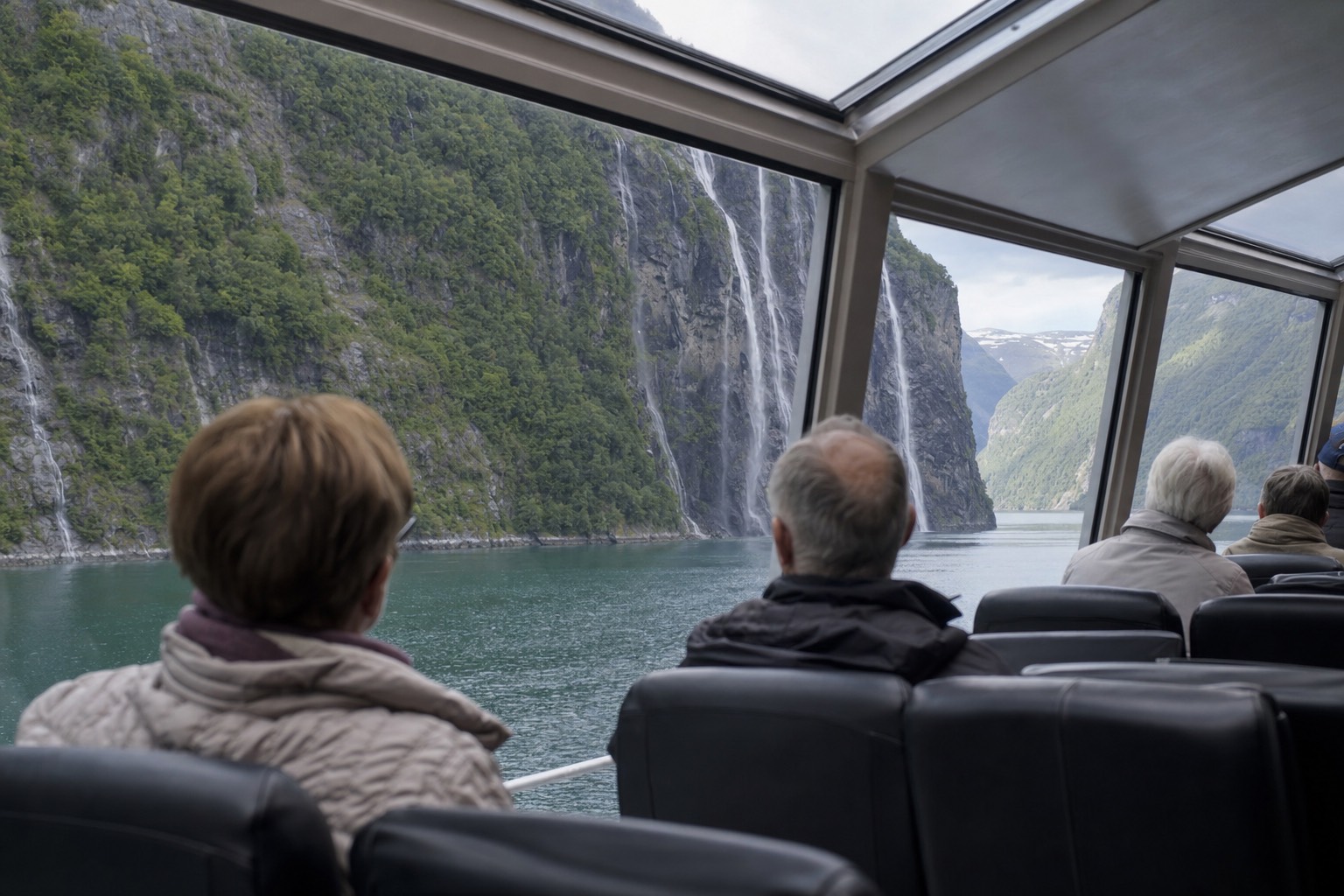
Norway's best views are, unusually, seated views. The country built its tourism around water and rails long before it built it around trails, which means the postcard scenery reaches you through the window of a boat, a train carriage or a bus on a mountain road. That changes the calculation for anyone who travels at a gentler pace. Elsewhere in Europe, the famous sight sits at the top of something. Here, the famous sight is the thing you sail past for three and a half hours with a coffee in your hand.
Choose by the walking, boarding and transfer demands that suit you. Age alone does not establish whether a tour is comfortable.
Booking choice: The short Geiranger cruise is the starting water-based choice when you are already in town; confirm boarding needs before booking. Explore Geiranger Fjord Sightseeing Cruise : 75 min
What Makes Norway Easy Or Hard For Older Travelers?
Norway is easy on comfort and logistics, and harder on distance and terrain. Many services offer accessible options, but boarding, steps and advance assistance vary by vehicle and station. The difficulties are long transfer days, steep village lanes, and hiking-first attractions that get promoted heavily but suit only sure-footed walkers.
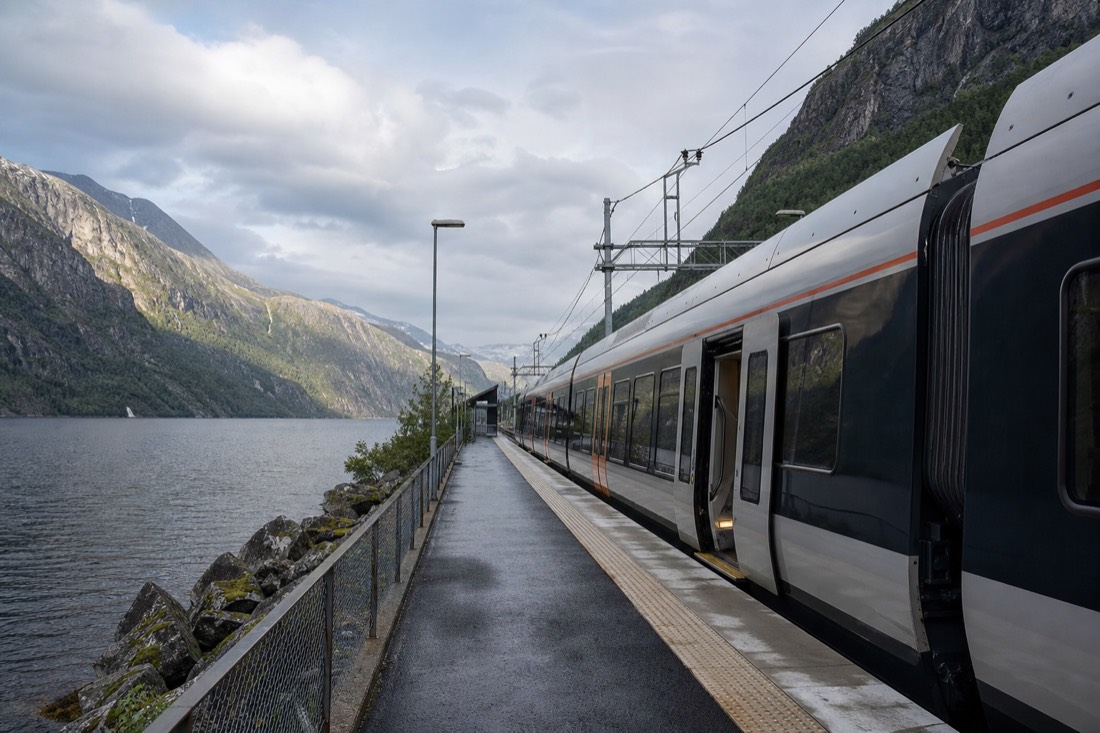
Three practical things work in your favour. Public transport is genuinely accessible, with assistance and access information to check for the exact journey. Payment is frictionless: cards and Apple Pay are accepted almost everywhere, including small ferries, so there is no cash to manage. And tap water is excellent throughout the country, which removes the daily bottled-water errand entirely.
The friction is geography. Norway is long, and the gap between Bergen and Tromsø is roughly the gap between London and Rome. Itineraries that try to include the fjords and the Arctic in one week convert into airport days. A slower plan that picks one region and works it properly gives you more of the country, not less, which is the same argument we make in our guide to how many days Norway really needs.
Which Norwegian Sights Need The Least Walking?
The fjord cruises, the Flåm Railway and the Bergen to Oslo line ask almost nothing of you physically. The Flåm Railway climbs 866 metres over 20.2 kilometres in about an hour, all of it seated. Short harbour sailings from Bergen run year-round and involve one gangway.
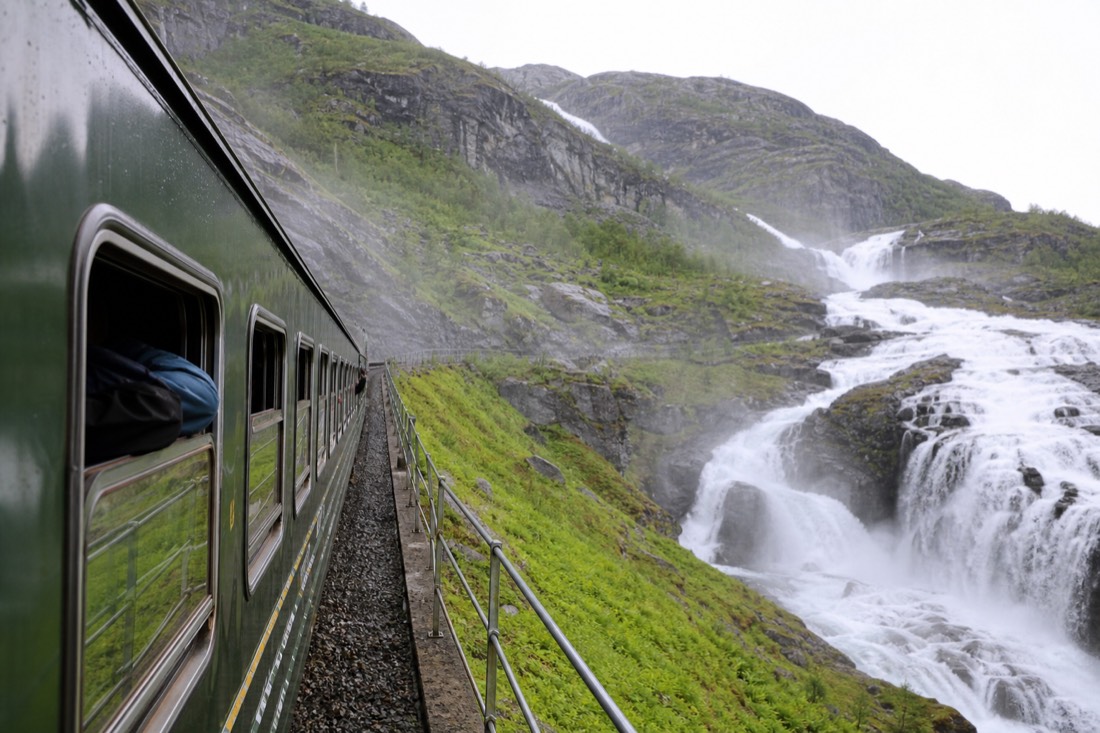
The Flåm Railway is the clearest example of Norway handing you a hard-to-reach landscape without asking you to earn it. Operated by Flåm Utvikling under Vy, it runs between Flåm and Myrdal year-round with a maximum gradient of 5.5%, stopping at the Kjosfossen waterfall so passengers can step out for a few minutes if they want to. Tickets come through norwaysbest.com or Vy directly.
Below is how the main options compare on physical effort. The ratings are what each platform's own reviewers give, not our scoring.
| Experience | Effort level | Duration | Rating on platform |
|---|---|---|---|
| Mostraumen cruise from Bergen | Very low, one gangway | 3.5 hours | Check current listing |
| Mostraumen cruise with local guides | Very low | 3.5 hours | Check current listing |
| Geiranger sightseeing cruise | Very low | 75 minutes | Check current listing |
| Oslofjord silent electric cruise | Very low | 2 hours | Check current listing |
| Viking village, Nærøyfjord cruise and Flåm Railway from Bergen | Low to moderate, long day | 10.5 hours | Check current listing |
| Flåm Railway, Nærøyfjord and Stegastein viewpoint | Moderate, very long day | 13 to 14 hours | Check current listing |
Related planning: fjord sailings we track.
Are Guided Multi-day Trips Worth The Extra Cost?
For most older travelers, yes. An escorted trip removes the two things that tire people out, which are luggage transfers and daily route decisions. You pay a premium over doing it yourself, and in exchange you get the accommodation and transport specified by that itinerary; hotel standard and access vary.
The honest counter-argument is cost and flexibility. Independent travel in Norway is entirely doable at any age, because the infrastructure is so good, and it costs less. What it does not remove is the mental load: eight connections in ten days, each one your responsibility. We compare the two approaches in detail for the classic route in Norway in a Nutshell, do it yourself or guided.
The escorted itineraries we track sit at the comfortable end of the market rather than the backpacking end:
| Trip | Operator via TourRadar | Length | Rating | Suits |
|---|---|---|---|---|
| Norwegian Fjords from Oslo | Cosmos | 11 days | Check current listing | Check hotel standard, coach steps and daily walking |
| Fjords Escape with aurora | Globus | 10 days | Check current listing | Oslo–Tromsø route; aurora excursion optional |
Read the daily itinerary line by line before booking, not the headline. The word to look for is "optional" beside anything described as a walk or a hike, because that tells you the coach is waiting either way. The full set is on our escorted trips page.
What Should You Skip Or Approach Carefully?
Skip Trolltunga unless you are a strong hiker. It is a strenuous mountain day; P2 takes about 8–12 hours, and winter needs specialist preparation. Preikestolen is moderate to difficult over roughly four hours round trip, with uneven rock. Kjeragbolten is exposed. None of these are casual afternoon walks despite how they are marketed.
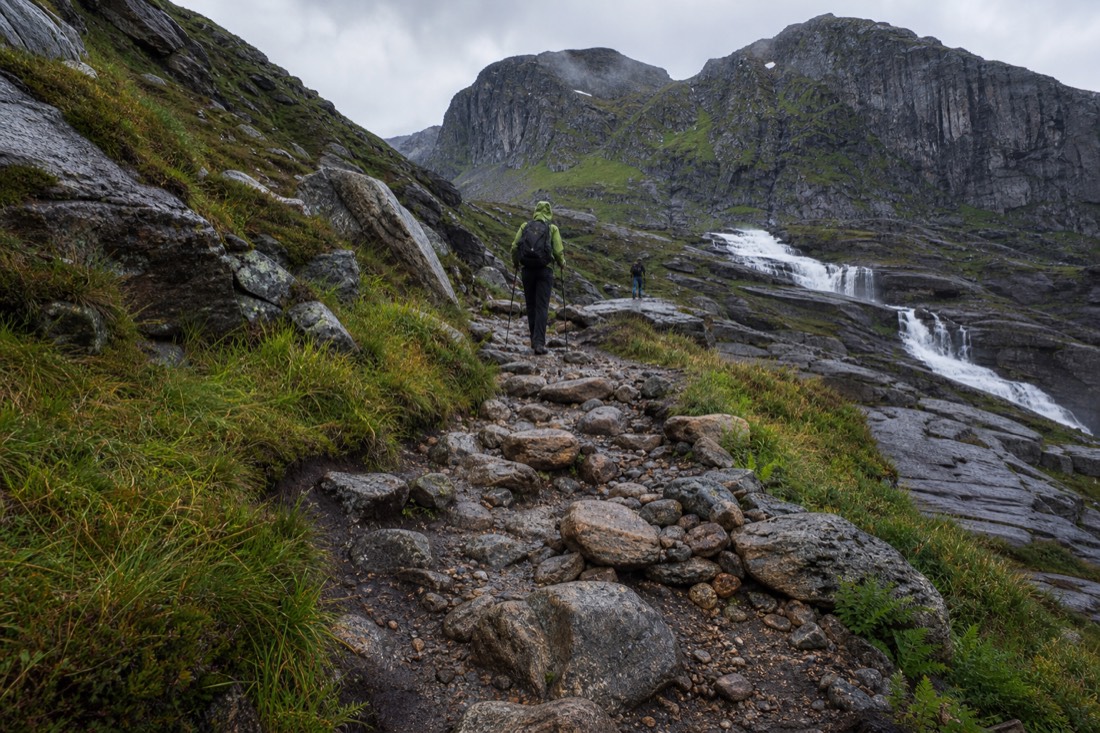
The gap between the photograph and the reality is wider for Norway's famous cliffs than for almost any other attraction in the country. These are unfenced rock formations reached on natural trails, not viewing platforms. Preikestolen in particular gets recommended casually because the round trip sounds short, but the ground is loose stone and boulder steps, and some sources put the realistic total closer to four hours once you allow for crowds at the top.
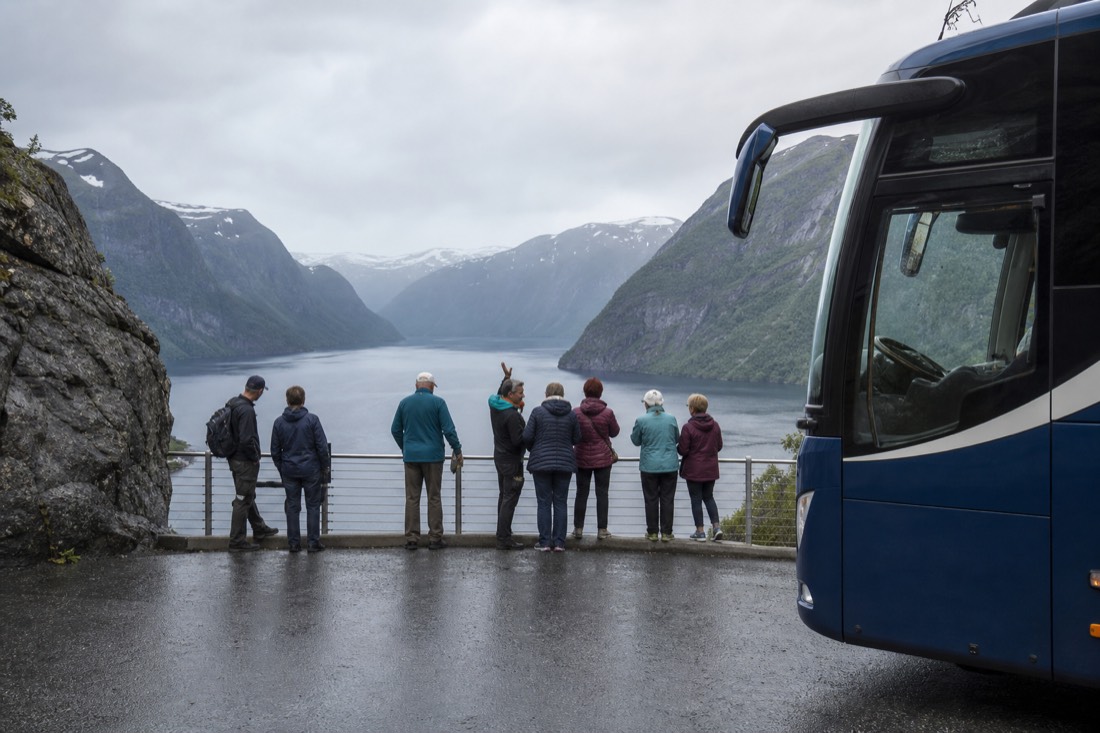
The good news is that the alternatives are strong. Stegastein and the Norwegian Scenic Routes viewpoints, catalogued at nasjonaleturistveger.no, put you at a railing with a fjord below and a car park behind you. Trollstigen, which opened for the 2026 season on 29 April and normally runs into October or November depending on weather, delivers a comparable view from a road.
How Do Trains And Boats Compare For A Slower Pace?
Boats are the most comfortable, with lounges, toilets, food service though motion and sea conditions can vary. Trains are close behind and cover more ground: the Bergen to Oslo line takes roughly six and a half to seven and a half hours. Buses are the least comfortable of the three.
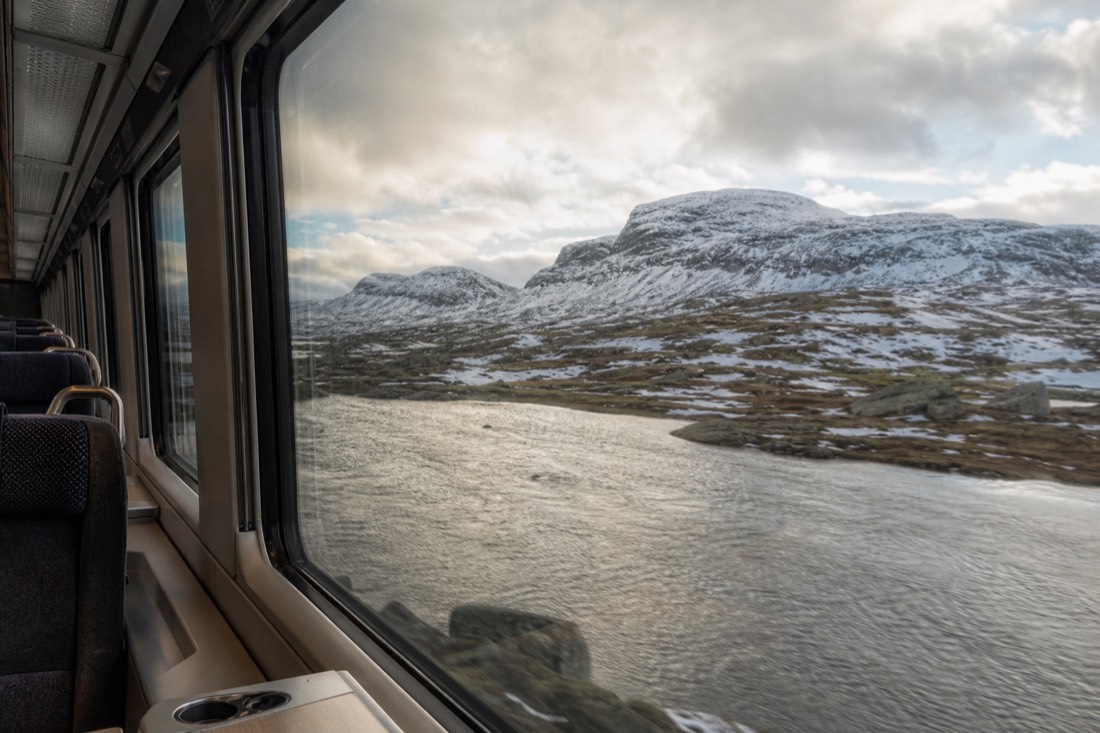
The practical difference is toilets and warmth. On a fjord sightseeing boat you can move between an outdoor deck and a heated saloon whenever you like, which matters in a country where the weather changes inside an hour. On a long guided coach day, comfort stops are scheduled rather than available on demand, so the 13-hour combination days are worth thinking hard about even if the scenery is the best on the list.
| Mode | Comfort | Toilets | Weather protection | Best use |
|---|---|---|---|---|
| Fjord boat | Highest, indoor and outdoor space | On board | Full, heated saloon | Half-day scenery without effort |
| Long-distance train | High, reserved seats | On board | Full | Moving between regions, Oslo to Bergen |
| Flåm Railway | High, short and seated | On board | Full | The signature mountain descent |
| Guided coach day | Moderate, fixed seat | Scheduled stops | Full | Reaching places transit does not serve |
| Local ferry | Moderate, basic | Usually | Partial | Short island and fjord crossings |
What Discounts And Practical Details Are Worth Knowing?
Vy gives a senior discount on rail tickets from age 67, verified with ID. Cards and Apple Pay work almost everywhere, so cash is unnecessary. Tipping is optional, 5 to 15% for genuinely excellent service. US visitors need no visa for a Schengen stay of up to 90 days in 180.
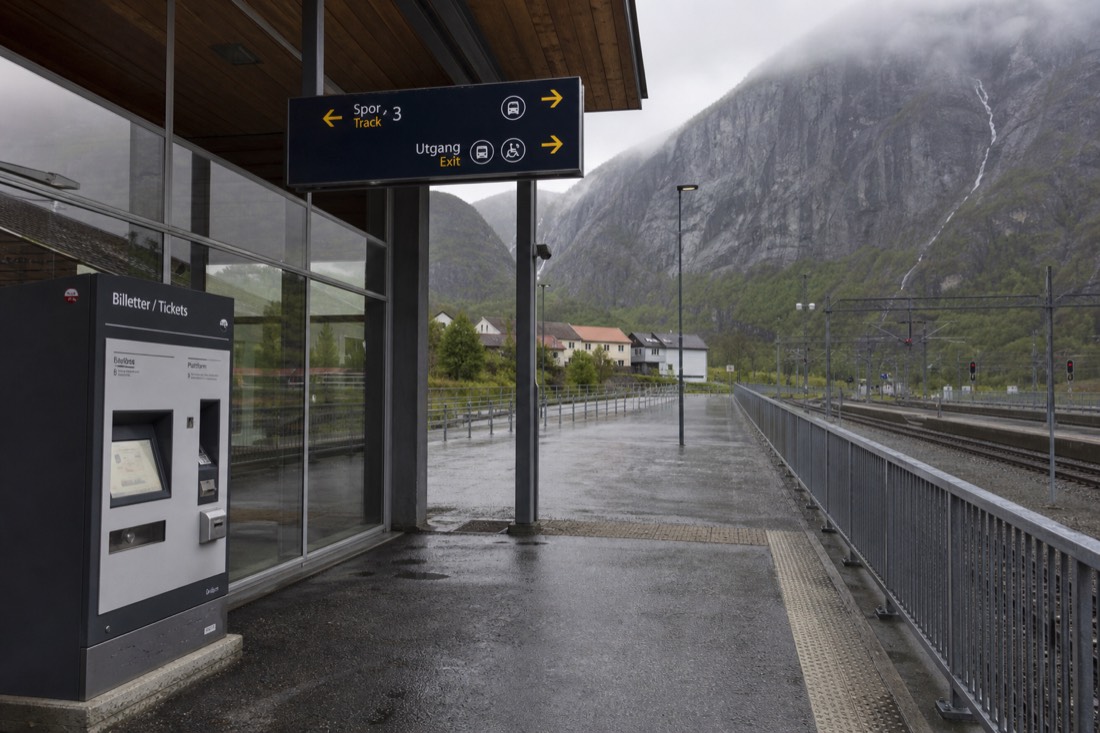
Book rail tickets early. Vy's cheapest advance fares are released well ahead and disappear as the date approaches, and senior reductions depend on the ticket type rather than automatically stacking with the cheapest advance fare. Full conditions sit on Vy's discount page.
On entry rules, nothing has changed for American passport holders. There is no visa requirement for a tourist stay inside the Schengen limits, and ETIAS, the planned European travel authorisation, is not operational yet despite the amount of confident misinformation floating around about it.
Which Norwegian Experiences Are Hardest On Mobility, And What Replaces Them?
The three famous rock hikes, the steep Lofoten viewpoints and any self-drive husky tour are the genuine barriers. Every one of them has a seated or short-walk substitute that reaches comparable scenery: cable cars, fjord cruises, scenic rail and the Stegastein viewpoint by road.
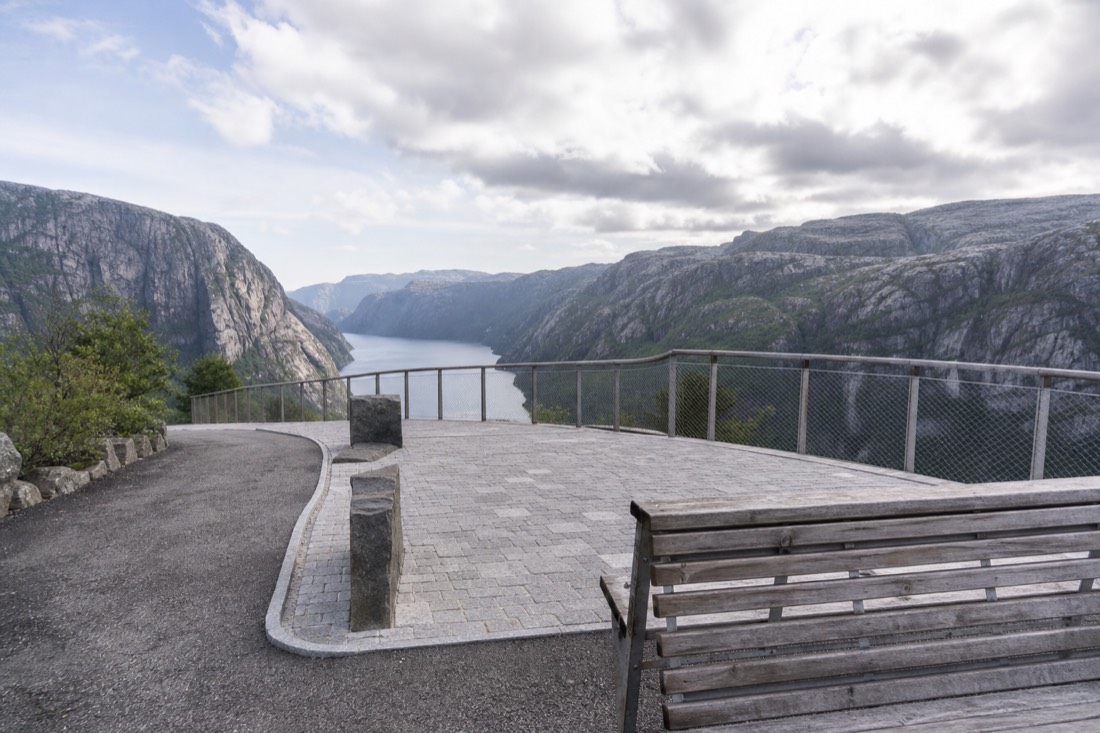
Norway is unusually good at this because the country built infrastructure to reach its own scenery long before tourism arrived. Funiculars, coastal ferries and mountain railways were transport first and views second, which is why so many of the best sightlines involve sitting down.
| Hard on mobility | What it demands | The substitute | What you keep |
|---|---|---|---|
| Preikestolen | About four hours round trip, uneven rock | Lysefjord cruise from Stavanger | The cliff seen from below, which many prefer |
| Trolltunga | 10-12+ hours, strenuous | Hardangerfjord scenic drive or cruise | Fjord scenery without the same mountain hike |
| Reinebringen in Lofoten | Steep stone staircase | Coastal road viewpoints around Reine | The village-and-peaks composition |
| Self-drive husky sledding | Standing, steering, cold hands | Sled ride as a seated passenger | The dogs, the trail, the silence |
| Long aurora chases | Late nights, minibus hours | Shorter chases or coastal aurora sailings | Reasonable odds, earlier bed |
| Flåm Railway platform crush | Crowds and steps | Book a guided day where seating is arranged | The 866-metre descent itself |
Escorted multi-day packages are the other structural answer, because a tour director absorbs the parts that get harder with age: luggage, connections, and knowing which door the coach is behind.
What Should You Ask An Operator Before Booking?
Ask five things: total walking distance and surface, how long the longest continuous standing period is, whether coaches have a lift or high steps, how far the hotel is from the evening meal, and what the real cancellation window is if health changes.
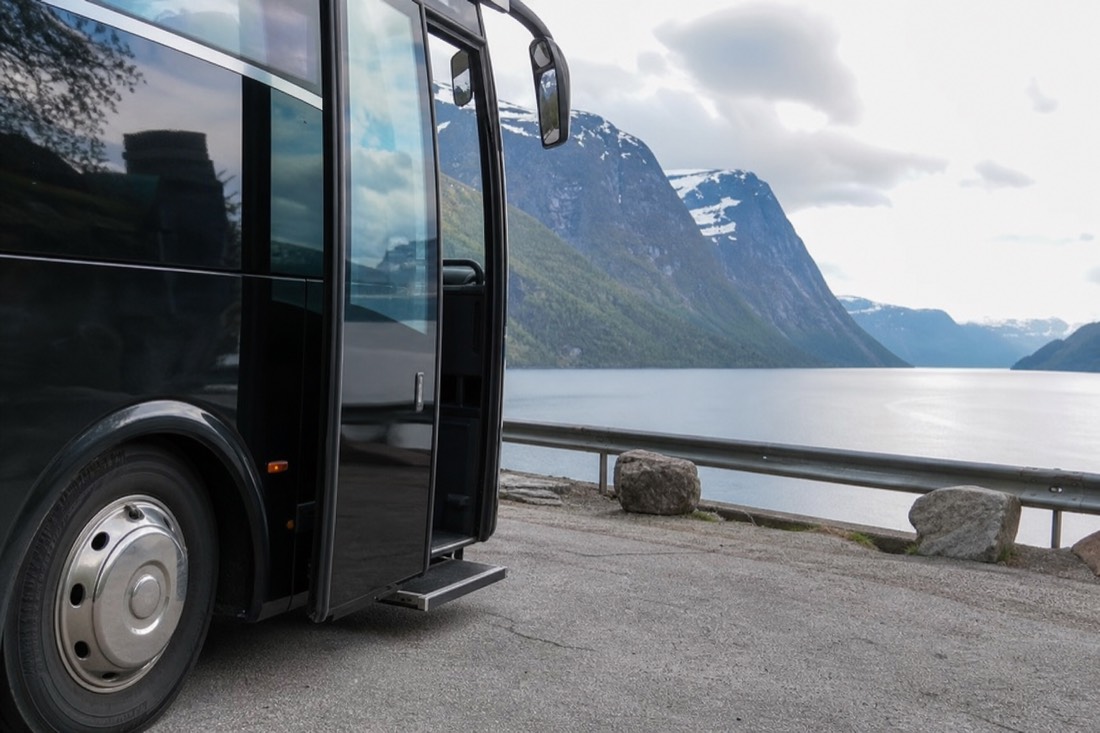
Listings answer none of this reliably, and the phrase "low intensity" is doing a lot of unexamined work across the industry. The questions below are worth an email before you book, and reputable operators answer them without fuss.
| Question | Why it matters | A good answer sounds like |
|---|---|---|
| How far do we walk, on what surface? | Distance matters less than cobbles and ice | A stated distance plus surface type |
| Longest time on our feet without a seat? | Standing is harder than walking for many | A specific number of minutes |
| Coach access: lift, or steps? | Determines whether every stop is available to you | A clear yes or no, not "most people manage" |
| Distance from hotel to dinner? | A ten-minute walk in sleet after a long day is real | Named hotel, stated distance |
| Cancellation if health changes? | The most likely reason a senior traveller cancels | A written policy with a date |
Two of the packages this site tracks are rated low intensity with all ages welcome and small group caps, which is the profile worth starting from. Whichever you choose, get the answers in writing rather than over the phone.
What Does Lars Check Before Recommending A Package To An Older Traveller?
Four things: the longest unbroken standing period, how many nights are single-night stops, whether luggage is handled between hotels, and how far the evening meal sits from the room. Those decide comfort far more than the advertised intensity rating.
Since 2015 Lars has planned a lot of trips for travellers in their seventies and eighties, and the pattern is consistent: the difficulty of a Norway package almost never comes from the scenery. It comes from the connective tissue between the scenery, and that is the part listings describe least.
| What to check | Why it decides comfort | The better shape |
|---|---|---|
| Single-night hotel stops | Repacking every evening is the real fatigue | Two-night bases wherever possible |
| Luggage handling | Stairs and gravel with a case is the hard part | Porterage included, or coach-door delivery |
| Standing time at viewpoints | Harder than walking for many travellers | Seating or a short return to the coach |
| Distance from room to dinner | Ten minutes in sleet undoes a good day | Hotels with restaurants on site |
| Group size | Large groups move slowly and wait outdoors | Smaller caps, even at higher cost |
| Pace of the first day | Jet lag plus a full itinerary is a bad opening | A light arrival day |
Of the packages this site tracks, the ones rated low intensity with all ages welcome and smaller group caps fit this profile best. The eight-day Oslo round trip is fully guided at 4 to 30 travellers; the seven-day Trondheim-to-Oslo route carries up to 72, which is a materially different experience.
Is Travel Insurance Different For An Older Traveller Here?
The policy matters more than the destination. Norway is safe, well-equipped and has excellent medical care, but it participates in the EEA healthcare arrangements for eligible visitors; confirm your own EHIC or reciprocal entitlement, and remote Arctic locations make evacuation the expensive scenario worth covering.
Health and insurance needs depend on your circumstances and planned activities. What changes the insurance calculation is geography: a problem in central Oslo is straightforward, and the same problem on a boat off Skjervøy in January is not.
| Consideration | Why it matters here |
|---|---|
| Norway is not in the EU | Eligible visitors can use EEA healthcare arrangements; confirm your own entitlement |
| Remote Arctic activities | Evacuation cover is the line that matters |
| Pre-existing conditions | Must be declared or the policy may not respond |
| Cancellation for health reasons | The most likely claim on a senior trip |
| Winter activity exclusions | Some policies exclude sledding or snowmobiling |
| Boat-based excursions | Check they are covered as standard |
Read the activity exclusions before booking anything on snow or water. A policy that quietly excludes dog sledding is a common and unwelcome discovery, and swapping to a seated sled ride does not always resolve it.
How Many Days, And At What Pace?
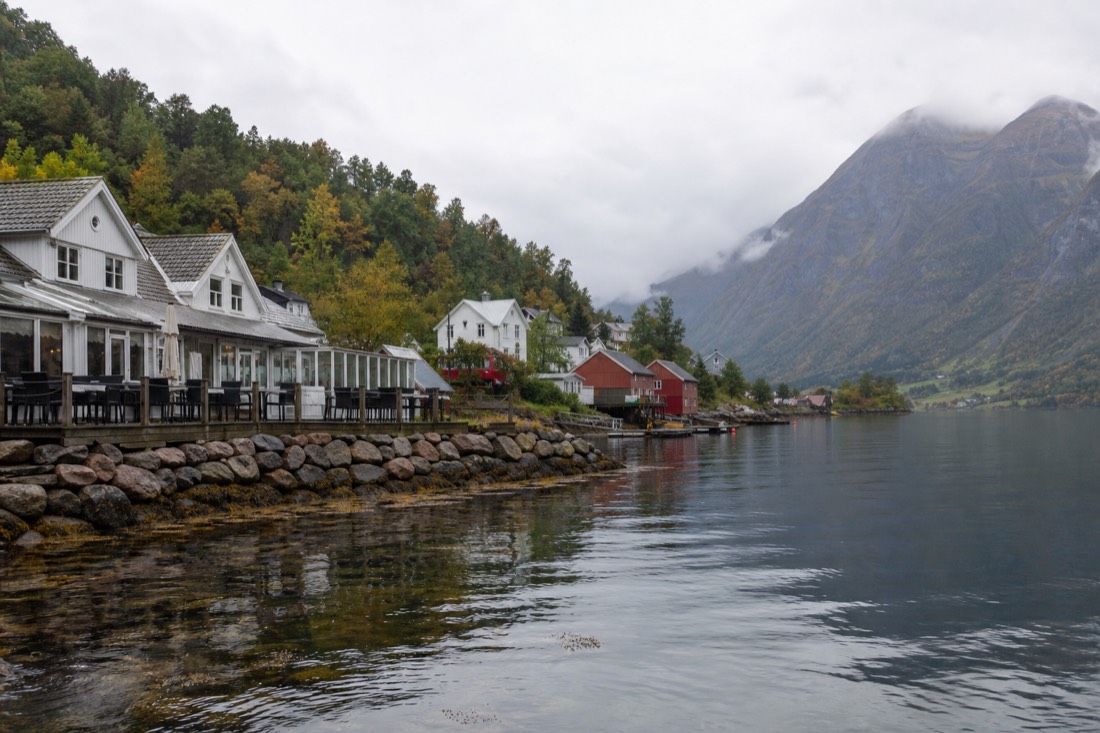
Plan one region per week and no more than one moving day in three. A comfortable first trip is Bergen plus the fjords over six or seven nights, with two full rest or light days built in. Anything that adds the Arctic on top needs ten days minimum to avoid becoming an airport tour.
| Day | Type | Example | Why it works |
|---|---|---|---|
| 1 | Arrival, light | Bergen wharf, no excursion | Recovers the flight |
| 2 | Half day out | Short fjord cruise | Big scenery, back by afternoon |
| 3 | Rest or city | Museums, funicular, market | No packing, no timetable |
| 4 | Full day out | Railway and fjord combination | The one long day of the week |
| 5 | Rest | Slow morning, short walk | Recovery after the long day |
| 6 | Transfer | Train toward Oslo | Scenery counts as the activity |
| 7 | City, light | Oslo harbour and one museum | Ends flat, not rushed |
That rhythm, one big day followed by one soft day, is what separates a trip people finish happily from one they finish exhausted. Bergen is a good base precisely because so much is reachable and back within an afternoon, which we break down in our roundup of day trips from Bergen. Check current opening and seasonal service on visitnorway.com before you fix anything, since several of the best low-effort options are summer-only.
Helsenorge explains healthcare rights for eligible visiting tourists. These arrangements do not replace comprehensive travel insurance.
Choose Your Norway Experience
Geiranger Fjord Sightseeing Cruise : 75 min. See Geirangerfjord from the water on a 75-minute sightseeing cruise. Have a date in mind? Check it before arranging the rest of your Norway trip.
1 hour 15 minutes. Start and finish at Geiranger harbour. Arrive 15 minutes early. English audio guide; drinks cost extra. Allow separate travel time to Geiranger.
Choose a date to see scheduled departures. Final availability and price are confirmed on Viator.
No verified experience fits those requirements. Adjust your choices, or keep the independent plan described above.
Compare Options And Fit Your Plans
General recommendation until you choose. Choose the city where the activity starts, not your arrival airport. Month filters describe the experience’s season, not confirmed departures. Allow travel to the meeting point as well as the listed duration. Confirm your exact option and access needs when booking.
- Stavanger Silent Lysefjord and Pulpit Rock Cruise by Hybrid Boat: 3 hours 30 minutes. See Preikestolen from below and cruise past Lysefjord waterfalls with an English-speaking guide. 3.5 hours from Strandkaien near Stavanger tourist information; arrive 15 minutes early. Lunch is excluded. The cruise does not take you onto the Preikestolen plateau.
- Half Day Arctic Fjord Cruise from Tromso: 4 hours. Explore Arctic fjords on a hybrid-electric boat with an English-speaking guide. Four hours from the pier beside Skarven Kro, Kaigata 6; arrive 15 minutes early. Food and drinks cost extra. Stops and underwater-drone use depend on conditions. This is a daytime fjord cruise, separate from whale watching or midnight sun.
- Cosmos Norwegian Fjords: 11 days. Travel from Oslo through southern Norway, Bergen and the western fjords on an 11-day guided circuit. Oslo round trip with accommodation and English guiding. Check the dated itinerary, room arrangement and included meals. Geiranger cruising is an optional extra; low intensity does not establish wheelchair access.