The Cheapest Months To Fly To Norway In 2026
The cheapest month to fly to Norway is usually deep winter, with January and February lowest. Here is why, which shoulder weeks beat them, and what cheap dates cost you.
 By Lars Hansen, Norway Tour Packages Specialist & Experience Guide
Fares into Oslo and Tromsø do something unusual: they follow the sun. Norwegian tourism has two hard peaks, one built on 24-hour daylight and one built on darkness, and the weeks that fall between them are quiet enough to move prices. That is why the same seat can swing wildly across a calendar year, and why the cheapest ticket is rarely the one nobody wants. It is usually the one people have not thought about yet.
A low airfare helps only if your chosen experience runs in that season and starts near your base.
Booking choice: For a winter Tromsø trip, compare an aurora night with your flight and hotel dates. Bergen and Oslo outings start elsewhere. Explore Tromsø Northern Lights Chase We Go Where The Lights Appear
Which Months Are Cheapest To Fly To Norway?
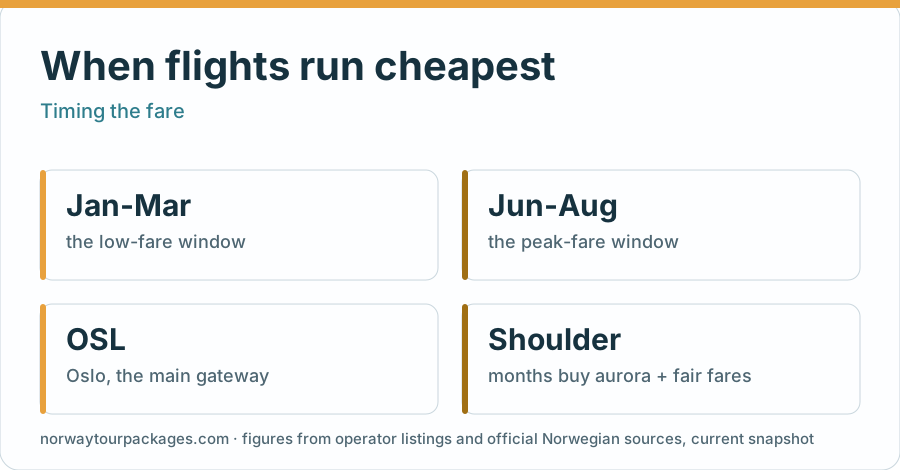
January and February are normally the lowest, once the Christmas and New Year rush has cleared. Late April, May and early November follow as the strongest shoulder windows. July is the peak, because the midnight sun season and the European summer holidays land on top of each other in the same four weeks.

Norway's demand calendar is unusually legible, and once you can read it the fare pattern stops being mysterious. The table below is not about prices, which move constantly. It is about the pressure behind them, which barely changes year to year.
| Month | What is happening in Norway | Demand pressure on fares |
|---|---|---|
| January | Polar night ends mid-month, aurora and whale season running | Low after the first week |
| February | Deep winter, aurora strong, half-term traffic in places | Low to moderate |
| March | Statistically one of the best aurora months | Moderate and rising |
| April | Aurora tails off, mountain passes start reopening | Low, one of the year's best-value windows |
| May | Midnight sun begins 20 May, fjord season opens | Moderate, cheapest in the first half |
| June to July | Midnight sun to 25 July, European holidays | Highest of the year |
| August | Summer winding down, weather still good | High, easing late |
| September | Aurora season restarts late in the month | Moderate |
| October | Whale season opens mid to late month | Low to moderate |
| November | Polar night begins around 27 November in Tromsø | Low until the Christmas market rush |
| December | Christmas, New Year, Arctic winter packages | High in the second half |
If you want the full season-by-season picture rather than just the fare angle, our best time to visit Norway guide compares light, weather and what is open.
Why Do January And February Undercut Everything Else?
Because demand collapses after New Year while capacity stays roughly the same. The Christmas market crowd goes home, the summer fjord market has not started, and only aurora and whale travellers are left. Airlines discount to fill seats, and Norwegian hotels outside Tromsø follow.
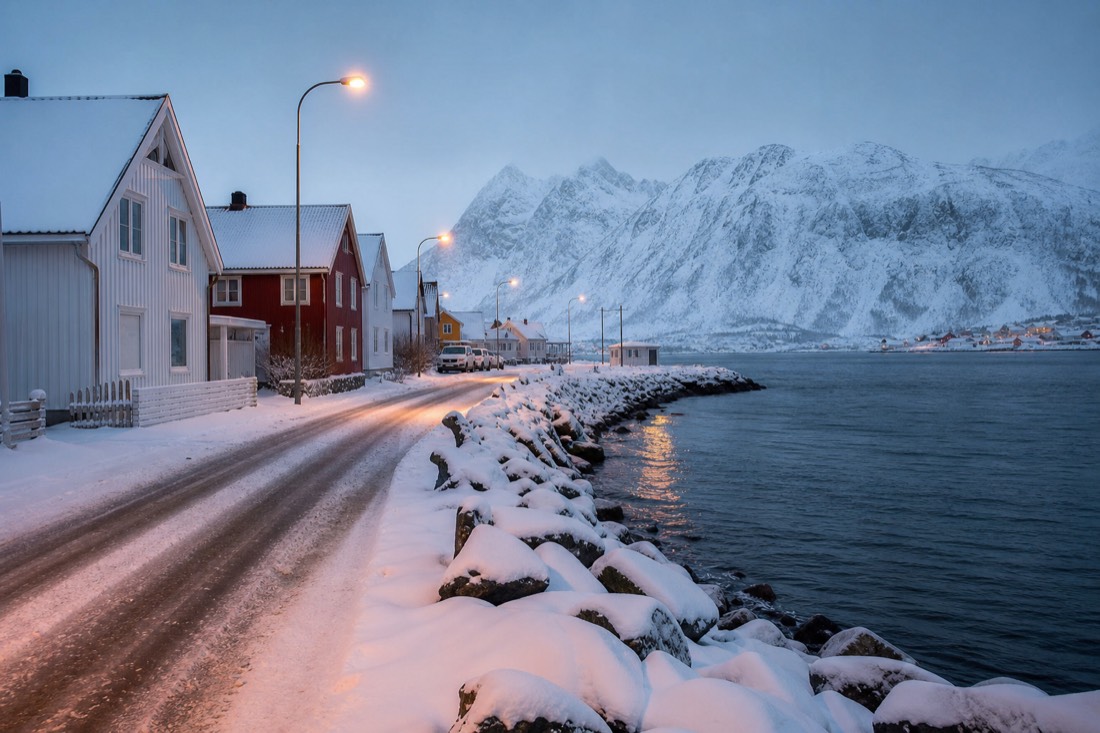
There is a split inside those two months that matters. Tromsø and the Arctic north do not go quiet, because aurora and husky season is in full swing and whale watching runs to the end of January. Oslo, Bergen and the fjord towns genuinely do. So a January flight into Oslo is often the cheapest ticket of the year, while a January flight into Tromsø is competing with peak Arctic demand.
That asymmetry is exploitable. Fly into the cheap gateway, then take a domestic connection north, and you often pay less than flying direct to the Arctic. It costs you a few hours and saves real money.
Are The Shoulder Months A Better Trade?
Often, yes. Late April, May and early October give you moderate fares with far more of the country open. Roads reopen, boats restart, daylight is long, and you avoid both the July crush and the winter closures. The trade is aurora odds, which are poor in May and June.
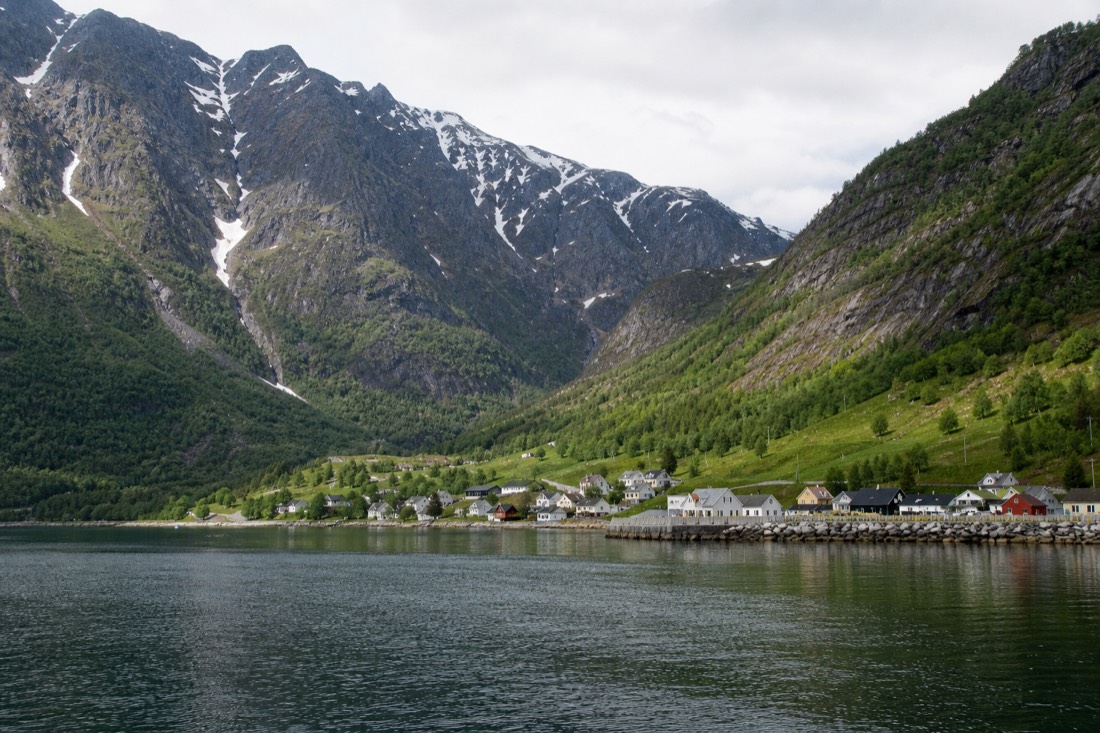
Late April is the sleeper. Trollstigen opened on 29 April in 2026, the fjord cruise season is spinning up, and the summer crowds are still six weeks away. Early October is the mirror image, with autumn colour, the whale season starting mid to late month, and aurora nights returning.
| Window | Fare level | What you get | What you lose |
|---|---|---|---|
| Mid-January to late February | Lowest | Aurora, whales to end January, husky season | Short days, closed mountain roads |
| Late April to mid-May | Low to moderate | Roads reopening, waterfalls at full melt, no crowds | Some high passes still shut |
| Late May to early June | Moderate | Midnight sun begins 20 May, everything open | Prices climbing weekly |
| Late September to mid-October | Moderate | Aurora restarts, autumn colour, whales from mid-October | Weather turning, shorter days |
| Early November | Low | Very quiet, aurora season running | Dark, wet, limited fjord operations |
Rain is the other variable nobody prices in. Bergen alone sees roughly 200 to 240 rainy days a year and between 2,250 and 2,413 mm of precipitation, which our post on the rainiest month in Norway breaks down properly. Cheap and dry are not the same search.
Which Airports And Routes Change The Price Most?
Compare the arrival airports available for your dates. Oslo often offers more competition, with the most competition and the most connections. Bergen, Stavanger and Trondheim sit mid-range, and Tromsø carries an Arctic premium through the aurora season.
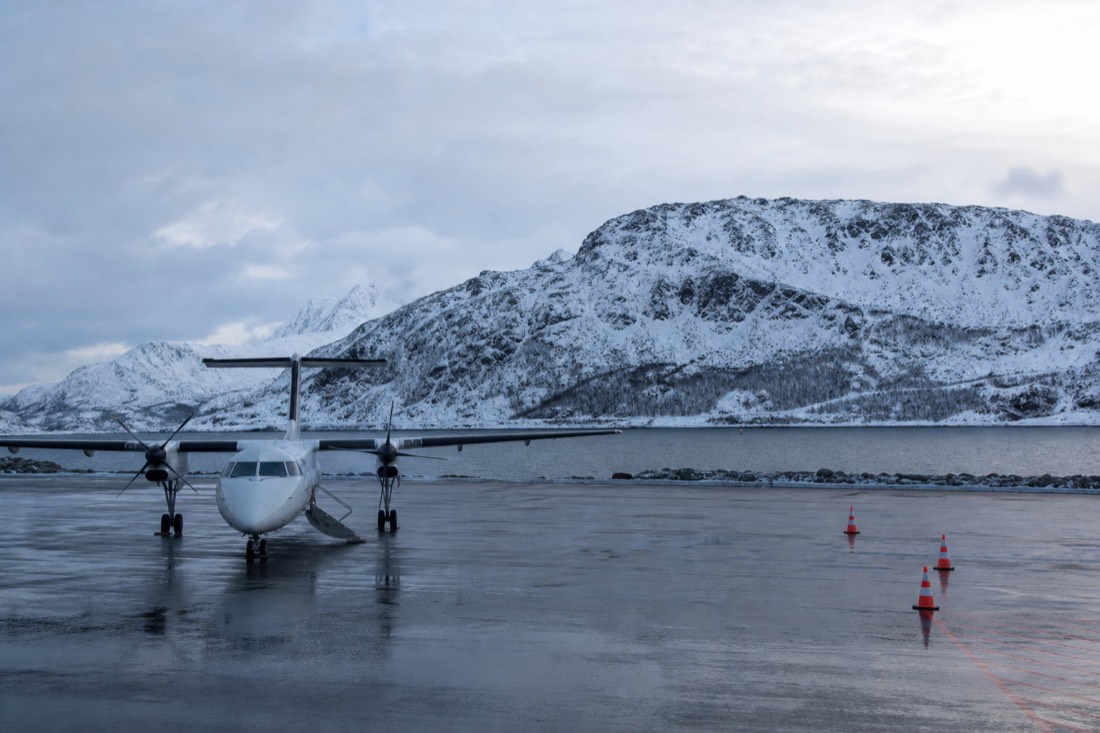
The domestic network is dense and reliable, so treating Oslo as a hub rather than a destination is a legitimate strategy. It also gives you the option of taking the train instead, since the Oslo to Bergen line runs 6.5 to 7.5 hours across the Hardangervidda plateau and is one of the country's better sights in its own right.
| Airport | Code | Best for | Fare character |
|---|---|---|---|
| Oslo | OSL | Everything, main international hub | Cheapest entry point, most competition |
| Bergen | BGO | Fjords, Norway in a Nutshell, western coast | Mid-range, summer premium |
| Tromsø | TOS | Aurora, whales, husky, Arctic winter | Premium from October to March |
| Stavanger | SVG | Preikestolen, Lysefjord, southwest | Mid-range, oil-industry traffic keeps routes frequent |
| Trondheim | TRD | Central Norway, coastal ferry connections | Mid-range |
| Ålesund | AES | Geiranger, Atlantic Road, art nouveau town | Seasonal, thinner in winter |
When Should You Actually Book?
Three to six months out for long-haul, which is about the fare curve rather than availability. Inside Europe, six to ten weeks is normally enough. What sells out first is not the flight, it is Arctic accommodation and December to January aurora tours, so book those before you finalise the ticket.
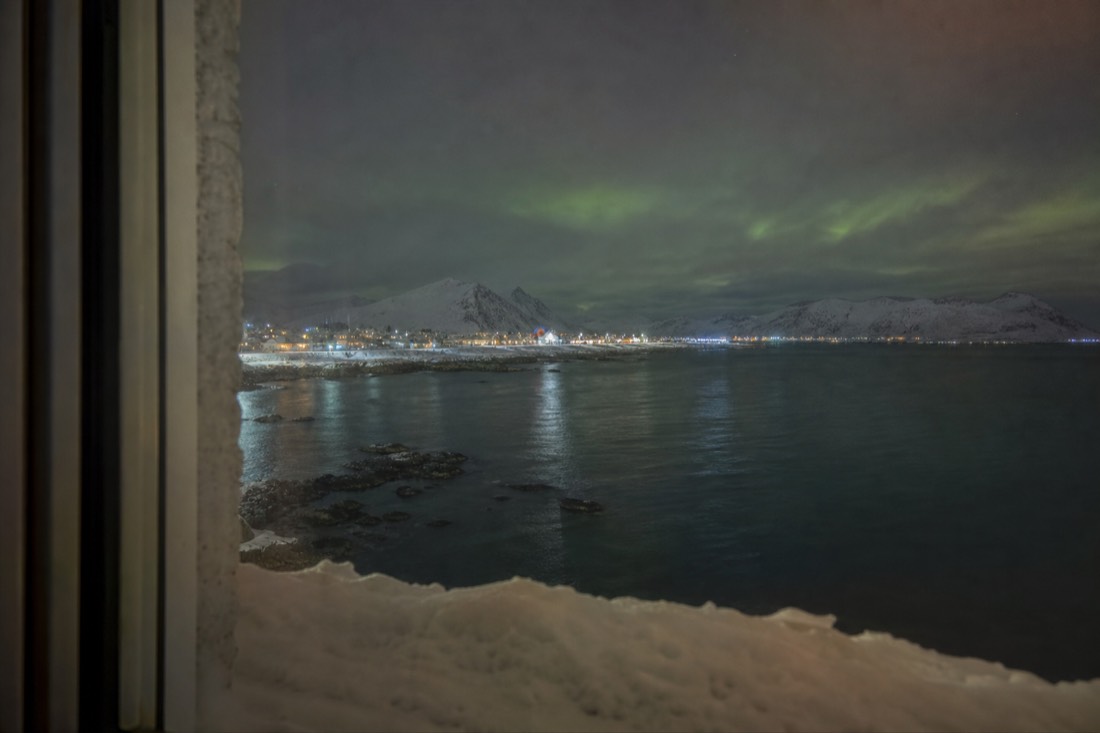
The order matters more than the timing. Norwegian fjord villages and Arctic towns have very small bed stock, and a cheap flight into a week with no rooms is not a saving. Fix the beds, then the seat.
Related planning: multi-day packages.
How Much Do Bags And Seat Fees Change The Real Price?
Enough to erase the saving entirely. A headline fare on a low-cost carrier typically covers a small cabin bag and nothing else, and a checked bag plus a seat assignment can double a cheap one-way. Compare the total at checkout, not the price on the search page.
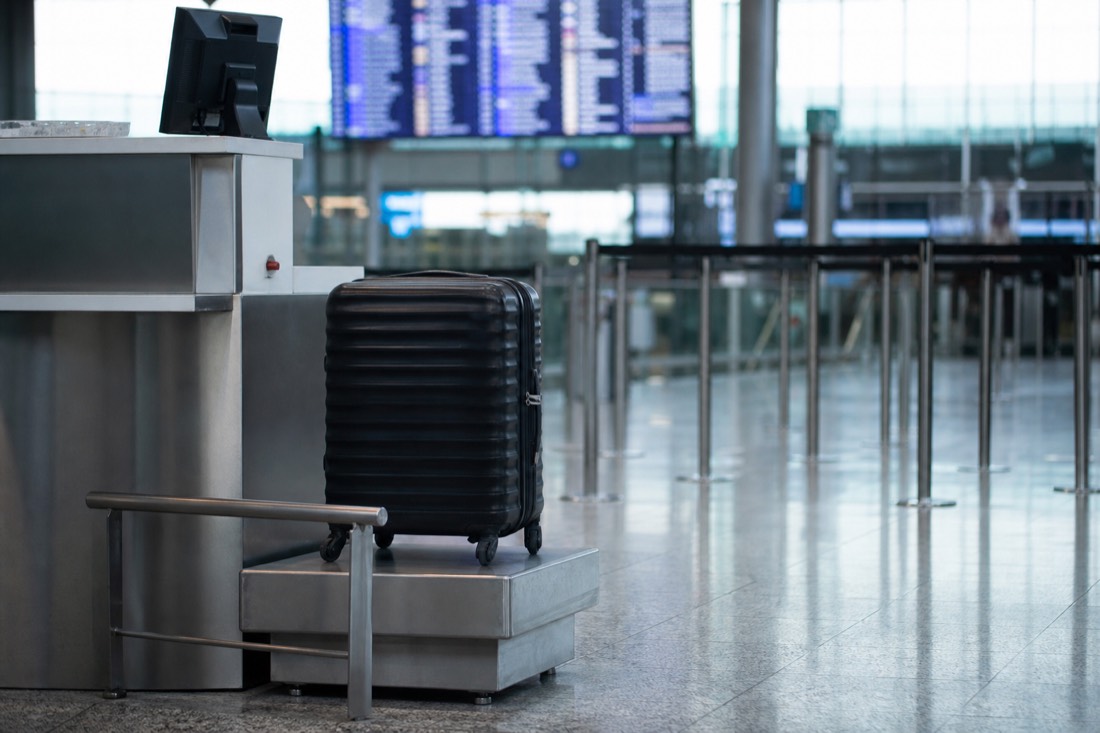
Norway is served by both full-service and low-cost carriers, and they price very differently. Even full-service airlines sell fares without checked baggage; inspect the exact fare type. For a winter trip where you are carrying bulky clothing, that distinction decides which is actually cheaper.
| Add-on | Typical effect on a cheap fare |
|---|---|
| Checked bag | Often the single largest add-on, each way |
| Seat selection | Small per person, doubles for a couple |
| Priority boarding | Rarely worth it on short sectors |
| Changes | Expensive or impossible on the cheapest fares |
| Winter gear weight | Pushes many travellers over cabin-only limits |
There is a second-order effect worth noting. Cheap fares cluster on the least convenient departure times, so the saving often comes with a 06:00 check-in or a late-evening arrival that costs you a hotel night at one end. Price the whole day rather than the flight alone, particularly on a short trip where a wasted evening is a meaningful share of the time you have.
The practical test is simple: price the trip twice, once cabin-only and once with a checked bag, then compare carriers on that total. Winter travellers should assume they will need the hold.
Is It Cheaper To Fly Into Oslo And Take The Train Onward?
Often yes, and the train is scenery rather than transit. Oslo has the widest route network and the most competition, so fares in are usually lower than to Bergen or Tromsø, but compare actual rail and flight quotes rather than assuming one is always cheaper.
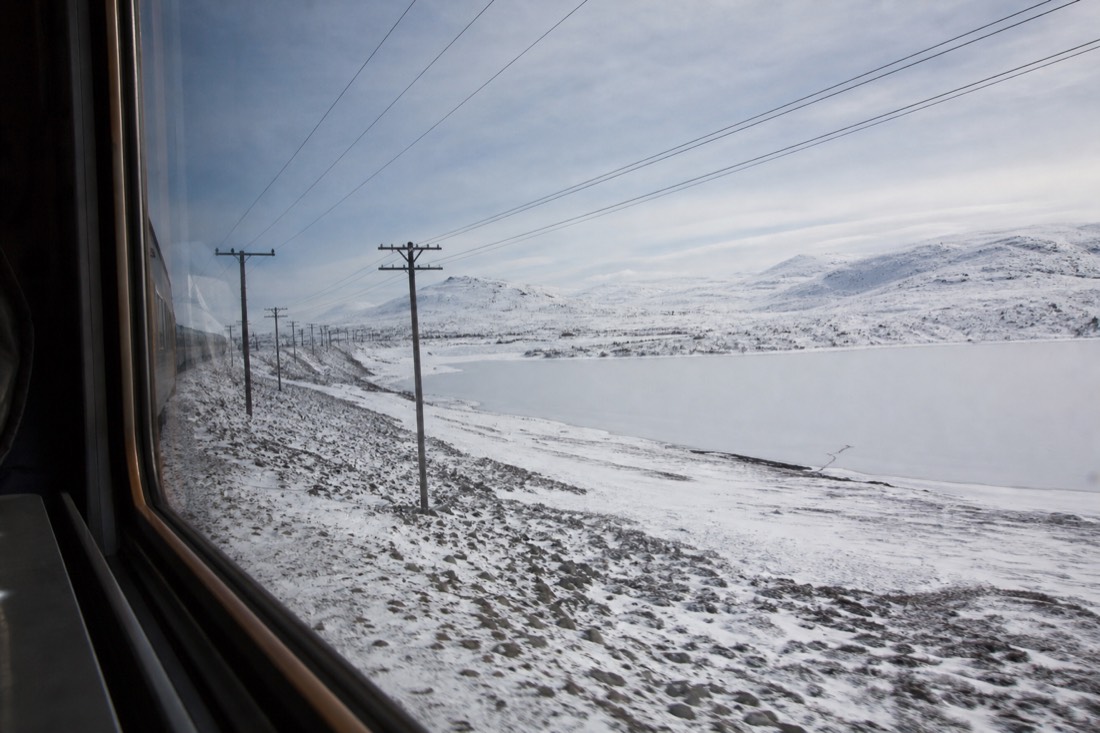
Direct flights to the regional airports exist but are thinner and priced accordingly. Routing through Oslo adds time and usually removes cost, and on the Bergen leg it replaces a dull connection with one of the better train journeys in Europe.
| Route | Typical cost position | What you get |
|---|---|---|
| Into Oslo, train to Bergen | Usually cheapest overall | 6.5-7.5 hours of high-plateau scenery |
| Direct into Bergen | Convenient, often pricier | Saves most of a day |
| Into Oslo, fly to Tromsø | Usually cheapest north routing | About 1h50m in the air |
| Direct into Tromsø from abroad | Limited routes | Fewer options, less competition |
The one case for flying direct is a short trip where the saved day matters more than the saved money. On anything of a week or more, the Oslo routing usually wins twice over.
Does The Day Of The Week You Fly Still Matter?
Less than it used to, though midweek departures remain softer than Friday and Sunday. The bigger lever on a Norway trip is the month, then how far ahead you book. Day-of-week fiddling saves a little; shifting from July to February saves a lot.
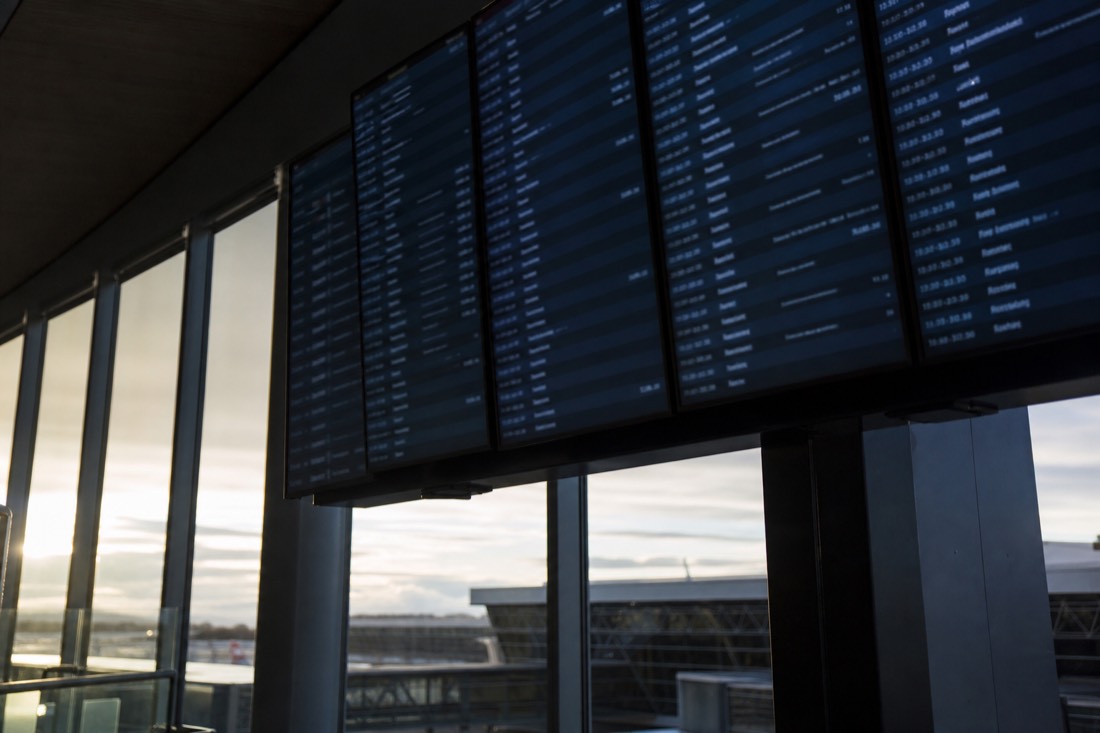
A great deal of flight-booking folklore survives from an era of rigid fare buckets. Modern pricing responds mostly to demand on a given date, which means the seasonal effect dwarfs the weekly one on a route like this.
| Lever | Rough impact | Worth optimising? |
|---|---|---|
| Month of travel | Largest by far | Yes, first |
| How far ahead you book | Large | Yes |
| Day of week | Modest; midweek softer | Only if dates are flexible |
| Time of day | Small; early and late cheaper | Marginal |
| Booking in an incognito window | None | No; this one is a myth |
The last row is worth stating plainly because the advice persists. Fares move with demand and seat availability, not with the cookies in your browser.
Do Hotel Prices Follow The Same Curve As Flights?
Broadly yes, and the two compound. The months with the cheapest flights are also the months with the softest hotel rates, so a February trip saves twice over while a July trip pays twice over. Accommodation is usually the larger of the two savings.

Bergen and the small fjord towns are where this bites hardest, because their room stock is limited against heavy summer demand.
Travellers optimise the flight and then book accommodation without applying the same logic, which misses most of the available saving. On a week-long trip the bed line is typically larger than the airfare, so the seasonal swing matters more there.
| Season | Flights | Hotels | Combined effect |
|---|---|---|---|
| January to February | Lowest | Softest, outside holiday weeks | The cheapest week available |
| March to April | Moderate | Moderate | Good value with better light |
| May to June | Rising | Rising sharply | Pay for long days |
| July to August | Highest | Highest, and scarce | Peak on both lines |
| September | Falling | Falling | The best value-to-quality ratio |
| October to December | Low | Low | Cheap, dark, quiet |
Flight prices also behave differently for the Arctic than for the south. Oslo and Bergen see heavy competition and volatile fares; the northern routes are thinner and steadier, which means the usual advice about waiting for a drop applies far less once you are booking to Tromsø.
One more variable moves both lines at once: school holidays. Norwegian and European school breaks push domestic demand into the mountain resorts and the fjord towns simultaneously, so a week that looks like off-season on the calendar can price like peak. Checking the Norwegian school holiday dates before fixing anything is a two-minute step that occasionally saves a great deal.
September is the row worth staring at. Flights and hotels have both come off their peak while the fjord cruises still sail, the colour is on the hillsides, and the aurora season has already opened in the north.
Booking flexibility is worth more than a marginal saving on any of this. A fare that is a little higher but changeable lets you move if the trip shifts, and on a weather-dependent destination that option has real value.
The exception is the Norwegian winter holiday weeks in February, when domestic demand fills the mountain resorts and rates jump regardless of what international flights are doing. Those weeks move each year, so check before fixing dates if February is your target.
What Is The Cheapest Way To Reach The Arctic?
Compare an Oslo connection with direct Tromsø fares for your own dates, including baggage and connection protection. The domestic leg runs about 1 hour 50 minutes and the competition on it keeps fares lower than the thin international routes.
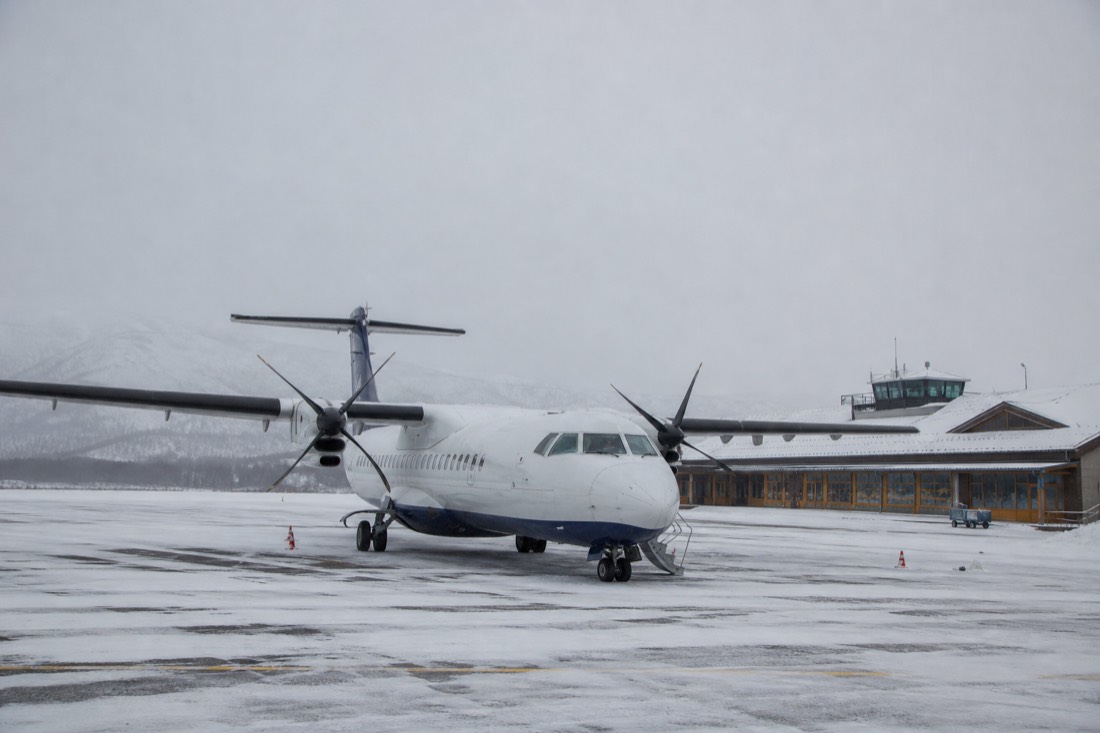
Travellers hunting a single ticket to Tromsø often pay a premium for the convenience of not changing planes. Splitting the journey at Oslo usually costs less overall and opens far more departure options from your home airport.
| Approach | Cost position | Trade-off |
|---|---|---|
| Direct international to Tromsø | Highest; few routes | Fewest connections |
| International to Oslo, then domestic | Usually cheapest | One connection, half a day |
| International to Oslo, then train north | Slow; no rail to Tromsø | Not practical for the far north |
| Coastal voyage as transport | A trip in itself | Days, not hours |
Weather diversions are a real if uncommon feature of northern Norwegian aviation in winter, and airlines handle them well when the whole journey sits on one ticket and considerably less well when it does not.
Book the two legs with enough of a gap to absorb a delay. If they are on separate tickets, a missed connection is your problem rather than the airline's, and northern weather does cause diversions in winter.
The same logic applies to Lofoten, reached by air via Bodø or by ferry. The regional legs are short, reasonably priced and frequent enough that routing through the hub almost always beats hunting for a single through-fare.
What Do The Cheap Months Cost You?
Daylight, mostly. A January trip to northern Norway gives you a few hours of blue twilight and nothing more, and the mountain scenic roads are shut. You trade fjord cruising, hiking and long evenings for aurora, snow and empty streets. That is a genuine trade, not a downgrade.
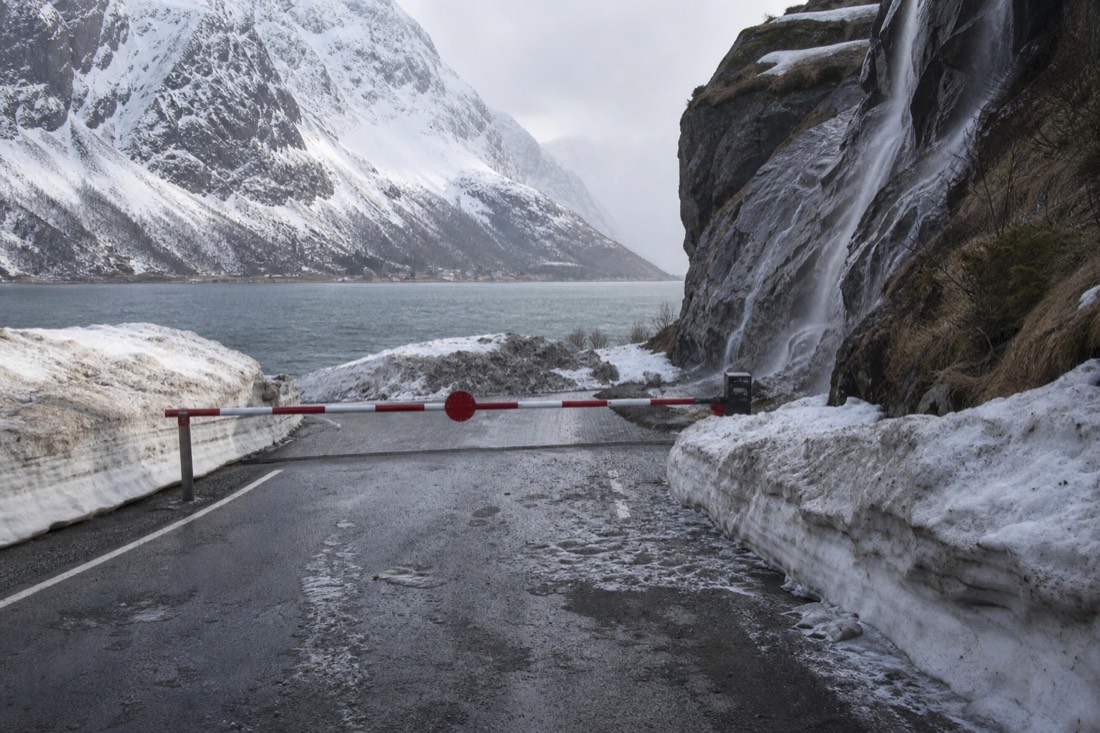
Be specific about what closes. High scenic passes such as Sognefjellet and Aurlandsfjellet are out between roughly November and May, and Trollstigen only opened on 29 April in 2026. Some fjord cruise operations reduce frequency, and hiking routes like Preikestolen and Trolltunga are either winter-only-with-a-guide or entirely out of season. Our guide to Norway in winter sets out what still runs.
Two things do not change with the season. Tap water is excellent everywhere, so bottled water stays a waste of money, and cards work almost universally. For live conditions before you commit, yr.no is the national forecast service and visitnorway.com publishes seasonal opening information. Tromsø's own tourist board at visittromso.no is the place to check what is running in the Arctic during the quiet weeks, which is exactly when the fares are at their best.
Choose Your Norway Experience
Tromsø Northern Lights Chase We Go Where The Lights Appear. Follow a guide and photographer away from Tromsø in search of clearer northern-lights skies. Have a date in mind? Check it before arranging the rest of your Norway trip.
9 hours. Allow 6–9 hours and select English Guide. Meet at the stated Tromsø departure point. Thermal suits are a rental option; boots and full meals are not included. Sightings are not guaranteed.
Choose a date to see scheduled departures. Final availability and price are confirmed on Viator.
No verified experience fits those requirements. Adjust your choices, or keep the independent plan described above.
Compare Options And Fit Your Plans
General recommendation until you choose. Choose the city where the activity starts, not your arrival airport. Month filters describe the experience’s season, not confirmed departures. Allow travel to the meeting point as well as the listed duration. Confirm your exact option and access needs when booking.
- Guided tour - Viking Village, Nærøyfjord Cruise and Flåm Railway: 10 hours 30 minutes. Join the Nærøyfjord cruise, Flåm Railway and Viking village in one guided day. Round trip from Strandkaien 16, Bergen. Choose the English option. Food and drinks cost extra. This is a day trip, with no hotel night.
- Cross-Country Ski Lesson for Beginners in Tromso: 3 hours. Learn cross-country skiing with an instructor, ski equipment and transport from central Tromsø. Ages 12+. Meet at Tromsø Outdoor, Fredrik Langes gate 14. Send your EU shoe size when booking. Winter clothing and hotel pickup are not included; inadequate snow may mean an alternative or refund.
- Central Oslo Guided Walking Tour with Local Guide: 2 hours. Get oriented in central Oslo on a two-hour walk with an English-speaking local guide. Two hours from the tiger statue outside Oslo Central Station to the Royal Palace. Select the English time option. Outdoor walking only; no admission inside buildings. Not recommended for poor cardiovascular health.