Which Is The Prettiest Town In Norway? We Ranked The Contenders
The prettiest town in Norway, compared honestly: Alesund, Reine, Undredal, Roros and Bergen, what makes each one look the way it does, and how to actually reach them.
 By Lars Hansen, Norway Tour Packages Specialist & Experience Guide
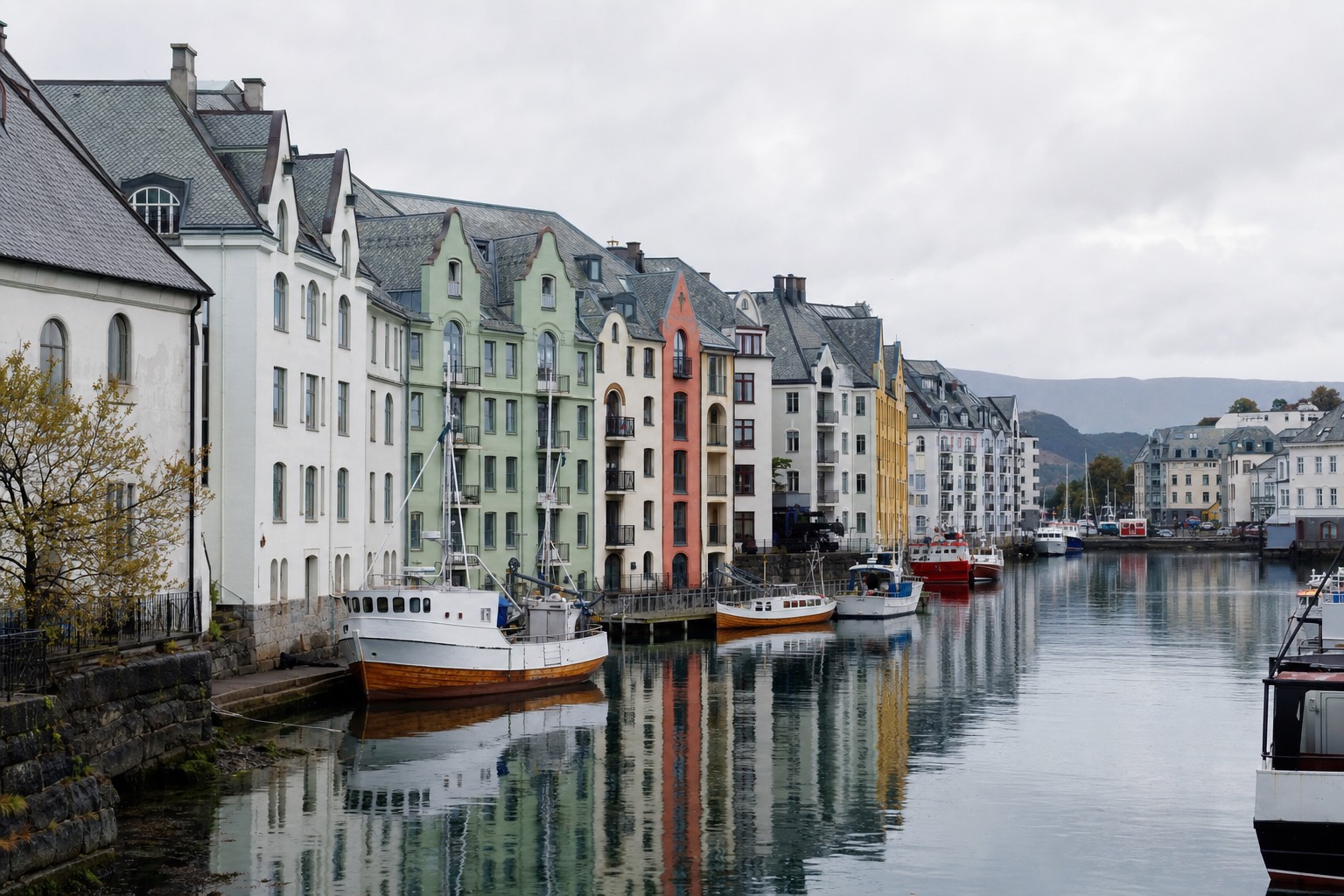
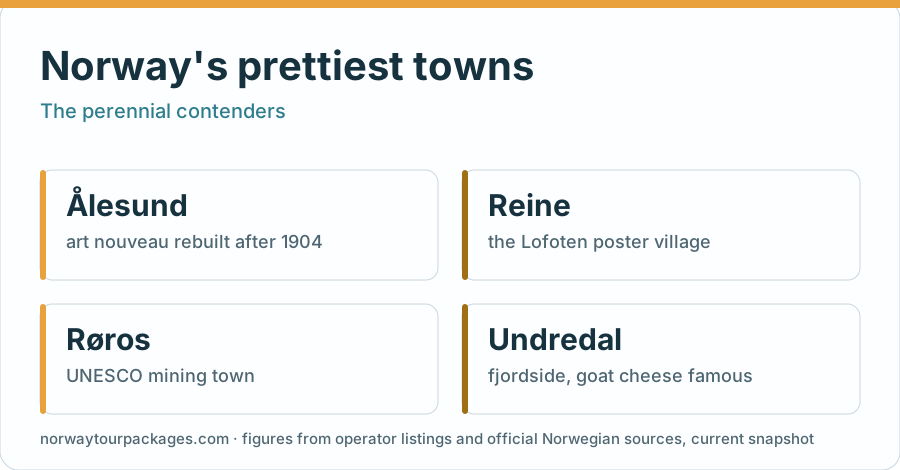
In January 1904 a fire started in a factory in Ålesund and burned almost the entire town to the ground in a single night. What went up in its place, over the following three years, was a complete Art Nouveau town: turrets, ornamental stonework, spires and pastel plaster, all built in one architectural language because it all went up at once. That accident of timing is why the prettiest-town argument in Norway usually starts there and then spends the rest of its energy on villages of forty people, a UNESCO-listed mining street, and a city with a wooden wharf leaning into the harbour.
These towns are widely separated. Choose a base before looking for a guided day that actually reaches the places you want.
Booking choice: From Svolvær, the Reine, Hamnøy and Sakrisøy road tour covers several photographed villages. Ålesund and Bergen need separate city stays. Explore Reine, Hamnøy, Sakrisøy Photo Tour from Svolvær
Which Town Is The Prettiest In Norway?
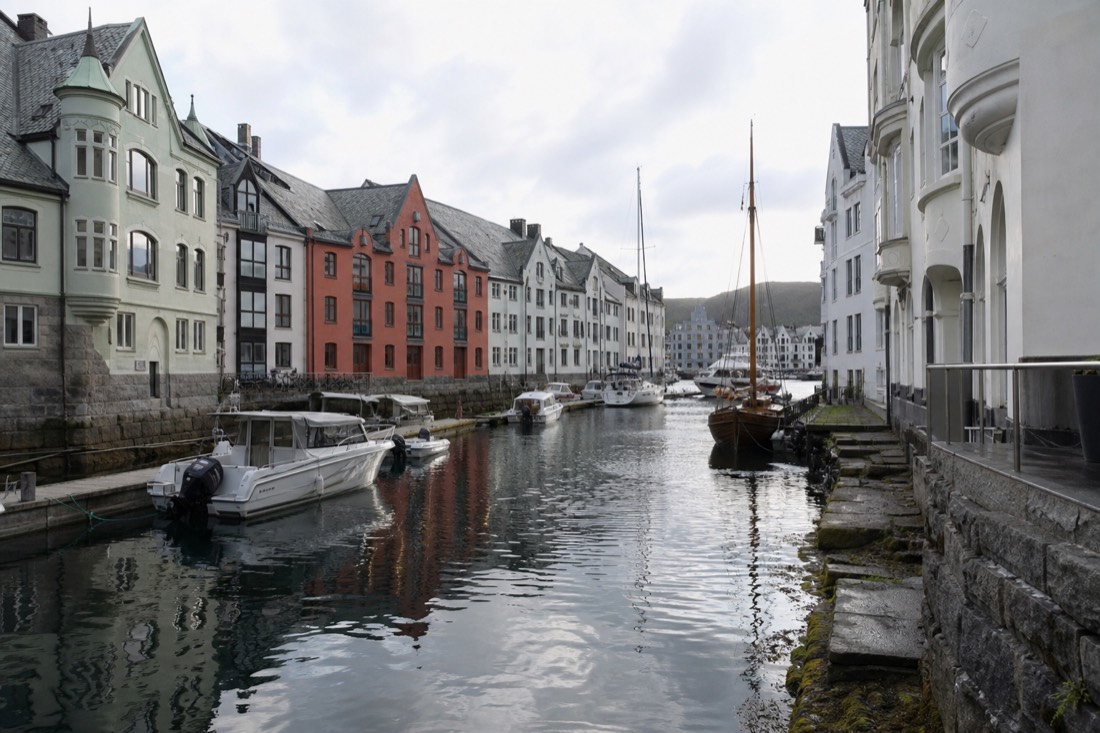
Ålesund is the strongest single answer, because it is the only Norwegian town that is beautiful as a whole rather than in fragments. Reine beats it on raw setting, Undredal on intimacy, Røros on preserved history. If your criterion is walking down a street and finding every building handsome, Ålesund wins.
The disagreement is really about what "pretty" means. Half the people asking the question want architecture. The other half want the photograph they saw on Instagram, which is almost always a red cabin below a black peak, and that is Reine in Lofoten rather than anywhere on the mainland. Both answers are defensible, which is why nobody ever settles the argument.
| Town | Region | What wins it | Realistic detour |
|---|---|---|---|
| Ålesund | Sunnmøre, west coast | Whole-town Art Nouveau after the 1904 fire | Easy, has its own airport |
| Reine | Lofoten, Arctic | Red cabins under vertical granite peaks | Significant, a trip in itself |
| Undredal | Aurlandsfjord | Thirty-odd houses, goats, tiny stave church | Easy from Flåm by boat |
| Røros | Inland, Trøndelag | UNESCO-listed timber mining town | Moderate, inland detour by rail |
| Bergen | West coast | Bryggen wharf, mountains, harbour life | None, it is the regional hub |
What Makes Ålesund Different From Everywhere Else?
Ålesund burned down in January 1904 and was rebuilt almost entirely between 1904 and 1907 in the Jugendstil style then fashionable across Europe. Because the reconstruction happened in one short burst, the whole town centre shares one visual language, which no other Norwegian town can claim.
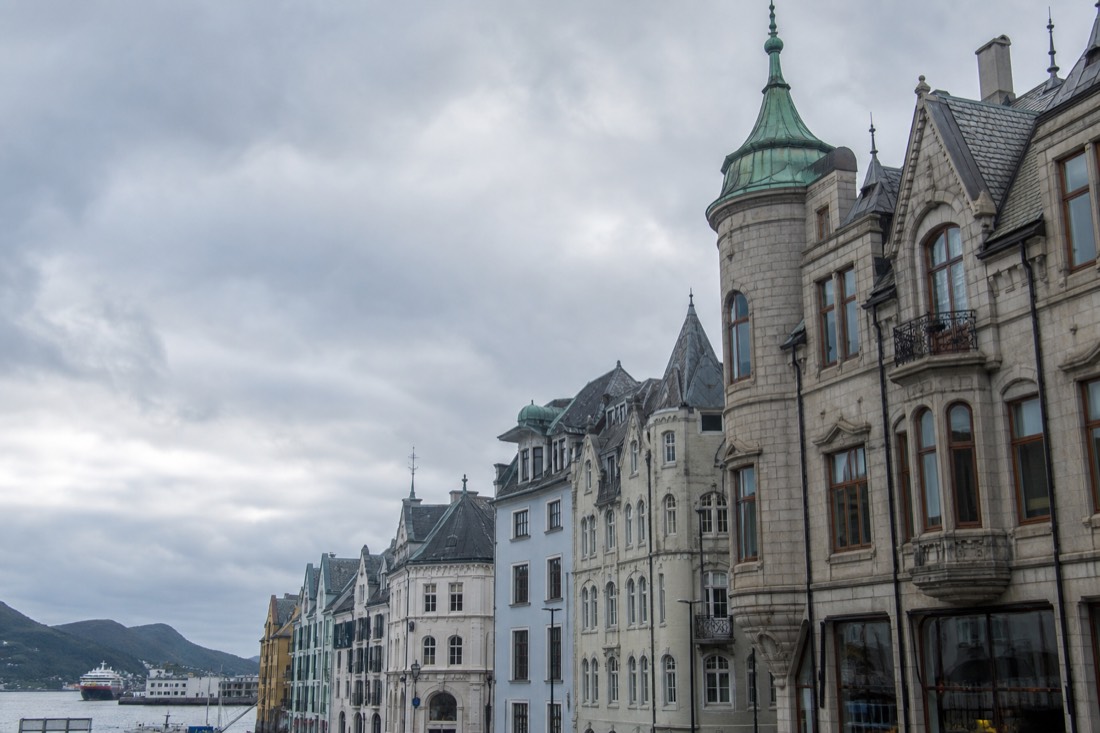
The town sits on islands between the open Atlantic and the Sunnmøre Alps, and the standard move is the climb up Aksla to the Fjellstua viewpoint, where the whole peninsula lays itself out below with mountains behind. It is a stair climb rather than a hike, and the view does most of the work in explaining why the town gets nominated.
Ålesund also functions as a base rather than only a destination. It is the northern anchor for the Geirangerfjord run and sits close to the Atlantic Road and Trollstigen, the switchback mountain route that reopened for the 2026 season on 29 April. That combination, handsome town plus three famous drives within reach, is unusual in Norway, where most pretty places are endpoints.
Is Reine In Lofoten As Good As The Photos?
Yes, with one caveat. Reine genuinely looks like the photographs: red rorbuer fishing cabins on stilts, black granite peaks rising straight from the water, no gradual foothills. The caveat is weather. Lofoten sits in the Arctic and the mountains disappear into cloud on a substantial share of days.
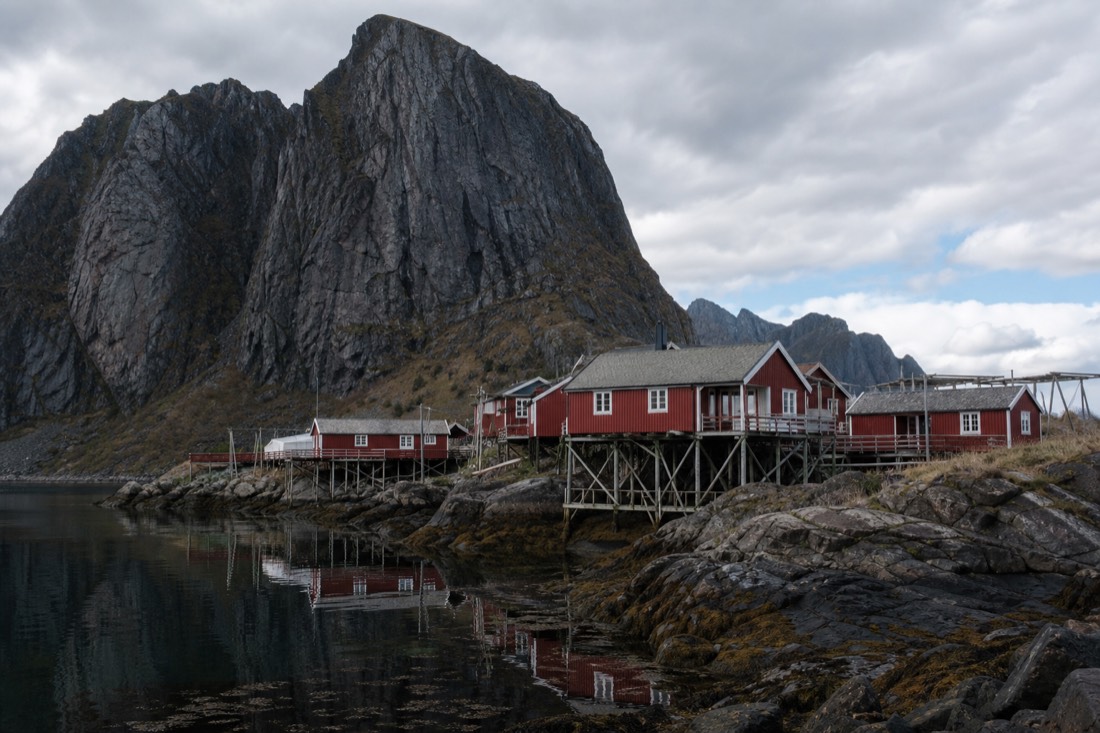
What separates Lofoten from the fjords is the verticality. Fjord walls are steep but they are walls, continuous and green. Lofoten's peaks are individual jagged blocks with sea between them, and the settlements sit on the few flat scraps at their feet. The scale is deceptive too: those mountains are not high by alpine standards, they simply start at sea level and go straight up.
Reine takes real effort to reach, and that is the honest counterweight to its looks. It is an Arctic archipelago with a long road chain, reached by flying to Bodø or Harstad-Narvik and then driving or ferrying. We set out the routes and the realistic time budget in our Lofoten guide. Nobody sees Reine on a day trip from Bergen.
Why Do People Fall For Undredal And The Fjord Villages?
Because they are tiny and still working. Undredal sits on the Aurlandsfjord with a few dozen residents, more goats than people, and one of Norway's smallest stave churches. It has no resort infrastructure, which is exactly the point: it reads as a village rather than a viewpoint.
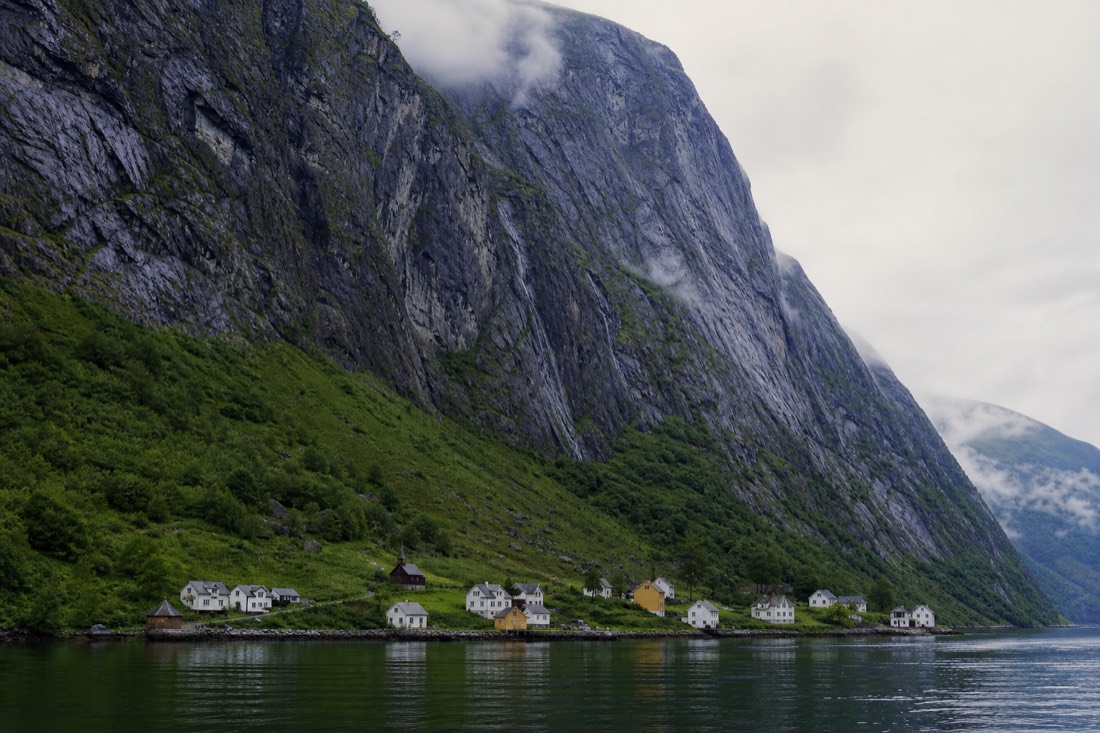
Undredal is the best of a category rather than a one-off. The Nærøyfjord and Aurlandsfjord arms hold a run of these settlements, wedged onto whatever flat ground the cliffs allow, most of them reachable more easily by boat than by road. Nærøyfjord is one of only two Norwegian fjords on the UNESCO World Heritage list, alongside Geirangerfjord, and the UNESCO record explains what the listing actually covers.
Related planning: fjord sailings we track.
What About Røros And The Inland Towns?
Røros is the outlier: a copper mining town of blackened timber houses on the inland plateau, listed by UNESCO in its own right as a mining town rather than as part of any fjord designation. It looks like nowhere else in Norway and is at its best under deep snow.
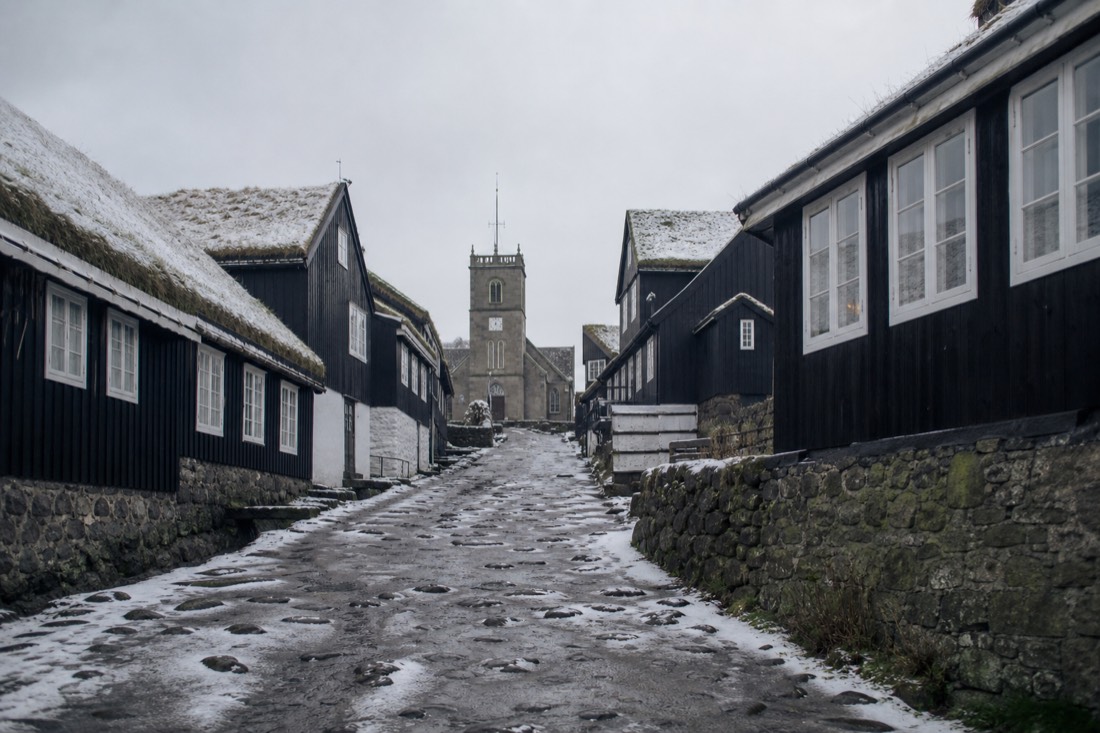
Everything else on this list is coastal and green. Røros is inland, high, cold and brown, with wide streets of tarred wooden buildings that grew around the copper works from the seventeenth century onward. Norwegian winter tourism sells the Arctic hard, but Røros in February, with smoke rising from the chimneys and snow packed on the street, is arguably the most atmospheric winter town in the country and gets a fraction of the attention.
It is also the easiest contender to combine with Oslo, since it sits on the rail network rather than at the end of a ferry chain. If your route is city-based rather than fjord-based, this is the pretty town that fits without wrecking the itinerary.
| Town | Nearest hub | Getting there | Best season |
|---|---|---|---|
| Ålesund | Ålesund airport | Direct flights from Oslo, coastal ferry, bus | May to September, plus clear winter days |
| Reine | Bodø or Harstad-Narvik | Flight then ferry or a long island drive | Late May to September, or February for aurora |
| Undredal | Flåm | Fjord boat, or a narrow road off the E16 | May to September |
| Røros | Trondheim or Oslo | Rail on the Røros line, or a regional flight | December to March for snow, summer for markets |
| Bergen | Bergen airport | Direct international flights, Bergensbanen from Oslo | Year-round |
Does Bergen Count As A Town?
Bergen is a city of around a quarter of a million people, so it competes in a different weight class. What earns it a place is Bryggen, the row of leaning wooden merchant houses on the harbour, UNESCO listed and unlike anything else on the coast. The mountains behind do the rest.
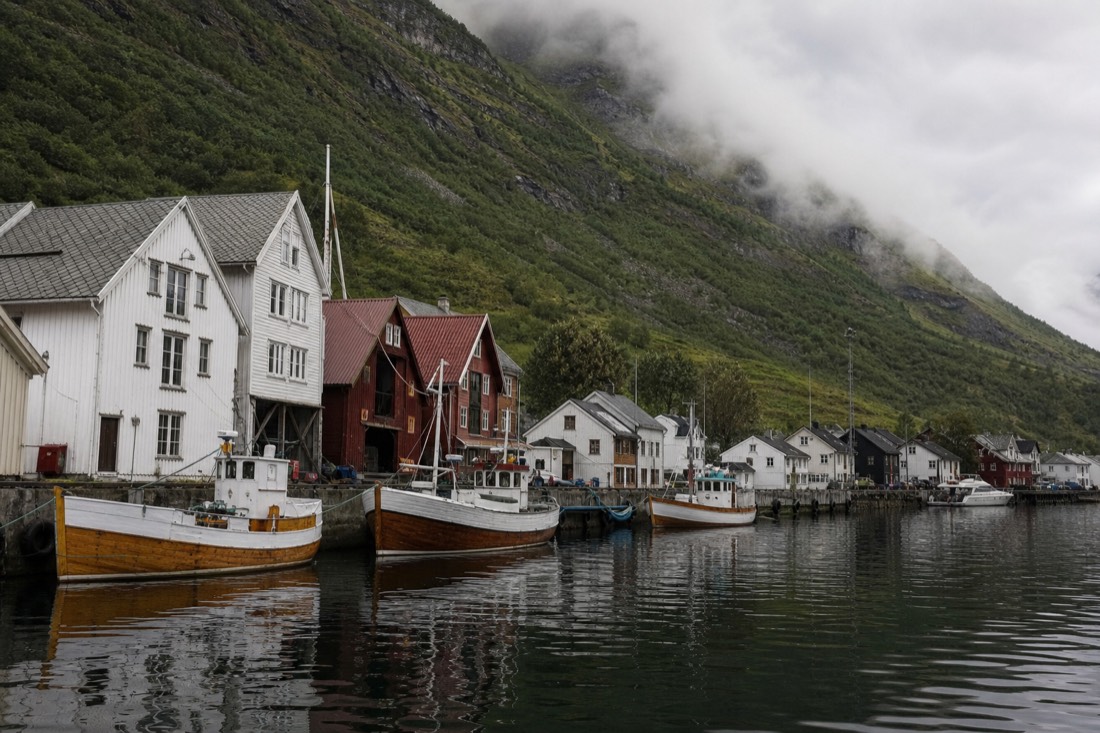
Bergen's difficulty is timing rather than looks. It is Norway's busiest cruise port, and the crowd on the wharf between eleven and three in summer is dense enough to change how the place feels. Early or late visits can be quieter, without guaranteeing empty streets. The other well-known factor is rain: roughly 200 to 240 wet days a year and between 2,250 and 2,413 mm of precipitation, which locals treat as background noise rather than an event. The city's own listings sit at visitbergen.com, and we cover what fills a couple of days there in our Bergen guide.
Why Do Norwegian Towns Look The Way They Do?
Fire and timber. Norwegian towns were built in wood and burned repeatedly, so what survives is either carefully preserved or rebuilt in the style of the moment the fire happened, which is why Ålesund is Art Nouveau and Bergen's Bryggen is medieval in plan.
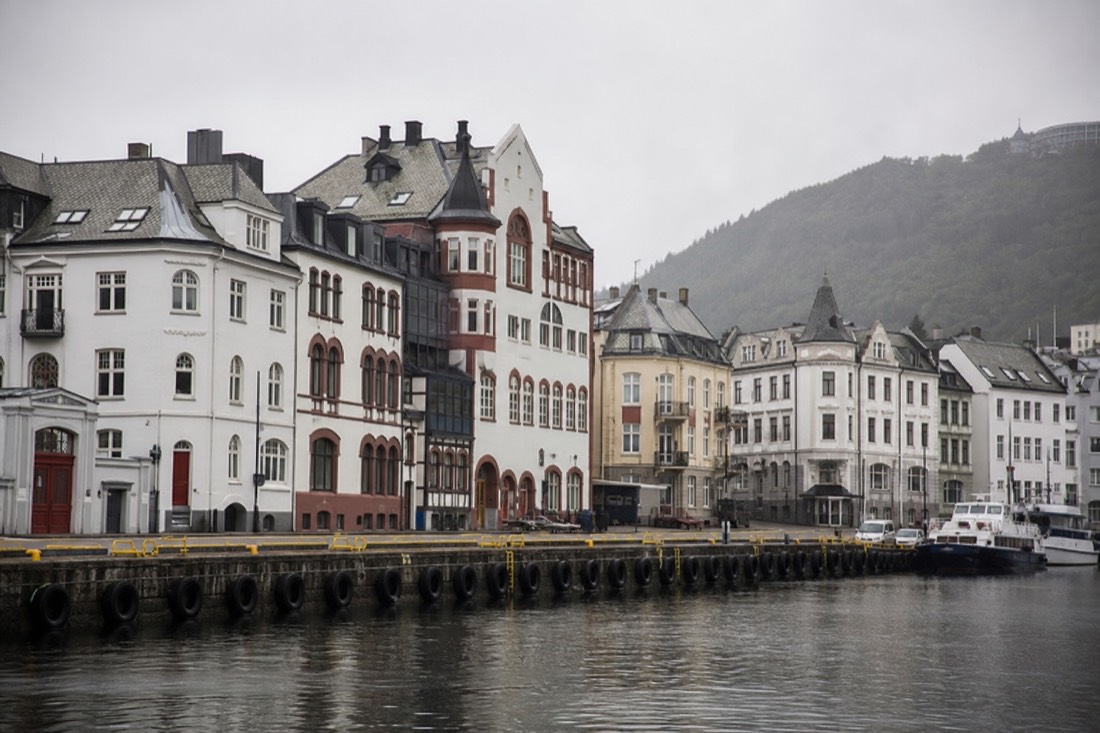
The visual character of these places is not a design choice made for tourists. It is the residue of a building tradition in timber, a harsh climate and a long history of towns burning down and being rebuilt in whatever style prevailed at the time.
| Town | Why it looks like this |
|---|---|
| Ålesund | Rebuilt after a fire in the Art Nouveau period |
| Bergen, Bryggen | Medieval wharf layout, repeatedly rebuilt in timber |
| Røros | Preserved mining town of wooden houses |
| Lofoten villages | Working fishing architecture: rorbuer on stilts |
| Undredal and fjord hamlets | Small-scale farming settlements, little changed |
It also explains why so little is old. Timber towns burned, and what survives is generally either the last rebuild or a deliberate preservation effort, which is why Norway's prettiest towns often look more coherent than European towns that grew in stone over centuries.
Knowing the reason changes what you look at. The uniformity of Ålesund's towers and the irregularity of Bryggen's leaning fronts are both consequences of the same underlying story.
Which Towns Deserve An Overnight Rather Than A Stop?
Ålesund, Røros and one Lofoten village. Each empties in the evening once the day traffic leaves, and each is markedly better without it. The fjord hamlets are lovely in an hour; these three reward a night.
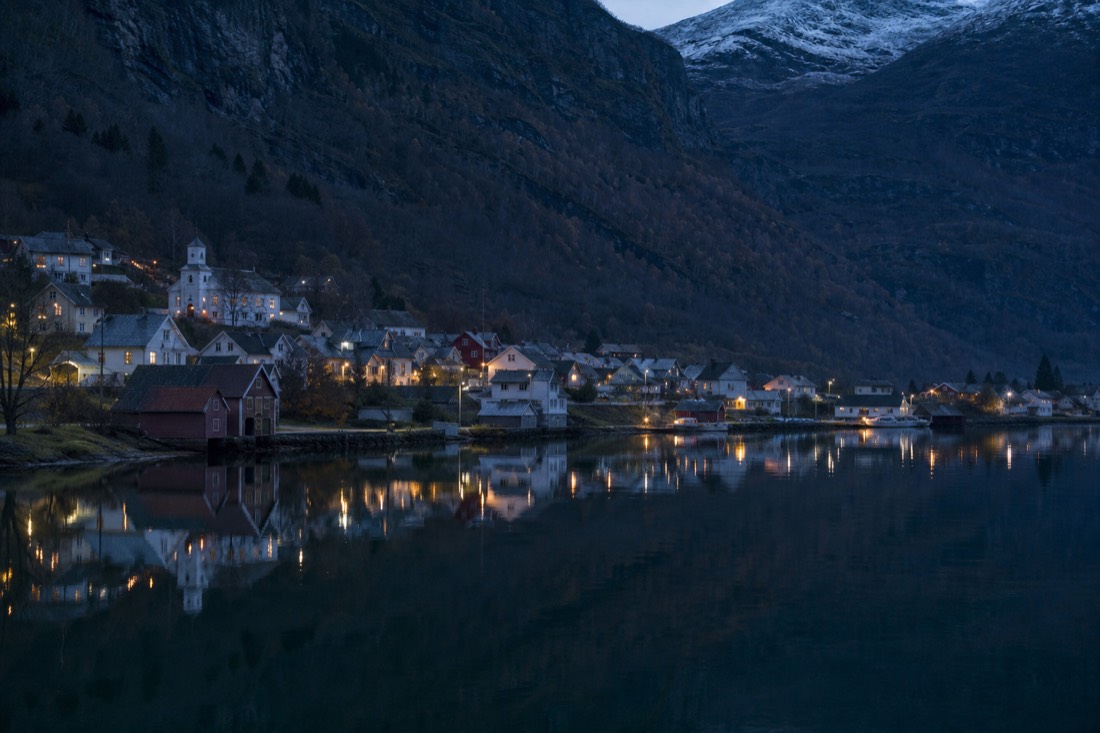
Most of Norway's pretty towns are day-trip destinations, which means they are at their most crowded exactly when you are likely to be there. Staying over inverts that completely and costs no extra travel time.
| Town | Day stop or overnight | Why |
|---|---|---|
| Ålesund | Overnight | Evening light on the facades, harbour quiet |
| Røros | Overnight | Remote; a day trip is mostly travel |
| Reine or Nusfjord | Overnight | Lofoten distances make day trips wasteful |
| Undredal | Day stop | Small; an hour covers it |
| Flåm | Overnight if you can | Can be quieter after the main day traffic |
| Bergen | Base, not a stop | Two nights minimum |
Undredal works the same way at smaller scale, and so does Geiranger once the cruise ships have left for the evening.
Flåm is the clearest example of the pattern. By day it functions as a transport hub with a village attached; by evening the trains and ships have gone and it becomes the fjord-side hamlet the photographs promised.
How Do These Towns Change Between Summer And Winter?
Summer fills them and winter empties them almost completely. Several coastal villages close much of their visitor infrastructure between October and April, while the towns with year-round populations, Ålesund, Bergen and Røros, simply get quieter and darker.
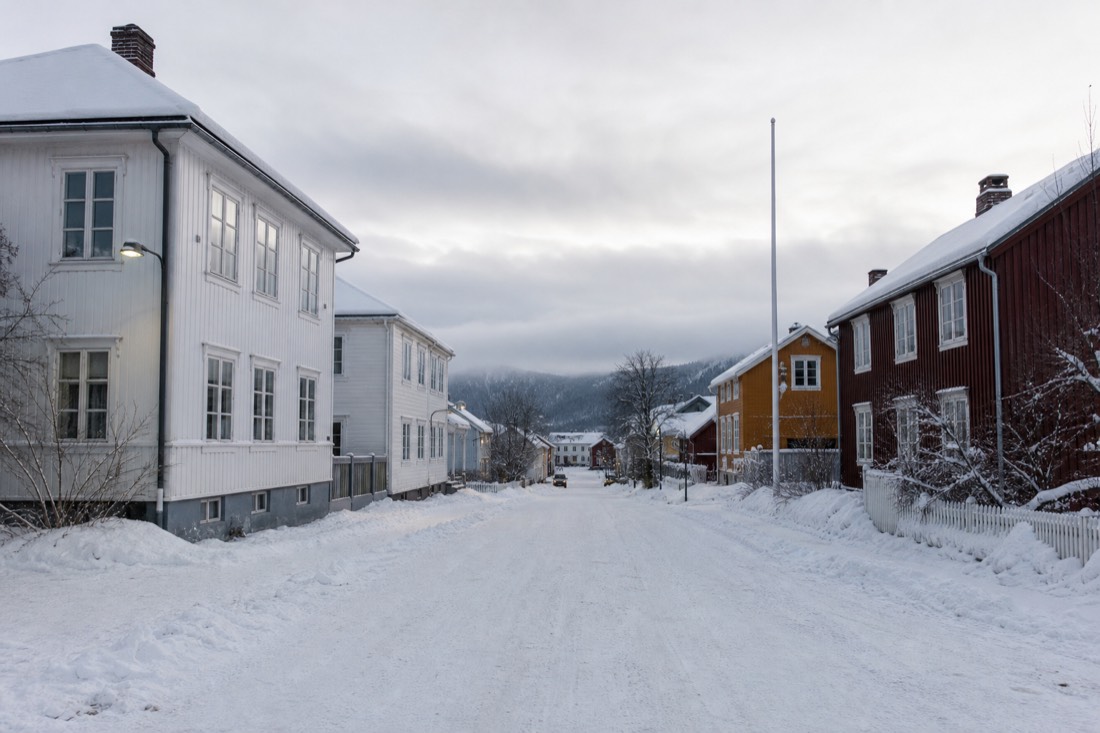
The seasonal swing is far larger in Norway's small towns than in its cities, and it determines whether a village is a living place or a shuttered one when you arrive.
| Town type | Summer | Winter |
|---|---|---|
| Fjord hamlets | Busy, everything open | Many services closed |
| Lofoten villages | Full; book months ahead | Quiet, aurora overhead, some closures |
| Ålesund | Busy, cruise calls | Open, quiet, atmospheric |
| Røros | Steady | Snow-covered and at its best |
| Bergen | Peak | Wet, open, fully functioning |
Røros is the exception worth noting: a preserved wooden mining town under snow is closer to its historical self than the same place in July, and it is one of the few Norwegian towns that improves in deep winter.
What Do These Towns Cost To Stay In?
Small and pretty usually means expensive and scarce. The fjord villages and Lofoten have very limited room stock against heavy summer demand, so they price above the cities in July while Bergen and Ålesund stay comparatively stable.
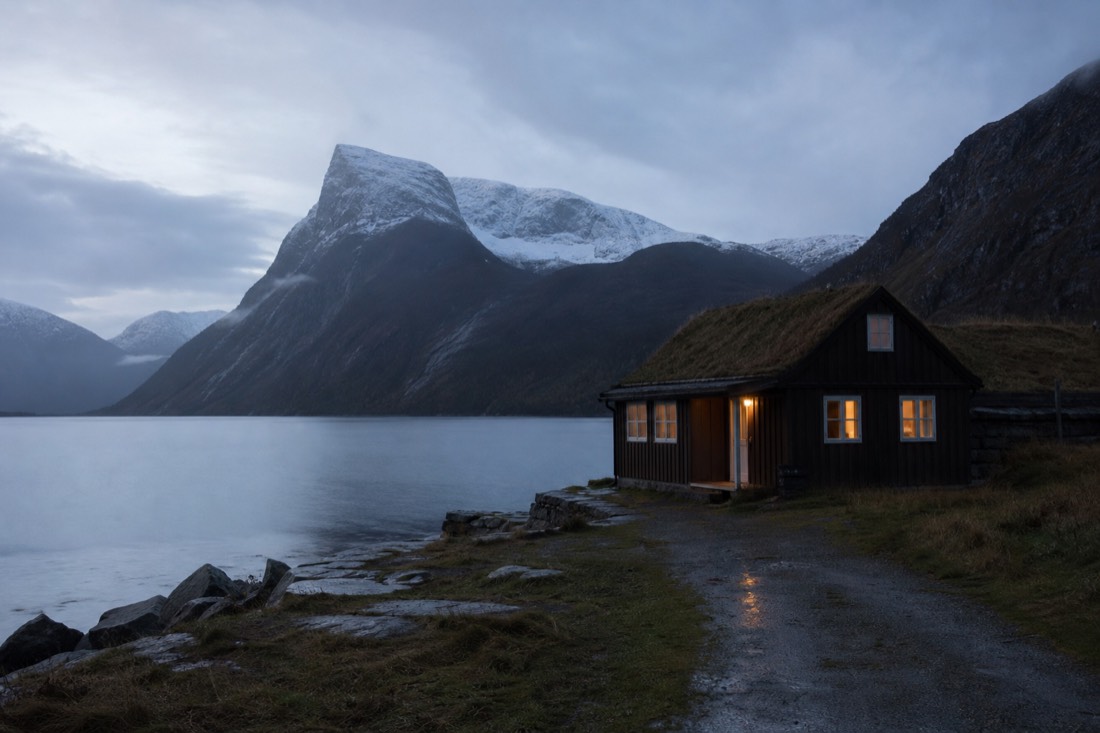
The pricing here runs opposite to most countries, where small towns undercut the cities. In Norway the constraint is supply: a village with forty beds facing a summer of full occupancy behaves very differently from a city with thousands.
| Place | Summer pricing | Availability |
|---|---|---|
| Fjord villages, Flåm and Undredal | High for what you get | Very limited; book months ahead |
| Lofoten villages | High | Extremely limited in July |
| Ålesund | Moderate | Reasonable |
| Røros | Moderate | Reasonable year-round |
| Bergen | High but stable | Better supply than the villages |
| Winter, most small towns | Much lower | Some places close entirely |
The winter row is the opening for anyone flexible on dates. The same village that is unaffordable and full in July is quiet and cheap in February, with the significant caveat that some of its restaurants and shops will be shut.
If your trip is in summer and your heart is set on one specific village, book that night first and build everything else around it. It is the least substitutable booking in a Norwegian itinerary.
Which Of These Towns Work Without A Car?
Bergen, Ålesund, Flåm and Undredal all connect by public transport, boat or rail. Røros has a rail link. Lofoten's villages are the exception: reaching them is possible without a car, but moving between them requires planned buses or guided transport.
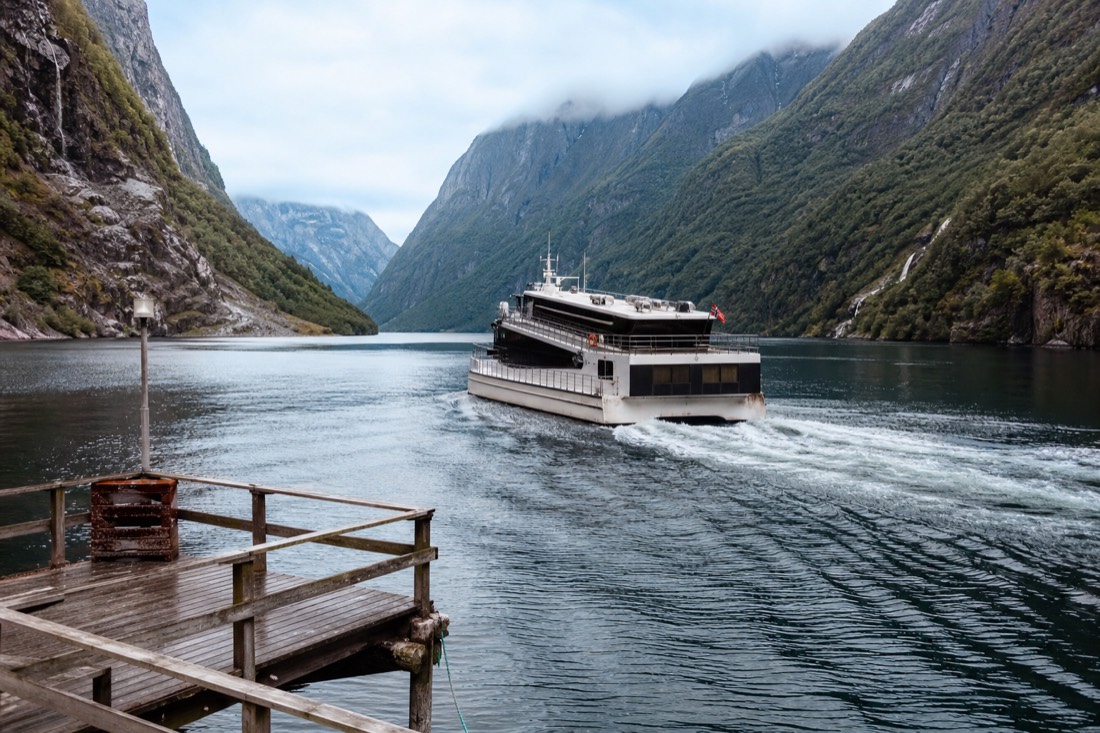
Norway's public transport reaches more of these places than visitors expect, which matters because renting a car for a town-focused trip is largely wasted money.
| Town | Reachable without a car | How |
|---|---|---|
| Bergen | Yes | Train, plane, coastal boat |
| Ålesund | Yes | Flight or coastal voyage |
| Flåm | Yes | Bergen Line plus the Flåm Railway |
| Undredal | Yes | Express boat on the fjord |
| Røros | Yes | Rail from Oslo or Trondheim |
| Lofoten villages | Yes, with planned buses or guided days | Car strongly advised |
They are also considerably faster than the equivalent road journey around a fjord.
The express boats are the underused part of this network. They connect fjord villages that look isolated on a map and turn a car-free itinerary through western Norway into a straightforward proposition.
Public buses do exist there and are usable for a single hop, but the timetable will shape your day rather than the other way round.
Lofoten is the one place where the calculation genuinely flips, and it is why the self-guided packages that pre-book lodging along the chain exist. Without a car, plan around bus timetables or the stops on a guided day.
How Do You Actually See Several Of Them In One Trip?
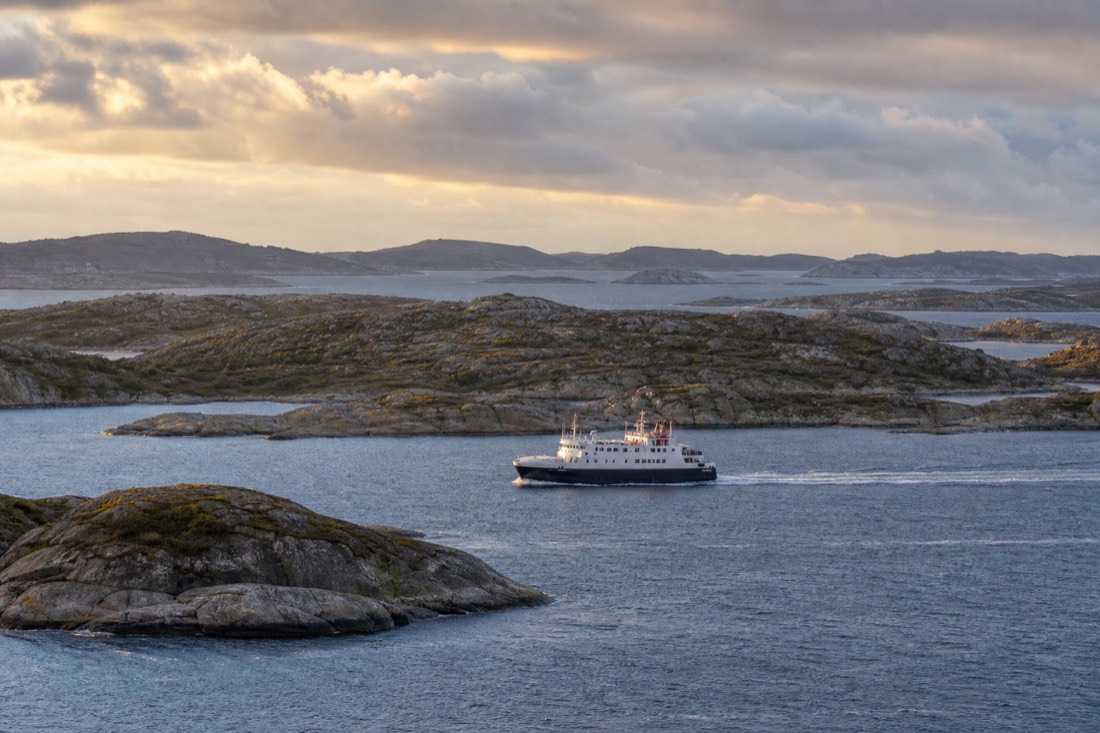
Pair by geography, never by ranking. Bergen with Undredal and the fjord villages is one clean week. Ålesund with Geiranger and the mountain roads is another. Reine belongs to a Lofoten trip. Røros attaches to Oslo. Trying to combine all five produces a transport itinerary.
| Pairing | Base | Towns you get | Days needed |
|---|---|---|---|
| Fjord week | Bergen | Bergen, Undredal, the Aurlandsfjord villages | 6 to 7 |
| West coast drive | Ålesund | Ålesund, Geiranger village, Trollstigen stops | 5 to 7 |
| Arctic islands | Bodø or Svolvær | Reine, Å, Henningsvær | 5 to 8 |
| Capital and inland | Oslo | Røros, plus Oslo itself | 3 to 4 |
| Two regions combined | Bergen then Ålesund | Bergen, Undredal, Ålesund | 10 |
The distance problem is the one thing that catches out first-time visitors. Bergen to Ålesund is a serious day of travel by road or coastal boat. Bergen to Reine is a flight plus a drive. Norway's length is comparable to the stretch from southern Europe to the Baltic, and the pretty towns are spread across all of it.
The workable version is two regions in ten days, or one region in a week. Timing matters as much as routing, since several of these places are effectively summer propositions and others are better in snow. If a fjord rather than a town is what you are chasing, the same comparison exists for water in our piece on Norway's prettiest fjord. Current opening dates and seasonal ferry routes for all five sit on visitnorway.com, and they are worth checking before you commit to anything outside high summer.
Choose Your Norway Experience
Reine, Hamnøy, Sakrisøy Photo Tour from Svolvær. Visit Reine, Hamnøy and Sakrisøy with a guide and transport from Svolvær. Have a date in mind? Check it before arranging the rest of your Norway trip.
7 hours. Seven hours, ages 5–85. Selected hotel pickup or the Svinøya meeting point. Lunch and refreshments cost extra; at least two guests are needed for departure. This is sightseeing, not a summit hike.
Choose a date to see scheduled departures. Final availability and price are confirmed on Viator.
No verified experience fits those requirements. Adjust your choices, or keep the independent plan described above.
Compare Options And Fit Your Plans
General recommendation until you choose. Choose the city where the activity starts, not your arrival airport. Month filters describe the experience’s season, not confirmed departures. Allow travel to the meeting point as well as the listed duration. Confirm your exact option and access needs when booking.
- Ålesund Two Hour Walking City Tour: 2 hours. Explore Ålesund’s streets, viewpoints and Art Nouveau history on a guided city walk. Two hours from Kongens gate 7B to the central park. Moderate fitness is listed despite wheelchair access; confirm your route needs. Local snacks are included, but dietary requests are not accepted.
- Food and Culture walk: 3 hours. Explore Bergen’s food and harbour history on a three-hour tasting walk with lunch included. Meet at the tourist-information entrance. Ages 5+; the listing requires at least two guests per booking. No specific dietary accommodation is verified.
- Guided tour to Hardangerfjord with Waterfalls and Ferry Crossing: 8 hours 30 minutes. Visit Hardangerfjord waterfalls with a guide, minibus transport and a ferry crossing. 8.5 hours from Strandkaien 1, outside tourist information. Ages 4+. Ferry tickets are included; meals are not. Meet 10 minutes before departure.